%22%2F%3E%3C%2Fpattern%3E%3C%2Fdefs%3E%3Crect%20width%3D%22100%25%22%20height%3D%22100%25%22%20fill%3D%22url(%23ph2pvpdg)%22%2F%3E%3Crect%20width%3D%22100%25%22%20height%3D%22100%25%22%20fill%3D%22url(%23ph2pvpdp)%22%2F%3E%3Ctext%20x%3D%2250%25%22%20y%3D%2250%25%22%20text-anchor%3D%22middle%22%20dominant-baseline%3D%22central%22%20fill%3D%22rgba(255%2C255%2C255%2C0.95)%22%20font-family%3D%22Georgia%2C%20'Times%20New%20Roman'%2C%20serif%22%20font-weight%3D%22700%22%20font-size%3D%22320%22%20letter-spacing%3D%22-0.02em%22%3EWRUR%3C%2Ftext%3E%3C%2Fsvg%3E)
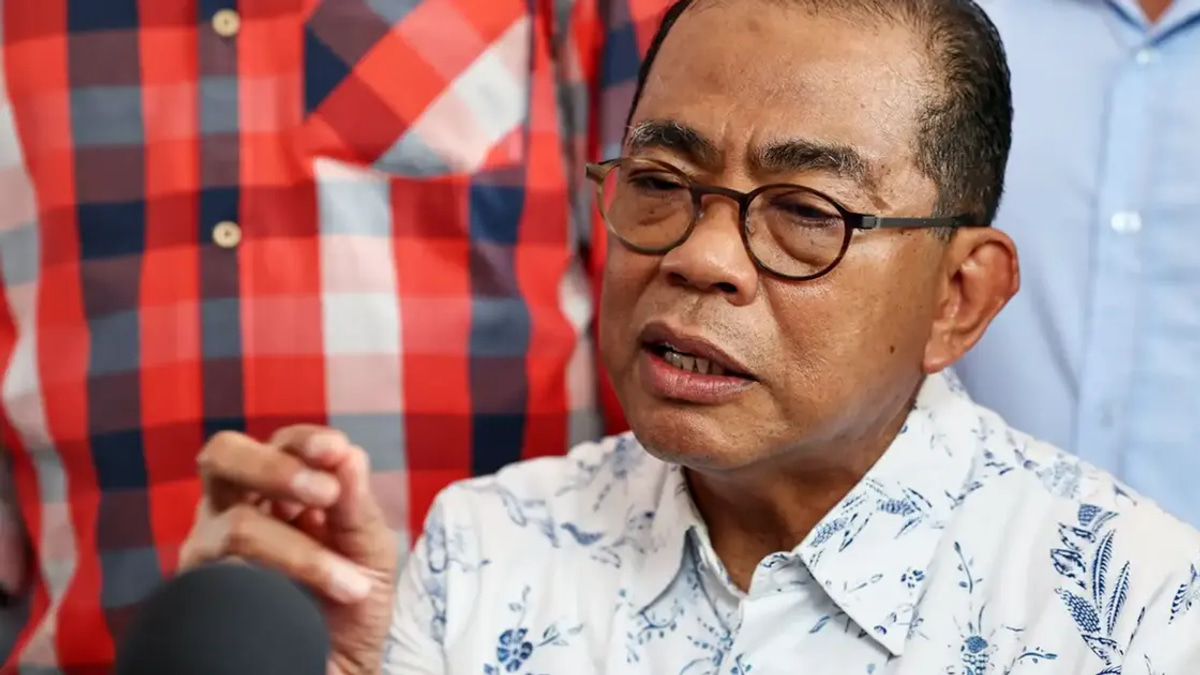
The true measure of success for grassroots governance programmes should centre on tangible improvements to citizens' lives rather than the volume of initiatives deployed, according to Melaka Chief Minister Datuk Seri Ab Rauf Yusoh. Speaking at the closing ceremony of the Wakil Rakyat Untuk Rakyat (WRUR) Programme in Kota Melaka parliamentary constituency, he articulated a philosophy increasingly relevant across Southeast Asia's developing democracies: that representative government must be evaluated through outcomes rather than optics.
The WRUR initiative represents an attempt to institutionalise grassroots responsiveness by creating formal channels for citizen grievances and ensuring accountability at the constituency level. Rather than viewing success through the prism of programme quantity, Ab Rauf's framework prioritises whether complaints are effectively documented, prioritised, and resolved. This distinction reflects a maturation in how state administrations conceptualise public service delivery—moving away from broadcasting achievements toward demonstrating material change in people's circumstances.
The pilot phase across 19 state constituencies has generated substantial complaint data: 4,027 grievances recorded with over 65 per cent receiving resolution. While these figures suggest operational efficiency, the more significant implication lies in establishing a permanent accountability infrastructure. Ab Rauf explicitly instructed all relevant agencies to continue addressing grievances beyond the formal four-week programme window, indicating that WRUR functions as institutional reform rather than a temporary political exercise. This commitment to post-programme continuity distinguishes genuine administrative restructuring from campaign-style initiatives designed for visibility.
The Kota Melaka constituency phase received 470 complaints during implementation, with 31 resolved during the active period and the remainder undergoing prioritisation for subsequent attention. The relatively modest immediate resolution rate—roughly seven per cent—might appear disappointing at first glance, yet it reflects the complexity of municipal governance. Issues spanning infrastructure defects, housing degradation, welfare access, and service provision require inter-agency coordination, budget allocation, and sometimes structural remediation. By deferring complete resolution beyond the programme deadline, authorities acknowledge that citizen satisfaction depends on substantive fixes rather than superficial acknowledgment.
Parallel development initiatives in Telok Mas state constituency illustrate the broader infrastructure investment supporting community outcomes. Over five years, 328 local projects valued near RM68 million have addressed fundamental infrastructure deficits: road rehabilitation, drainage and sewerage system upgrades, residential repairs, and facility construction encompassing community halls, worship sites, and educational institutions. These investments represent the material foundation upon which responsive governance operates—without functioning infrastructure, citizen complaint mechanisms become merely cathartic rather than transformative.
Welfare and social assistance programmes documented in Telok Mas—including food aid, health support, and subsidised goods distribution—address immediate cost-of-living pressures that shape voter perception of government effectiveness. The Jualan Rahmah and Jualan Murah initiatives, implemented 70 times since 2022, represent price-controlled retail operations providing ordinary households tangible relief from inflation. Similarly, the Free Petrol Programme benefiting 15,000 residents with RM177,000 assistance demonstrates resource allocation toward constituencies experiencing fuel cost sensitivity. These programmes operate at the intersection of social welfare and political legitimacy, where governments demonstrate commitment to household economic security.
Educational support systems merit particular attention as long-term welfare mechanisms. The distribution of educational incentives totalling RM244,200 to 1,694 SPM candidates and 255 exceptional Form Five students, combined with higher education support, represents investment in human capital development. Such programmes acknowledge that sustained poverty reduction requires educational opportunity alongside immediate relief. By coupling welfare assistance with educational support, state administrations address both present hardship and future economic mobility—a crucial consideration in Malaysia's development trajectory.
Tourism and heritage sector development initiatives reveal how local governance extends beyond welfare toward economic diversification. The RM2.4 million Ministry of Tourism, Arts and Culture allocation for upgrading Sungai Punggor and Alai facilities, the RM300,000 Dataran Telok Mas One-Stop Centre investment, and the emerging Melaka Geopark development represent strategies to catalyse local employment and visitor economy activity. For constituencies like Telok Mas, tourism infrastructure development offers residents employment opportunities beyond traditional sectors, while heritage preservation connects cultural identity to economic value.
The Bukit Larang geosite assessment for National Geopark recognition exemplifies how municipalities leverage geological and environmental assets within Malaysia's broader conservation frameworks. Such designations attract tourism investment, research attention, and international recognition—amplifying local economic potential while supporting environmental stewardship. This approach recognises that effective local governance operates across multiple domains: immediate welfare, infrastructure, education, and strategic economic positioning.
The WRUR programme's underlying methodology—comprehensive complaint recording, transparent prioritisation, cross-agency coordination, and sustained follow-up—establishes administrative infrastructure applicable across Malaysia's diverse constituencies. By formalising citizen grievance pathways and demanding resolution accountability, the initiative addresses a persistent governance challenge: translating electoral representation into practical responsiveness. This becomes increasingly critical as Malaysian cities experience rapid growth, infrastructure strain, and rising citizen expectations.
For broader Southeast Asian governance contexts, the WRUR model offers lessons regarding performance measurement in representative systems. Traditional indicators emphasising programme volume or budget expenditure often obscure whether resources actually reach intended beneficiaries or resolve documented problems. By centering evaluation on complaint resolution rates and community satisfaction, Melaka's administration privileges accountability over activity metrics—a distinction that strengthens government legitimacy when citizens perceive their grievances as systematically addressed rather than acknowledged but ignored.
The persistence of unresolved complaints even after programme completion reflects governance reality: sustained problems require sustained attention, not time-bounded initiatives. Ab Rauf's explicit instruction that agencies continue addressing grievances indefinitely signals recognition that citizen expectations cannot operate within artificial campaign cycles. This approach recognises that effective local governance ultimately depends on institutional capacity rather than political visibility—a fundamental principle that Malaysian and regional administrations must embrace as they navigate citizen demands for transparency and responsiveness in increasingly complex urban environments.