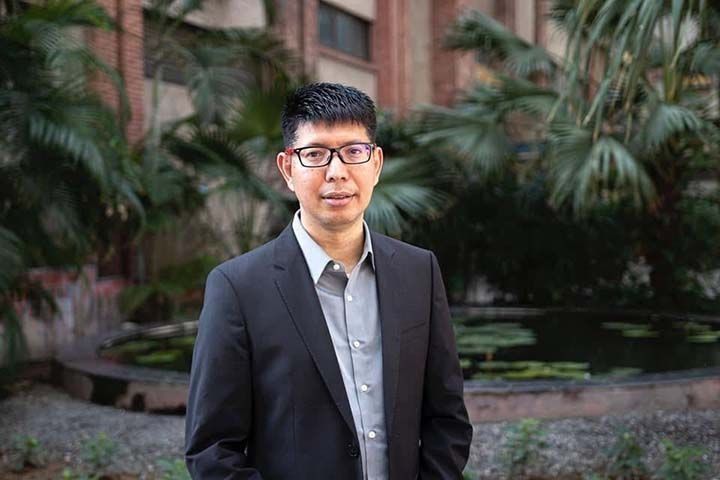
An American scholar specialising in Myanmar affairs was arrested in the Chinese city of Kunming on June 3 while travelling to participate in an academic workshop, according to the research institute he founded. Min Zin, executive director of the Institute for Strategy and Policy (ISP) - Myanmar, was taken into custody on suspicion of espionage and endangering national security, Beijing announced through its foreign ministry in the preceding week. His detention has sparked calls for his unconditional release from both his think tank and the United States government, which has characterised the allegations against him as baseless.
The ISP-Myanmar issued a statement emphasising that Min Zin had journeyed to Kunming exclusively to attend an academic gathering, rejecting what it termed groundless accusations levelled against him. The institute's leadership stressed the importance of allowing research organisations to operate freely without facing threats or coercion. A spokesperson for the US State Department echoed this position, asserting that American consular officers have been permitted to visit Min Zin and that Washington is actively engaging with Chinese authorities to provide appropriate consular support. Despite these international objections, China's foreign ministry maintained its position, stating that the case would be handled according to Chinese law and reiterating the espionage allegation without providing additional details.
The timing of Min Zin's arrest appears strategically significant within broader Sino-Myanmar relations. His detention occurred in early June, roughly three weeks before Myanmar's junta chief Min Aung Hlaing undertook a state visit to China lasting five days. This proximity in timing underscores the delicate nature of diplomatic relations between Beijing and the military regime that seized power in Myanmar, suggesting that internal security concerns may influence bilateral engagement. China remains one of Myanmar's most crucial foreign partners, maintaining substantial economic and strategic interests in the country despite international criticism of the junta's governance.
Min Zin's background as a pro-democracy activist and scholar provides context for understanding why his work might attract scrutiny from Beijing. He participated in Myanmar's 1988 democracy uprising, a pivotal moment in the country's political history when students and citizens protested against authoritarian rule. He subsequently pursued higher education, studying political science at the University of California, Berkeley, before returning to Myanmar to help establish the ISP. The think tank's original headquarters operated within Myanmar, but the organisation relocated overseas following the February 2021 military coup that deposed elected leader Aung San Suu Kyi.
The 2021 coup fundamentally altered Myanmar's domestic politics and international standing. The military's seizure of power triggered immediate and widespread public resistance, with demonstrations erupting across urban centres. These protests gradually evolved into an armed insurgency as newly formed pro-democracy militia groups joined forces with established ethnic armed organisations to mount organised resistance against the junta's authority. This ongoing conflict has destabilised the nation, causing humanitarian suffering and economic deterioration. The international community, including the United States and many Western democracies, has condemned the coup and its aftermath.
The Institute for Strategy and Policy - Myanmar has become increasingly important as an independent voice analysing Myanmar's political crisis and its implications for the region. Since relocating abroad, the think tank has focused its research agenda on several interconnected issues: the military conflict and prospects for political transition, Myanmar's economic collapse under military mismanagement, and the complex relationship between Myanmar and China. These research interests place ISP-Myanmar in a position that may be viewed as challenging to Beijing's interests, particularly regarding analysis of Sino-Myanmar ties and their implications for Myanmar's sovereignty and development.
Min Zin's detention raises broader concerns about academic freedom and research independence in Southeast Asia. The incident highlights how scholars working on sensitive geopolitical issues, particularly those examining China's influence in the region, may face legal jeopardy when travelling in Chinese jurisdiction. For Malaysian researchers and think tanks operating in similar spaces—examining regional security, economic ties, and great power competition—the case presents a cautionary example of the risks associated with publishing critical analysis that might displease powerful governments.
China's espionage charges against Min Zin remain unsubstantiated in any public disclosure. The foreign ministry has provided no evidence or specific allegations detailing what espionage activities he allegedly undertook. This lack of transparency is typical of cases involving national security accusations in China's legal system, where closed proceedings and limited disclosure characterise handling of such matters. The vagueness of the charges complicates international advocacy efforts on behalf of the detained scholar.
The incident also reflects broader tensions within Myanmar's military government regarding international relationships and information flows. The junta faces a complex balancing act: maintaining crucial economic and military support from China while navigating international pressure regarding human rights and democratic governance. Min Zin's arrest may serve multiple purposes for the regime, simultaneously satisfying Beijing's apparent concerns about external scrutiny of Sino-Myanmar relations while demonstrating to the Chinese leadership that Myanmar's military remains attentive to Beijing's interests and security sensitivities.
For Southeast Asia more broadly, Min Zin's detention underscores how major powers' security concerns can intersect with regional research and academic work. Myanmar's strategic location as a neighbour to China, combined with its current political instability, makes it a focal point for scholarly attention from international observers. Researchers analysing Myanmar's trajectory, China's regional influence, and the future of democracy in Southeast Asia face an environment where their work may inadvertently attract unwanted attention from governments concerned about external commentary on their affairs.
The United States' response to Min Zin's detention reflects Washington's broader commitment to defending academic freedom and supporting independent research organisations operating in contested political spaces. American diplomatic engagement with Chinese authorities represents an attempt to secure the scholar's release through formal channels. The case will likely influence how other scholars assess the risks of conducting research on Myanmar and related topics, potentially affecting the international community's ability to maintain independent analysis of one of Asia's most important ongoing crises.