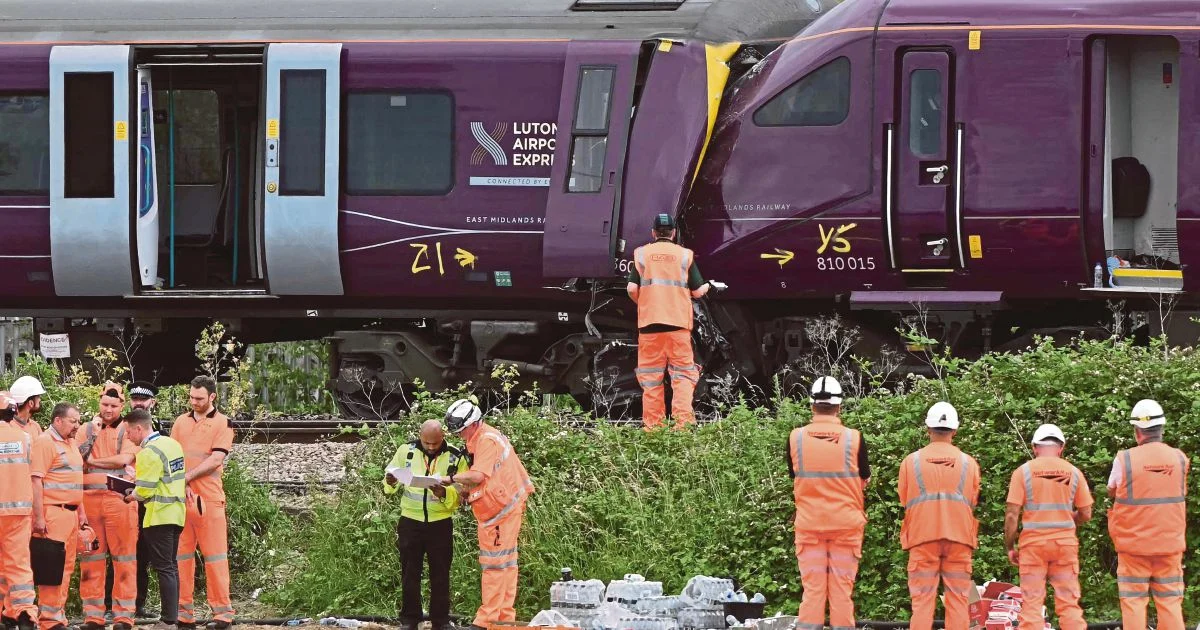
A fatal train collision that unfolded north of London on Saturday has triggered a major investigation by the UK's transport safety authorities, with one driver losing his life and dozens of passengers requiring medical attention. The incident near Bedford has highlighted ongoing concerns about rail safety in Britain's busy commuter network, with emergency services responding to what became one of the most serious railway accidents in the region in recent years.
The collision resulted in the hospitalisation of 28 individuals, among them nine passengers and crew members whose injuries were deemed critical enough to warrant intensive care. The remaining injured sustained various degrees of harm, from moderate injuries requiring overnight observation to minor wounds treated and released. The exact sequence of events that led to the trains coming together remains under active investigation, with specialists examining everything from signal systems and speed indicators to driver actions and track conditions.
Accident investigation teams mobilised quickly to the scene, where forensic experts began collecting evidence and documenting the wreckage configuration. Their role involves reconstructing the precise moments leading to impact, analysing maintenance records for both trains, and interviewing surviving crew members and passengers. This methodical process typically takes weeks or months to complete, though preliminary findings may emerge as initial examination progresses.
The location near Bedford, situated on a crucial corridor connecting London to the Midlands and beyond, raises questions about how such an incident occurred on one of Britain's most scrutinised rail routes. Regular passenger services rely on these lines daily, carrying thousands of commuters and long-distance travellers. Any disruption sends ripples through the entire transport network, affecting schedules across multiple operators and forcing passengers to seek alternative routes.
For Malaysian readers familiar with the expansion of rail networks across Southeast Asia, the incident underscores the importance of stringent safety protocols and regular infrastructure maintenance that many regional countries are still developing. The sophistication of UK rail systems, combined with dense traffic volumes, creates an environment where even minor mechanical failures or human oversights can escalate into serious accidents. This mirrors challenges facing rapidly growing transport networks in Malaysia and neighbouring countries as they handle increasing passenger demand.
The psychological impact on survivors and bereaved family members will likely extend far beyond immediate medical concerns. Railway accidents carry particular weight in public consciousness, influencing passenger confidence in modal choice for decades following a major incident. Those injured physically will require ongoing rehabilitation, whilst psychological support services often prove essential for trauma recovery.
British rail operators and the government face pressure to review whether existing safety measures remain adequate given current network usage levels. Questions typically arise about train spacing, automatic braking systems, signal visibility, and crew fatigue management—elements that directly parallel concerns raised in Malaysian rail development discussions. The Rail Accident Investigation Branch will need to determine whether this collision resulted from technical failure, procedural breakdown, or some combination of factors.
The incident comes amid broader discussions about rail investment in the UK, where aging infrastructure competes with demand for modern capacity upgrades. Maintenance budgets, staff training programmes, and technology implementation all factor into accident prevention strategies. Similar resource constraints affect developing rail networks in Southeast Asia, where rapid expansion sometimes outpaces comprehensive safety standardisation.
Family members of those affected have expressed distress over the incident, with support services activated to assist those struggling emotionally. The driver who perished represents another tragic dimension, with colleagues in the railway industry mourning a fellow professional. These human dimensions often receive less media attention than technical details but profoundly affect communities dependent on rail transport.
Authorities are expected to release preliminary findings within weeks, though the comprehensive report determining root causes and safety recommendations may take several months to finalise. Any significant systemic weaknesses identified will likely trigger revised operating procedures across the rail industry. Similar accidents in other countries have historically prompted international learning, with lessons disseminated through professional networks and regulatory bodies.
The incident reminds stakeholders throughout the transportation sector—particularly in Malaysia and the wider region developing modern rail infrastructure—that vigilance remains essential even on well-established networks. As Southeast Asian countries invest billions in new rail corridors and metro systems, the UK experience demonstrates that safety cannot be treated as secondary to expansion targets. The investigation's findings will likely influence international best practice discussions and inform risk assessments for rail operators globally.