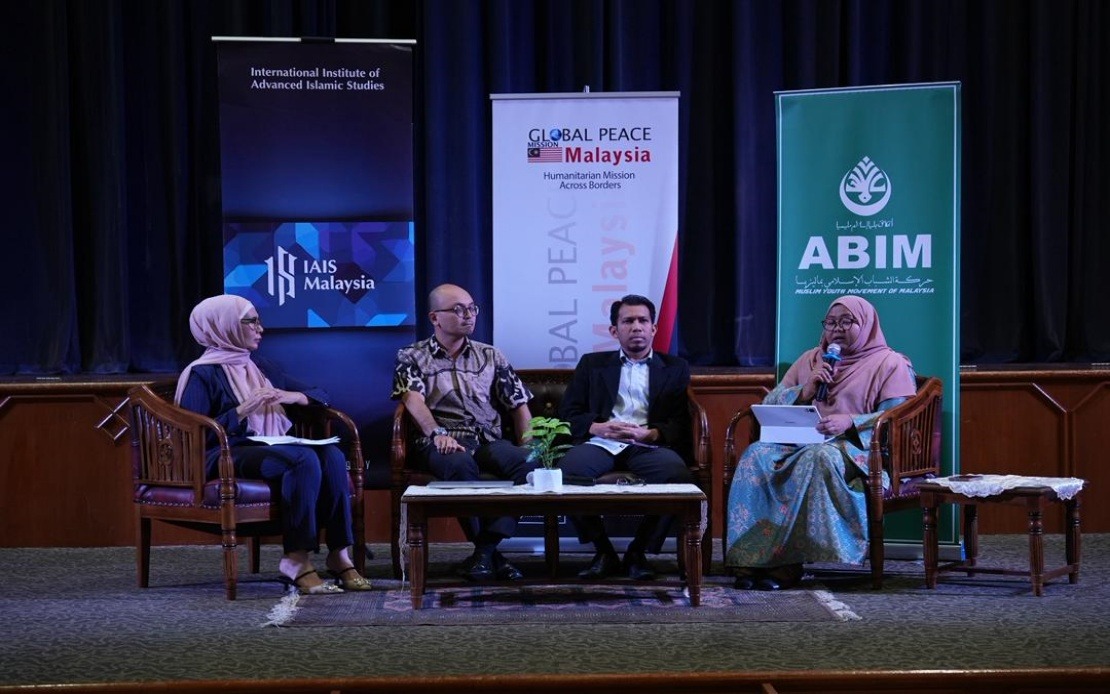
Civil society leaders convened in Kuala Lumpur on June 20 to chart a new direction for how Malaysia handles one of its most contentious policy challenges. The Solidarity with Refugees Conference, marked by the annual World Refugee Day commemoration, produced ten resolutions that represent an attempt to reframe the refugee debate away from polarisation toward pragmatic governance. Organisers hope the proposals will influence parliamentary discussions and shape ministerial thinking on a question that affects hundreds of thousands of people within the country's borders.
The gathering brought together a cross-section of Malaysian society—from Islamic youth movements and academic researchers to United Nations officials and grassroots humanitarian workers. Held at the International Institute of Advanced Islamic Studies (IAIS) Malaysia, the conference demonstrated that refugee policy need not remain trapped between hardline restriction and unconditional acceptance. Ahmad Fahmi Mohd Samsudin, heading the influential Angkatan Belia Islam Malaysia (ABIM), signalled that the resolutions would be formally transmitted to Members of Parliament and key agencies, initiating what organisers hope becomes sustained policy dialogue.
The timing carries significance for Southeast Asia's geopolitical moment. Malaysia has sheltered refugee populations from Vietnam, Syria, Bosnia and Palestine over recent decades, building institutional knowledge that few countries in the region possess. Yet public sentiment toward displaced persons has grown increasingly strained, particularly as economic pressures mount on ordinary Malaysians. The conference acknowledged this reality directly rather than dismissing legitimate concerns about security, law enforcement and community resources. By naming these anxieties rather than ignoring them, organisers attempted to create intellectual space for solutions that don't require choosing between humanitarianism and prudent governance.
Among the substantive proposals, participants called for comprehensive refugee data collection and registration systems developed collaboratively with the United Nations High Commissioner for Refugees (UNHCR). Such systems would impose order and transparency on what remains a largely ad hoc arrangement. Currently, Malaysia's refugee management operates in a grey zone—the country refuses to ratify the 1951 Refugee Convention, yet houses some 180,000 registered refugees and untold numbers of undocumented displaced persons. Better data would serve multiple purposes: it would help government planners allocate resources more effectively, allow security agencies to conduct proper vetting, and provide humanitarian organisations with clearer population estimates for programming.
A second major resolution addressed the information environment surrounding refugees. Participants explicitly rejected all forms of dehumanising rhetoric and discrimination while simultaneously committing to counter misinformation and xenophobic narratives that circulate widely on social media. This dual commitment reflects understanding that the refugee question in Malaysia, like elsewhere, has become weaponised in partisan discourse. False claims about disease transmission, crime rates and resource consumption circulate readily online, shaping public opinion in ways disconnected from evidence. The conference proposed establishing mechanisms to support civil society organisations facing coordinated online harassment and disinformation campaigns when they advocate for refugee rights.
Ahmad Fahmi articulated a concern that resonates across Southeast Asia: anti-refugee sentiment, left unchecked, tends not to remain confined to discussions about displaced persons. When dehumanisation becomes normalised toward one vulnerable group, it establishes rhetorical and psychological precedent for extending such treatment toward other minorities or marginalised communities. Malaysia's history of communal tensions makes this concern particularly acute. By elevating the discourse above simple xenophobia, the conference sought to protect not only refugees but also Malaysia's broader social fabric.
The resolutions further called for public education campaigns grounded in factual information rather than speculation. Malaysian media literacy remains uneven, with many citizens obtaining information primarily through social media networks that algorithmically amplify sensational content. Government and civil society collaboration on explaining refugee policy—why certain populations are in Malaysia, how they are managed, what support systems exist—could reduce fear born of ignorance. Educational efforts would necessarily include acknowledgment of genuine challenges: housing strain in certain neighbourhoods, employment competition in low-skilled sectors, and administrative burdens on healthcare and education systems. Addressing these realities through policy rather than rhetoric offers a constructive alternative to blame-shifting.
The conference's emphasis on balancing national interests with humanitarian responsibility reflects Malaysia's actual position in global refugee dynamics. The country hosts proportionally more refugees relative to its population than many wealthier nations, yet receives far less international financial support. This asymmetry creates legitimate frustration among policymakers and ordinary citizens, who see Malaysia bearing humanitarian burdens that wealthy countries evade. The resolutions implicitly argue that Malaysia can maintain humane refugee policies while demanding greater international burden-sharing and technical support from organisations like UNHCR.
Implementation remains the critical question. Previous conferences have produced declarations that gathered dust in ministry offices while policy continued along established lines. Ahmad Fahmi's announcement that ABIM intends follow-up engagement with the Home Ministry and National Security Council suggests seriousness about translating rhetoric into action. Yet success will require sustained pressure from civil society, political leaders willing to resist xenophobic populism, and international partners prepared to assist Malaysia in managing populations it did not create and cannot unilaterally resolve.
The Kuala Lumpur conference thus represents an inflection point in Malaysian refugee discourse. Rather than accepting the false choice between fortress borders and open humanitarianism, it proposes managed integration: orderly systems, fact-based communication, security maintained through proper vetting rather than blanket exclusion, and community resources allocated transparently. Whether Malaysia's government possesses the political will to implement such approaches remains to be seen. The conference has provided a roadmap; the harder work of navigating bureaucratic resistance and populist pressure lies ahead.