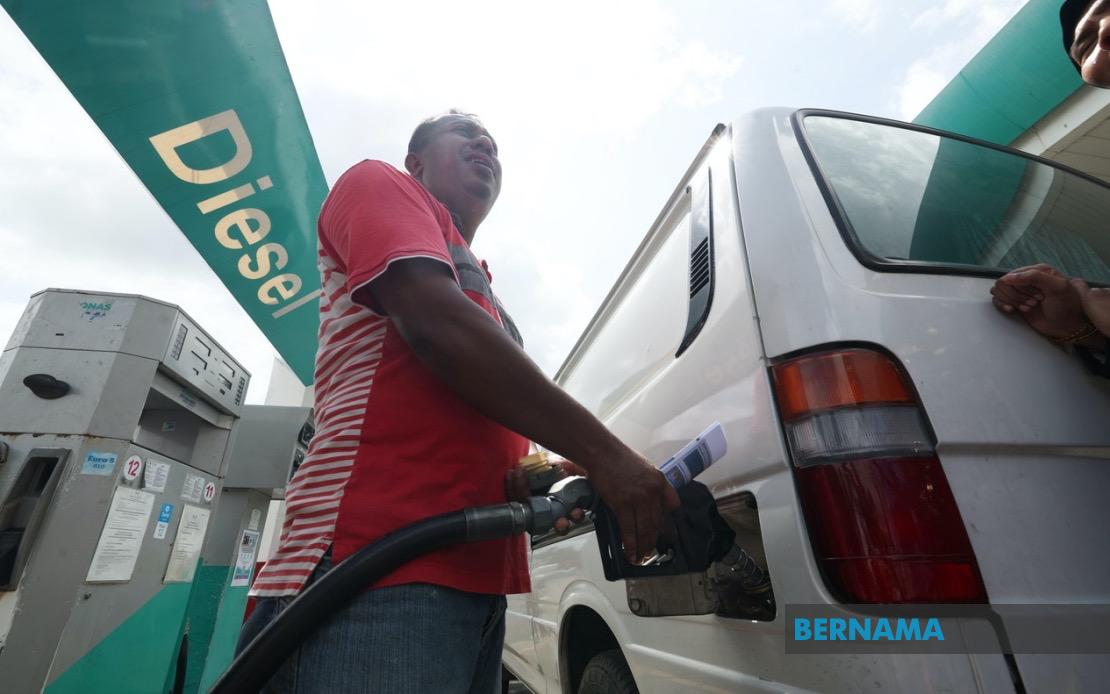
The MADANI Government has committed to reducing the price of subsidised diesel to RM2.10 per litre beginning in July 2026, Prime Minister Datuk Seri Anwar Ibrahim announced in Bintulu today. The new pricing structure represents a significant shift in how the government manages fuel subsidies, moving away from blanket support towards a system that targets assistance more precisely to Malaysian citizens who qualify for the benefit.
The diesel subsidy reform mirrors the approach already established under the BUDI MADANI RON95 programme, which applies identity card verification to ensure only eligible citizens receive the discounted fuel price. This method represents a strategic pivot by the administration to contain subsidy expenditure while maintaining support for lower-income Malaysians and essential sectors that depend heavily on diesel. The verification mechanism through MyKad serves as a safeguard against misuse and diversion of subsidised fuel to the black market or commercial users who might otherwise exploit blanket price controls.
Finance Minister II Datuk Seri Amir Hamzah Azizan is scheduled to brief the media in Kuala Lumpur with comprehensive details regarding the implementation framework for the new subsidised diesel price. This additional briefing suggests that the government intends to provide clarity on eligibility criteria, the rollout timeline, and operational procedures for the programme, allowing businesses and consumers to prepare for the transition. Such communication from the Finance Ministry underscores the technical complexity involved in launching a means-tested subsidy system across a nation where diesel consumption spans everything from household generators to massive commercial shipping operations.
The announcement comes as Malaysia grapples with persistent fiscal pressures from fuel subsidy programmes that have historically represented a substantial drain on the federal budget. By adopting targeted rather than universal subsidisation, the government aims to improve fiscal sustainability while maintaining a safety net for vulnerable populations and critical economic sectors. Diesel subsidies have long been contentious in Malaysia, balancing the need to protect consumers and support industries like transportation, fishing, and agriculture against the imperative to control government spending and reduce distortions in the fuel market.
The timing of this announcement, made during an official ceremony in Bintulu marking the conversion of Bintulu Port from federal to state authority, reflects the government's concurrent focus on decentralisation and economic restructuring. The port development project and the subsidy reform both signal the MADANI administration's broader agenda of modernising Malaysia's economic governance structures and financial management practices. This multifaceted approach suggests recognition that sustainable economic development requires simultaneous attention to fiscal discipline, infrastructure enhancement, and targeted social support.
The transition to a MyKad-verified subsidy system carries implications for retail fuel operations nationwide, particularly at petrol stations serving predominantly lower-income areas or regions dependent on diesel for agricultural and industrial activities. Station operators will need to implement identity verification technology and train staff on the new authentication procedures, representing an operational change that requires coordination between the government and private fuel retailers. The success of this system depends largely on the efficiency and reliability of the MyKad verification infrastructure, which must function smoothly across thousands of retail points while maintaining security against fraud.
Regional observers have noted that Malaysia's approach to subsidy targeting reflects a broader trend across Southeast Asia toward more fiscally conservative fuel policies. Countries including Indonesia and the Philippines have implemented similar verification-based subsidy schemes in recent years, often with mixed results in terms of operational efficiency and market acceptance. Malaysia's specific approach, building on experience with the BUDI95 programme, suggests the government has identified lessons from regional implementation attempts and tailored its design accordingly.
For Malaysian consumers accustomed to subsidised fuel prices, the transition represents both continuity and change. The RM2.10 per litre price point maintains government support for fuel costs while introducing a new administrative requirement for those seeking the discounted rate. This dual shift—combining price modification with identity verification—requires public communication emphasising the rationale for change and clarity regarding who qualifies for subsidised rates. Without effective public education, confusion and resentment could undermine the programme's objectives and create operational friction at fuel retailers.
The diesel subsidy framework also intersects with Malaysia's broader energy policy evolution, as the country simultaneously pursues renewable energy expansion and fossil fuel management. Targeted diesel subsidies support existing consumption patterns while the government invests in alternative energy infrastructure and electrical vehicle adoption through separate policy mechanisms. This layered approach to energy transition reflects the practical reality that Malaysia cannot abruptly eliminate fossil fuel reliance while maintaining economic stability and protecting lower-income households from energy price shocks.
Industry observers expect that articulate implementation will be crucial to the programme's effectiveness in achieving both fiscal savings and social protection objectives. The coming months will reveal whether the MyKad verification system functions reliably at scale, whether consumers understand and accept the new eligibility requirements, and whether the RM2.10 price point adequately balances government costs against market expectations. The Finance Ministry's promised detailed briefing will provide essential information for stakeholders preparing to adapt operations under the new subsidy regime beginning next July.