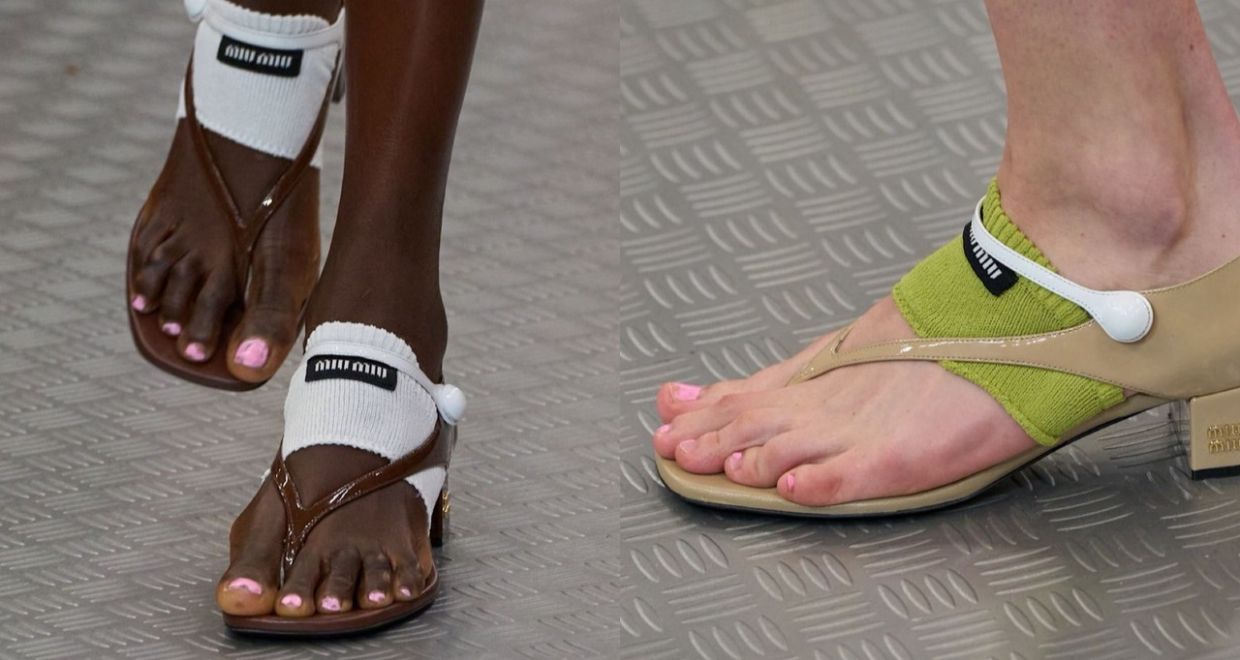
The seasonal fashion paradox has found an unlikely solution: open-toe socks are quietly reshaping how style-conscious shoppers approach warm-weather dressing. The design, which exposes the toes while covering the arch and upper foot, represents a creative answer to the discomfort of choosing between completely bare feet and full socks during sweltering months. What started as an avant-garde experiment has rapidly accelerated into a legitimate trend, particularly across East Asian markets where early heat waves have accelerated the shift toward lighter summer footwear.
Retail data from South Korea reveals the dramatic momentum behind this unconventional pairing. W Concept, a major online fashion platform, documented an 80 percent surge in sales for summer shoes including mules, slides, and flip-flops during the week of May 31 to June 7 compared to the same period last year. The figures signal a broader shift in consumer purchasing behaviour, but even more striking are the numbers specifically tracking socks designed for warm-weather wear. Style commerce platform Ably reported that transaction values for flip-flop socks skyrocketed by 1,664 percent between May 14 and June 14, with search interest climbing even more sharply at 3,227 percent. These metrics suggest that open-toe socks have transcended novelty status and entered mainstream consumer consciousness.
The trend's credibility stems largely from high-fashion endorsement. Luxury house Miu Miu introduced open-toe sock designs in its 2025 Spring/Summer collection, presenting socks that abandoned traditional full-foot coverage in favour of minimal wrapping around the arch area. This runway moment provided the aesthetic legitimacy that transforms fringe ideas into fashion statements. Celebrity adoption has further accelerated acceptance, with prominent figures like actor Cha Jung-won demonstrating how the look translates into everyday styling through social media posts that pair sky-blue flip-flops with beige knit leg warmers. Such visible endorsements from trusted style influencers carry particular weight in Southeast Asian markets, where celebrity fashion preferences significantly shape purchasing decisions.
The practical engineering behind summer open-toe socks distinguishes them fundamentally from their winter counterparts. Rather than prioritising warmth, contemporary versions employ sheer, mesh, and loosely knit fabrics that prioritise breathability without sacrificing structure. This material choice transforms socks from a purely functional base layer into a visible styling element, one that adds colour, texture, and visual interest to otherwise straightforward summer footwear. The design philosophy reflects a broader shift in fashion toward function-forward aesthetics, where utility and style intertwine seamlessly rather than existing in opposition.
Beyond aesthetic appeal, open-toe socks address genuine comfort concerns that affect many tropical-climate residents. The arch coverage reduces friction and chafing caused by flip-flop straps directly against bare skin—a particular advantage for those who wear such shoes daily. During monsoon seasons prevalent throughout Southeast Asia, the style offers additional practical benefits by providing a protective layer between rain boots and skin, thereby minimising moisture-related irritation. These functional advantages make open-toe socks a genuinely useful addition to warm-weather wardrobes rather than merely a decorative trend destined for swift obsolescence.
Styling open-toe socks successfully hinges on understanding restraint and balance. Fashion professionals recommend beginning with neutral foundations—grey, black, or white socks paired with minimalist footwear such as black flip-flops or ballerina flats. This combination works particularly well with casual bottom halves including denim, Bermuda shorts, or satin skirts, creating looks that feel intentional rather than accidental. As confidence builds, bolder colour choices emerge as viable options. Vivid yellows, hot pinks, and sky blues add personality and visual pop to otherwise predictable summer ensembles. Advanced styling deliberately mismatches sock and shoe colours, a technique that reads as intentional fashion awareness rather than wardrobe coordination failure.
The styling approach emphasises visual hierarchy and compositional balance. Because the open-toe sock and shoe combination already command significant visual attention through colour and pattern positioning, the remainder of the outfit benefits from simplicity and restraint. Pairing statement socks with understated tops—basic t-shirts, plain shirts, or simple sweaters—prevents outfit discord and allows the footwear styling to function as the primary design element. Patterns incorporated into the socks themselves, such as dots or floral motifs, create additional visual interest and offer styling versatility that solid colours cannot match.
For Malaysian and Southeast Asian consumers, the open-toe sock trend arrives at a particularly opportune moment. Year-round warm temperatures mean summer footwear dominates local wardrobes, making innovations in this category particularly relevant. The trend's emphasis on breathable materials addresses genuine climate-related discomfort while its emphasis on visible, playful styling aligns with growing regional interest in self-expression through fashion. Furthermore, the relatively low cost and accessibility of open-toe socks compared to luxury footwear makes the trend genuinely democratic and achievable for mainstream shoppers across various income levels.
The cultural significance of this trend extends beyond mere fashion observation. Open-toe socks represent a broader movement toward challenging conventional fashion rules and embracing unconventional combinations that prioritise personal comfort and individual expression. The style demonstrates that fashion innovation often emerges from practical problem-solving rather than purely aesthetic whimsy. By making socks—historically a hidden, functional garment—into a visible styling statement, the trend elevates everyday items and encourages shoppers to reconsider their assumptions about which clothing elements deserve creative attention.
Looking forward, open-toe socks exemplify how global fashion trends increasingly develop through simultaneous adoption across multiple markets rather than cascading from single fashion capitals. The strong response in South Korea, combined with retail momentum elsewhere in Asia, suggests the style will continue gaining ground throughout the region. For those hesitant about embracing the trend, fashion editors suggest viewing open-toe socks not as a radical departure but as a practical solution to seasonal dressing challenges—one that happens to look refreshingly modern in the process.
%22%2F%3E%3C%2Fpattern%3E%3C%2Fdefs%3E%3Crect%20width%3D%22100%25%22%20height%3D%22100%25%22%20fill%3D%22url(%23ph2edejg)%22%2F%3E%3Crect%20width%3D%22100%25%22%20height%3D%22100%25%22%20fill%3D%22url(%23ph2edejp)%22%2F%3E%3Ctext%20x%3D%2250%25%22%20y%3D%2250%25%22%20text-anchor%3D%22middle%22%20dominant-baseline%3D%22central%22%20fill%3D%22rgba(255%2C255%2C255%2C0.95)%22%20font-family%3D%22Georgia%2C%20'Times%20New%20Roman'%2C%20serif%22%20font-weight%3D%22700%22%20font-size%3D%22136%22%20letter-spacing%3D%22-0.02em%22%3EGovernment%3C%2Ftext%3E%3C%2Fsvg%3E)
%22%2F%3E%3C%2Fpattern%3E%3C%2Fdefs%3E%3Crect%20width%3D%22100%25%22%20height%3D%22100%25%22%20fill%3D%22url(%23ph3yglag)%22%2F%3E%3Crect%20width%3D%22100%25%22%20height%3D%22100%25%22%20fill%3D%22url(%23ph3yglap)%22%2F%3E%3Ctext%20x%3D%2250%25%22%20y%3D%2250%25%22%20text-anchor%3D%22middle%22%20dominant-baseline%3D%22central%22%20fill%3D%22rgba(255%2C255%2C255%2C0.95)%22%20font-family%3D%22Georgia%2C%20'Times%20New%20Roman'%2C%20serif%22%20font-weight%3D%22700%22%20font-size%3D%22194%22%20letter-spacing%3D%22-0.02em%22%3EHaaland%3C%2Ftext%3E%3C%2Fsvg%3E)