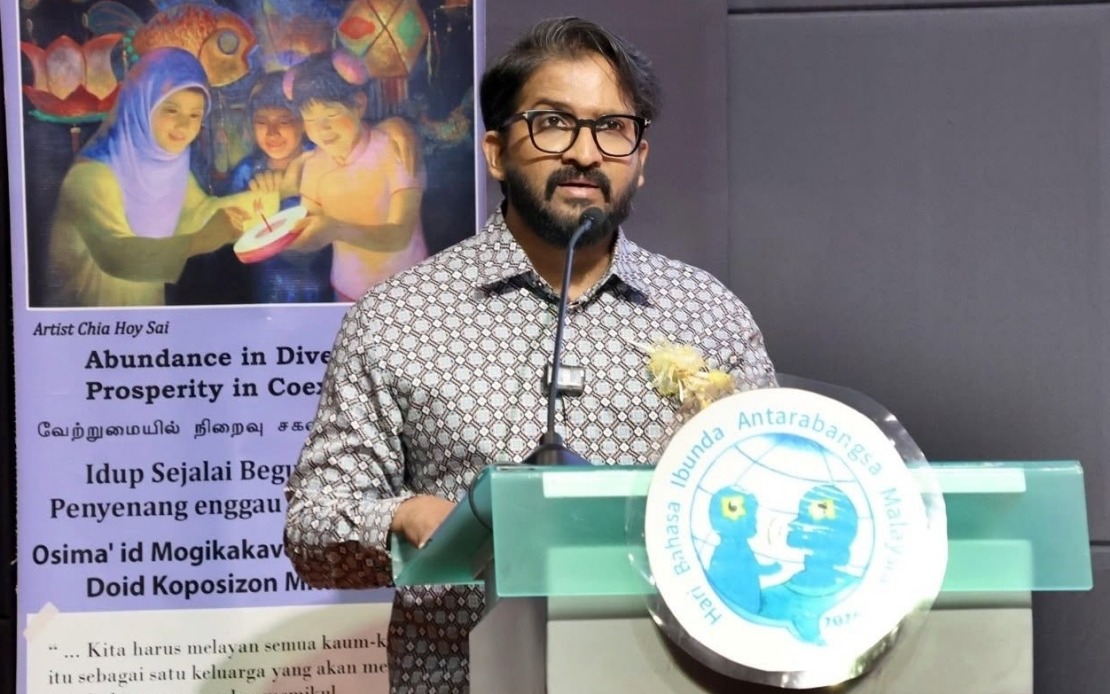
Deputy National Unity Minister R. Yuneswaran has underscored the importance of deepening proficiency in mother-tongue languages as a critical strategy for curtailing the proliferation of race, religion and royalty (3R) disputes that regularly inflame social media discourse and fracture Malaysian society. Speaking on June 21, Yuneswaran attributed the persistent emergence of these divisive issues to fundamental gaps in cross-cultural understanding, limited familiarity with one another's historical narratives, linguistic knowledge, and foundational cultural values. By contrast, he argued that investing in mother-tongue education could serve as a preventive mechanism against these societal tensions.
Yuneswaran's framing of language as more than a mere communication tool represents a significant departure from purely utilitarian approaches to linguistic policy. In his assessment, language embodies and transmits identity, ancestral heritage, and the value systems that form the bedrock of community cohesion. This perspective acknowledges that linguistic competence directly correlates with cultural consciousness and mutual respect across ethnic and religious boundaries. The minister's intervention comes at a moment when Malaysian social media platforms routinely become flashpoints for grievances rooted in misunderstanding and stereotyping, suggesting that linguistic and cultural literacy may offer a more foundational solution than post-hoc moderation or rhetorical appeals for unity.
Malaysia's linguistic landscape encompasses approximately 130 distinct languages, a figure that Yuneswaran characterised not as a liability but as evidence of the nation's richness and diversity. This reframing is crucial in a national context where linguistic plurality has occasionally been viewed with suspicion or relegated to minority concern status. By explicitly designating linguistic diversity as a source of national strength rather than fragmentation, Yuneswaran challenges prevailing narratives that subordinate minority languages to the national language or treat them as obstacles to integration. The rhetoric serves to legitimise minority language communities while simultaneously positioning mother-tongue education as patriotic rather than particularistic.
A central thrust of Yuneswaran's argument addresses a widespread misconception that proficiency in one's mother tongue necessarily undermines fluency in Bahasa Malaysia or other languages. Drawing on his personal trajectory as an Indian Malaysian who navigated both Chinese and national school systems, he contends that multilingualism and strong foundational literacy in one's heritage language are mutually reinforcing rather than competing objectives. This testimony carries particular weight given his position and mixed educational background, offering a lived counter-narrative to anxieties about linguistic fragmentation. The implication for educational policy is substantial: resources devoted to mother-tongue instruction need not come at the expense of national language proficiency, yet this reality remains contested in political and budgetary discussions.
Yuneswaran contextualised his advocacy within the broader mandate of the National Unity Ministry under the 13th Malaysia Plan, positioning mother-tongue education as integral to nation-building rather than peripheral to it. This institutional framing elevates the issue from cultural preservation concerns to a matter of state-level strategic importance. The 13th Malaysia Plan's emphasis on understanding, respect, and reciprocal learning provides a policy scaffold upon which targeted interventions in language education could logically rest. However, translating this rhetorical commitment into concrete curriculum changes, resource allocation, and institutional support remains an open challenge, particularly in a federal system where education falls partially under state jurisdiction.
The persistent emergence of 3R disputes on social media reflects deeper fractures in collective knowledge-sharing about Malaysian society's constituent communities. When citizens lack foundational literacy in neighbouring cultures' languages, they become dependent on second-hand narratives, simplified stereotypes, and algorithmic amplification of inflammatory content. By this logic, mother-tongue proficiency represents a form of cognitive infrastructure that enables more direct, less-mediated engagement with diverse communities. A Malaysian who reads Tamil literature in its original language, for instance, accesses layers of cultural meaning and historical context unavailable through translation or summary, fostering a more textured appreciation of Tamil Malaysian experience than social media discourse typically permits.
The emphasis on mutual understanding and openness articulated by Yuneswaran encodes an implicit theory of social cohesion predicated on knowledge rather than mere toleration. This distinction matters significantly: toleration implies barely suppressed disagreement, whereas understanding rooted in genuine literacy about others' cultures, histories, and values suggests the possibility of deeper solidarity. Educational initiatives grounded in this premise would necessarily extend beyond basic language instruction to encompass literature, history, philosophy, and contemporary cultural production—a more ambitious agenda than many current mother-tongue programmes deliver.
For Southeast Asian readers, Yuneswaran's intervention speaks to challenges that transcend Malaysia's borders. Linguistic and ethnic tensions simmer across the region, often exacerbated by social media's capacity to circulate uncontextualised claims and inflammatory stereotypes. Singapore's model of balancing mother-tongue education with a unified national language provides comparative lessons, as do Thailand's ongoing efforts to accommodate minority linguistic communities whilst maintaining central linguistic standardisation. The Malaysian case illuminates broader questions about how multilingual, multiethnic democracies can harness linguistic diversity as a cohesive rather than centrifugal force.
Implementing Yuneswaran's vision would require sustained policy commitment and resource reallocation. Current mother-tongue education in Malaysia operates largely through vernacular schools serving specific ethnic communities; integrating this more thoroughly into the national curriculum, expanding it to reach students from majority communities, and elevating its status within university-level humanities education would constitute substantial shifts. Teacher training, curriculum development, and examination structures would all require recalibration. The costs are non-trivial, yet Yuneswaran's framing implicitly argues that the expense of inaction—measured in social fragmentation, communal mistrust, and the emotional and economic toll of recurring 3R crises—substantially exceeds the investment required.
The minister's final injunction that language unites while unity strengthens Malaysia encapsulates his core conviction: linguistic proficiency is not a sectional interest but a national asset. Yet realising this potential hinges on whether Malaysian policymakers translate sympathetic rhetoric into concrete institutional change. The National Unity Ministry's role will prove decisive; without coordinated action involving the Education Ministry, local authorities, and educational institutions themselves, Yuneswaran's advocacy risks remaining aspirational rather than transformative. The coming years will reveal whether this articulate defence of mother-tongue education catalyses substantive policy evolution or remains rhetoric in the face of competing priorities and entrenched educational structures.
%22%2F%3E%3C%2Fpattern%3E%3C%2Fdefs%3E%3Crect%20width%3D%22100%25%22%20height%3D%22100%25%22%20fill%3D%22url(%23ph2edejg)%22%2F%3E%3Crect%20width%3D%22100%25%22%20height%3D%22100%25%22%20fill%3D%22url(%23ph2edejp)%22%2F%3E%3Ctext%20x%3D%2250%25%22%20y%3D%2250%25%22%20text-anchor%3D%22middle%22%20dominant-baseline%3D%22central%22%20fill%3D%22rgba(255%2C255%2C255%2C0.95)%22%20font-family%3D%22Georgia%2C%20'Times%20New%20Roman'%2C%20serif%22%20font-weight%3D%22700%22%20font-size%3D%22136%22%20letter-spacing%3D%22-0.02em%22%3EGovernment%3C%2Ftext%3E%3C%2Fsvg%3E)
%22%2F%3E%3C%2Fpattern%3E%3C%2Fdefs%3E%3Crect%20width%3D%22100%25%22%20height%3D%22100%25%22%20fill%3D%22url(%23ph3yglag)%22%2F%3E%3Crect%20width%3D%22100%25%22%20height%3D%22100%25%22%20fill%3D%22url(%23ph3yglap)%22%2F%3E%3Ctext%20x%3D%2250%25%22%20y%3D%2250%25%22%20text-anchor%3D%22middle%22%20dominant-baseline%3D%22central%22%20fill%3D%22rgba(255%2C255%2C255%2C0.95)%22%20font-family%3D%22Georgia%2C%20'Times%20New%20Roman'%2C%20serif%22%20font-weight%3D%22700%22%20font-size%3D%22194%22%20letter-spacing%3D%22-0.02em%22%3EHaaland%3C%2Ftext%3E%3C%2Fsvg%3E)