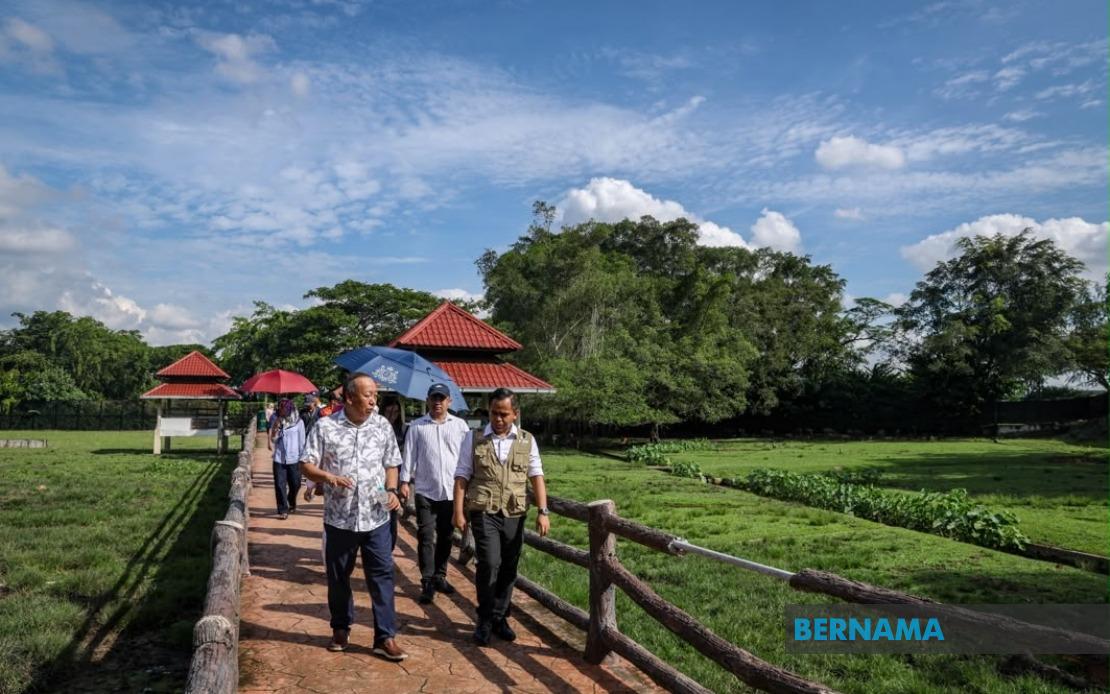
Sabah UMNO is leveraging its party apparatus to strengthen Barisan Nasional's campaign efforts across key constituencies in the Johor state election, drawing on experience from previous electoral cycles in the southern state. The party has been assigned to concentrate its ground operations within the Pasir Gudang parliamentary constituency, where demographic patterns show significant concentrations of voters who have migrated from Sabah and subsequently registered themselves in their new constituencies.
Datuk Jafry Ariffin, who chairs the Sabah UMNO liaison committee, outlined the party's strategic assignment during a visit to Johor Zoo. According to voter registration data maintained by electoral authorities, approximately 3,000 Sabahans are registered to vote in the Permas state assembly seat, whilst a further 2,000 have enrolled in the neighbouring Johor Jaya constituency. These figures underscore the significance of inter-state migration patterns within Malaysia's political landscape, particularly how communities relocate for economic opportunities while maintaining electoral influence in their adopted homes.
The liaison committee chairman emphasised that Sabah UMNO's involvement in these constituencies is not a new undertaking but rather a continuation of established arrangements. During the 2022 Johor state election, the party deployed similar resources to support the Barisan Nasional campaign across the same geographical areas. Ariffin suggested that the continuity of this arrangement reflects both the stability of Sabahan voter concentrations and the trust that the broader Barisan Nasional coalition places in Sabah UMNO's capacity to mobilise their community effectively.
Ariffin, who additionally serves as Sabah's Minister of Tourism, Culture and Environment, confirmed that preliminary campaign activities have already commenced at a measured pace. The party is conducting foundational work ahead of the formal campaign period, establishing contact networks and preparing logistical arrangements. However, party leaders anticipate that substantially more intensive canvassing and voter engagement will occur after nomination day, when candidates are officially registered and the regulatory campaign period formally begins.
The Election Commission has established June 27 as the date for nominations, setting the stage for candidates from all competing parties to formally declare their intentions and secure their ballot positions. The actual polling exercise is scheduled to occur two weeks later on July 11, providing a concentrated campaign window typical of Malaysian state elections. This compressed timeline necessitates efficient use of available campaign machinery, making the early mobilisation activities undertaken by Sabah UMNO particularly strategic.
The Johor State Legislative Assembly comprises 56 total seats, making it one of Malaysia's larger state legislatures. Prior to the dissolution of the assembly on June 1, the political landscape reflected the considerable strength that Barisan Nasional continues to maintain across the state. The coalition controlled 40 seats, providing a commanding position that would translate to a substantial majority if replicated in the upcoming election. Pakatan Harapan, as the primary opposition coalition, held 12 seats, whilst Perikatan Nasional maintained a small foothold with three representatives, and MUDA held a single seat.
The involvement of Sabah UMNO in supporting Barisan Nasional's Johor campaign demonstrates the integrated nature of Malaysian political party machinery across state boundaries. Political parties routinely mobilise resources and personnel across states to concentrate efforts in competitive or strategically important constituencies. For Sabah UMNO, participation in mainland Malaysian electoral campaigns reinforces the party's role within the broader UMNO structure and contributes to the coalition's overall electoral success.
The targeting of constituencies with significant Sabahan voter populations reflects a sophisticated understanding of electoral demographics and voter behaviour. Communities that have migrated from one state to another often maintain strong cultural and political networks, making them responsive to campaigning that acknowledges their origins and specific concerns. Sabah UMNO, as the authoritative voice representing Sabahan interests within the party structure, naturally positions itself as the most credible messenger to this constituency.
The 2022 Johor state election experience provides valuable institutional memory for the current campaign cycle. During that election, Sabah UMNO's ground operations contributed to broader Barisan Nasional success in these constituencies. The lessons learned regarding voter preferences, effective messaging channels, and logistical challenges can be applied to 2024's electoral effort. This cumulative knowledge enhances campaign efficiency and demonstrates how political organisations develop institutional expertise across successive electoral cycles.
For Malaysian observers, Sabah UMNO's campaign involvement also reflects the federation's peculiar political dynamics, where major parties maintain sophisticated cross-state coordination mechanisms. The arrangement illustrates how Malaysia's larger political parties function as integrated national organisations whilst simultaneously respecting state-level party structures and interests. This federal balance in party organisation has shaped Malaysian politics for decades and continues to influence how coalitions approach competitive elections.
The emphasis on maximising outreach following nomination day rather than during these preliminary weeks aligns with Malaysian electoral law and campaign conventions. Election Commission regulations govern campaign activity intensity and resource deployment once the official period commences. Sabah UMNO's staged approach—beginning preparations now whilst escalating intensity after June 27—demonstrates practical understanding of these legal frameworks and strategic deployment of finite campaign resources.

%22%2F%3E%3C%2Fpattern%3E%3C%2Fdefs%3E%3Crect%20width%3D%22100%25%22%20height%3D%22100%25%22%20fill%3D%22url(%23ph40buhg)%22%2F%3E%3Crect%20width%3D%22100%25%22%20height%3D%22100%25%22%20fill%3D%22url(%23ph40buhp)%22%2F%3E%3Ctext%20x%3D%2250%25%22%20y%3D%2250%25%22%20text-anchor%3D%22middle%22%20dominant-baseline%3D%22central%22%20fill%3D%22rgba(255%2C255%2C255%2C0.95)%22%20font-family%3D%22Georgia%2C%20'Times%20New%20Roman'%2C%20serif%22%20font-weight%3D%22700%22%20font-size%3D%22320%22%20letter-spacing%3D%22-0.02em%22%3EGRS%3C%2Ftext%3E%3C%2Fsvg%3E)