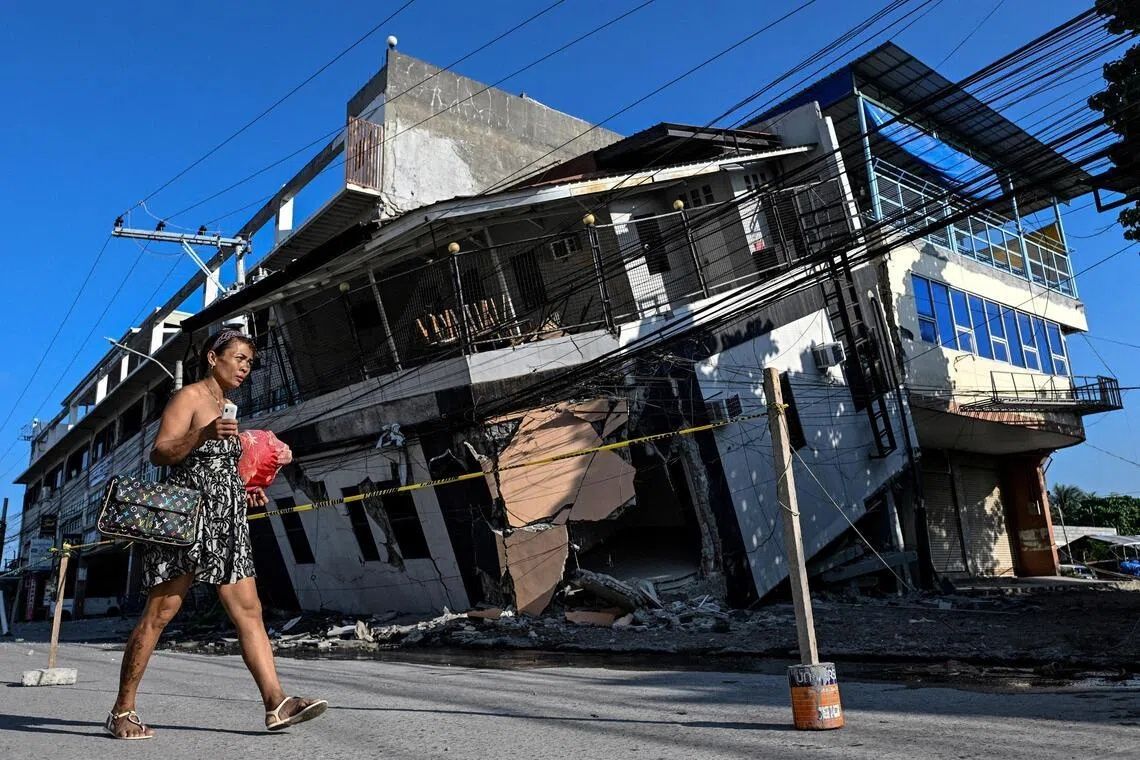
When the ground began shaking beneath his home last week, Arsenio Butil Jr., a fisherman and pastor in Glan, Sarangani province, fell to his knees in prayer. As the violent tremors subsided and he looked toward the shoreline he had known his entire life, he witnessed something extraordinary—vast expanses of coral and seabed that had been submerged moments earlier now stood exposed above the waterline. The June 8 earthquake, registering 7.8 on the magnitude scale, had fundamentally altered the landscape where he and thousands of others made their living from the sea.
The tremor was triggered by the movement of the Cotabato Trench, a major fault line located as close as 50 kilometres off the coast of Mindanao. Beyond reshaping the geography, the quake proved catastrophic for human life, killing at least 76 people across the island and triggering numerous landslides that destroyed homes and infrastructure. Yet perhaps no damage was more disorienting than what geological forces created through a phenomenon known as coastal uplift—the sudden vertical rise of land mass during seismic events. The trench, which has been a source of frequent seismic activity over decades, unleashed a violent release of accumulated tectonic energy that morning.
The physical transformation of the shoreline was startling in its permanence and scale. When journalists visited the affected areas, they discovered fishing vessels that had once bobbed at the water's edge now marooned on the wrong side of a jagged wall of dead coral that stretched for kilometres in both directions. According to Nane Danlag, a scientist at the Philippines' seismology centre, the seabed had risen approximately two metres in the most affected zones, extending the shore outward by as much as 200 metres in some locations. The change spanned a devastated coastal region stretching nearly 100 kilometres between two major towns, creating an entirely new landscape that residents no longer recognised.
Butil Jr. provided a vivid firsthand account of the violent geological forces at work. He described how the water had receded from the shore multiple times during the earthquake itself—between three and four distinct occasions, he recalled—before slowly returning, a terrifying rhythm that testified to the enormous energy being released beneath the surface. The experience left him in a state of profound shock. The quake was the strongest he had ever experienced in his lifetime, and the sight of fish dying and floating in the churning waters added to the sense of catastrophe unfolding around him. What had been a familiar, reassuring seascape became alien and threatening.
While scientists characterised the coastal uplift as a natural geological process that has been occurring for thousands of years in this tectonically active region, the human toll and psychological impact proved far more immediate and severe. In the hills above a neighbouring village, approximately 100 residents—men, women, and children—had established an encampment after fleeing to higher ground when the earthquake struck. Many remained too frightened to return to their destroyed homes on the coast. Datu Atom Malimpnig, a Maguindanaon chieftain, explained that the newly formed coastline had intensified anxieties among the displaced fishing families. The fear that gripped the evacuees was not merely about rebuilding; it centred on concerns that the seabed's sudden rise could portend a dangerous seismic surge or tsunami that might still come ashore.
The economic consequences extended beyond the fishing communities directly affected by displacement. At the Isla Jardin del Mar resort, located ten kilometres away from the most severely altered sections of coast, staff confronted a commercial crisis. Edzel Baylon, who worked at the resort, lamented how the geological transformation had fundamentally undermined the business model of the destination, which had marketed itself to tourists seeking a white sand beach holiday experience. The once-picturesque beachfront was now separated from the water by exposed, jagged coral formations. Where guests once swam in inviting waters, the sea had become shallower and far less suitable for the recreational activities that had drawn visitors. The dramatic environmental change overnight threatened the livelihoods of workers and the economic vitality of the region.
The earthquake's aftermath has been characterised by relentless seismic instability that has kept residents in a heightened state of anxiety. According to the Philippine seismology agency, more than 8,500 aftershocks have rattled the region since the initial June 8 event. This extraordinary swarm of follow-up tremors, while mostly minor in magnitude, has compounded psychological trauma and prevented residents from feeling safe enough to return to normal activities. Earlier in the year, in January, a swarm of thousands of smaller tremors had been recorded in the Cotabato Trench area. A United Nations disaster risk reduction report released in mid-May had cautioned that such seismic swarms could serve as precursors to larger earthquakes, a warning that proved tragically prescient.
In Glan, residents remained in a state of paralysis regarding their future. Butil Jr. and others in the community were reluctant to commence rebuilding efforts, not merely because their homes lay in ruins but because the ground itself bore the scars of the violence unleashed upon it. Deep cracks now fractured the earth across the affected areas, and their presence served as a stark warning. Residents feared that if another earthquake of comparable strength struck the region, these already-weakened sections of crust could fail catastrophically, potentially causing even greater destruction and loss of life. The visible damage to the earth itself became a psychological barrier to recovery, a physical reminder of vulnerability and the ever-present threat of further seismic activity.
The situation in southern Mindanao illustrates how geological forces operate on vastly different timescales than human recovery. While scientists explained that coastal uplift represents a natural process that has shaped tectonic margins for millennia, the compressed timeframe of disaster—sudden, violent, and followed by months of trembling uncertainty—leaves survivors struggling to comprehend and adapt. For Malaysia and the broader Southeast Asian region, where numerous fault lines and subduction zones similarly pose seismic hazards, the Philippine experience offers sobering lessons about disaster preparedness, the psychological dimensions of living through ongoing seismic events, and the importance of early warning systems. The transformation of Mindanao's coast serves as a geological reminder that the ground beneath Southeast Asia remains restless and capable of dramatic change.