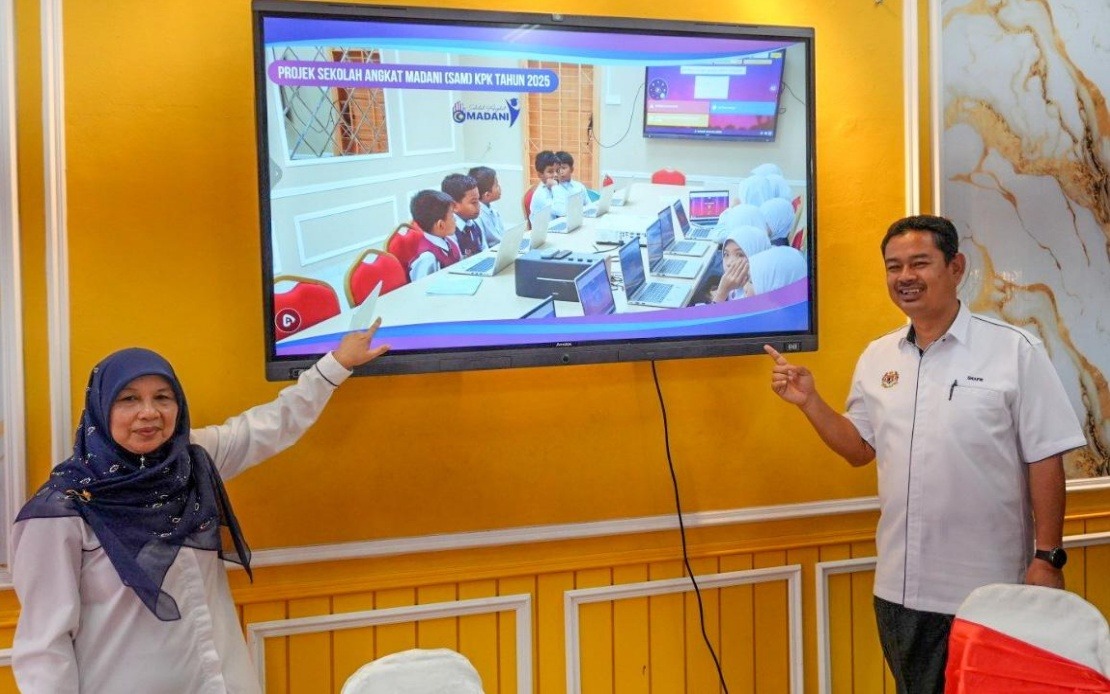
The Ministry of Plantation and Commodities unveiled a significant educational investment this week, channelling RM100,000 toward comprehensive upgrades at Sekolah Kebangsaan Bendang Kering in Kuala Kangsar. The handover ceremony, held at the school premises, was presided over by KPK deputy secretary-general Shafie Taib, signalling the government's direct commitment to narrowing the infrastructure divide between urban and rural educational institutions. This initiative forms part of a broader school adoption scheme designed to ensure that students in remote areas receive learning environments comparable to their urban counterparts.
The Malaysian Rubber Board, operating as the implementing agency under the ministry's oversight, orchestrated the programme's execution. This institutional arrangement reflects how government agencies are increasingly collaborating across departmental boundaries to tackle educational disparities. The partnership demonstrates a structured approach to rural development where established organisations leverage their administrative capacity to deliver tangible benefits to communities that have historically received less attention from major infrastructure programmes.
Infrastructure improvements constitute the foundation of the investment. The allocated funds have been deployed to rehabilitate the school's assembly area and main hall, spaces critical for collective student activities and school events. Reading corners have been established to encourage independent learning and foster a culture of literacy among younger pupils. Preschool classrooms, often overlooked in rural development schemes, received dedicated attention, acknowledging that early childhood education forms the bedrock of academic progression. These physical enhancements address a fundamental gap: many rural schools operate with deteriorating infrastructure that directly impacts student concentration and academic outcomes.
Technology integration represents a modern dimension of the upgrade. Interactive smartboards have been installed in classrooms, enabling educators to move beyond traditional chalk-and-board teaching methods toward more dynamic, visually engaging instruction. This technological infusion is particularly significant in rural contexts where access to contemporary educational tools has lagged behind urban schools. Air conditioning units were added to create comfortable learning spaces during Malaysia's humid climate, a practical consideration that influences student attendance and classroom productivity. Educational signage throughout the facility supports environmental learning and wayfinding, contributing to a more purposeful institutional atmosphere.
The furniture component addresses an often-underestimated factor in student welfare and performance. New classroom furniture improves ergonomic comfort during extended periods of study, reducing physical strain that can distract young learners. When combined with air conditioning and modern teaching aids, these physical improvements create a conducive ecosystem for learning rather than merely providing functional utilities. The holistic nature of the intervention suggests careful planning rather than ad-hoc spending, demonstrating how educational investment requires attention to multiple interconnected elements.
Beyond bricks and technology, the ministry has embedded academic enhancement mechanisms into the programme. A performance scheme targeting Malay, English, Science, and Mathematics identifies the core competencies essential for students' future advancement and economic participation. By providing targeted support and incentive structures, the scheme addresses academic gaps without resorting to punitive measures, instead motivating high achievers and those with improvement potential. This framework recognises that infrastructure alone cannot drive educational quality; deliberate pedagogical strategies and student encouragement are equally vital.
Character and leadership development initiatives complement the academic pillar. The Student Leadership Motivation Camp and Student Talent Development Camp represent investments in capabilities beyond examination performance. These programmes cultivate qualities—responsibility, communication, teamwork, and self-confidence—that employers and universities value increasingly. For rural students who may have limited exposure to formal leadership training, such opportunities level the playing field and expand their horizons beyond their immediate communities. The ministry's recognition that competitive advantage requires both academic prowess and personal development reflects contemporary thinking about what constitutes meaningful education.
The selection of SK Bendang Kering carries symbolic and practical significance. Rural Perak has traditionally faced resource constraints relative to Klang Valley and other urbanised regions. By highlighting this school in Kuala Kangsar district, the ministry signals that no student should be disadvantaged by geography. This messaging extends beyond one institution; it announces that rural communities warrant serious investment and belong within national development priorities. For parents and students in similar circumstances throughout Southeast Asia, such initiatives provide tangible evidence that quality education remains possible even beyond major urban centres.
The school adoption model presents implications for educational policy across the region. Rather than centralised mega-projects, targeted interventions at individual schools allow customisation to local needs and measurable outcomes. Malaysian policymakers, increasingly concerned with reducing regional disparities, may find this approach more efficient than broad-brush programmes. Other Southeast Asian nations facing similar rural-urban educational gaps might adapt this framework, particularly the integration of infrastructure, technology, and human development components within a single coherent programme.
Implementation fidelity will ultimately determine whether RM100,000 translates into sustained educational improvement. The ministry's confidence in the programme must be validated through subsequent monitoring of student outcomes, facility maintenance standards, and the actual uptake of leadership and talent development initiatives. For rural communities, the real test lies not in the inauguration ceremony but in whether students demonstrate improved academic performance, enhanced confidence, and expanded aspirations over the medium term. The question of how this single allocation will be sustained or supplemented in future budgeting cycles remains critical for long-term impact.
%22%2F%3E%3C%2Fpattern%3E%3C%2Fdefs%3E%3Crect%20width%3D%22100%25%22%20height%3D%22100%25%22%20fill%3D%22url(%23ph4w4yvg)%22%2F%3E%3Crect%20width%3D%22100%25%22%20height%3D%22100%25%22%20fill%3D%22url(%23ph4w4yvp)%22%2F%3E%3Ctext%20x%3D%2250%25%22%20y%3D%2250%25%22%20text-anchor%3D%22middle%22%20dominant-baseline%3D%22central%22%20fill%3D%22rgba(255%2C255%2C255%2C0.95)%22%20font-family%3D%22Georgia%2C%20'Times%20New%20Roman'%2C%20serif%22%20font-weight%3D%22700%22%20font-size%3D%22226%22%20letter-spacing%3D%22-0.02em%22%3EPenang%3C%2Ftext%3E%3C%2Fsvg%3E)