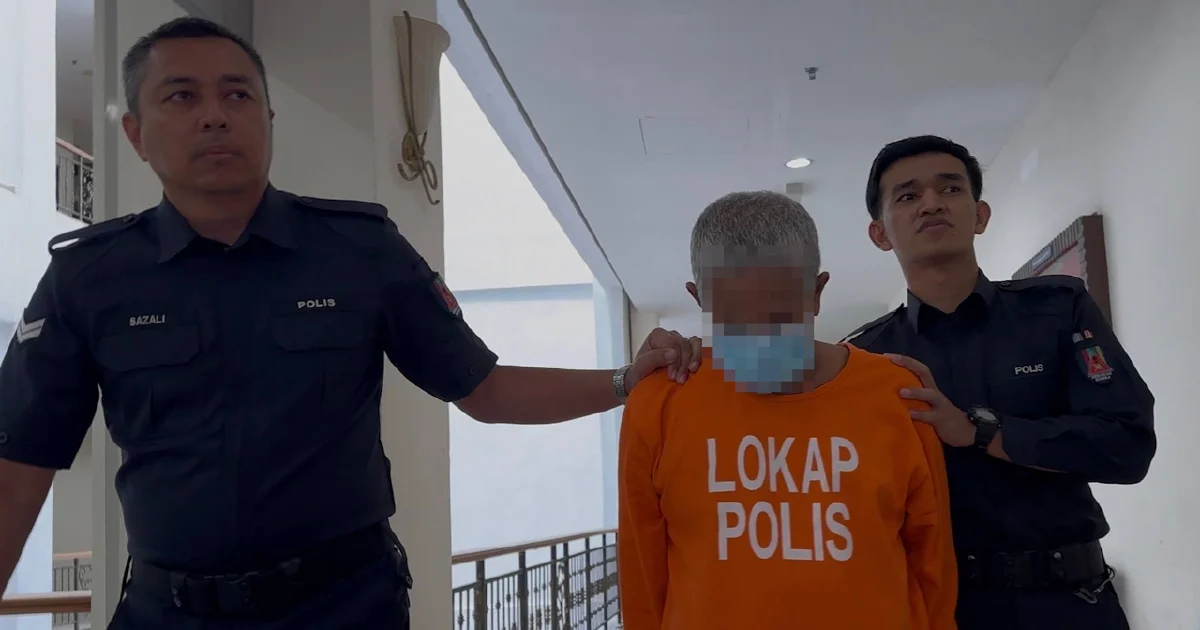
A 67-year-old pensioner in Muar has been handed down a 33-year prison sentence coupled with 14 strokes of the cane following his guilty plea to five charges involving the rape and sexual assault of his two granddaughters. The Sessions Court delivered the verdict after the elderly man admitted to all counts brought before him, bringing an end to proceedings that highlighted one of the most distressing categories of abuse within Malaysian family structures.
The case represents a particularly egregious breach of familial trust, as the perpetrator occupied a position that would normally command respect and care within the household hierarchy. The guilty plea streamlined the legal process, sparing the young victims the additional trauma that would have accompanied a contested trial and cross-examination. Such admissions in sexual assault cases involving children remain uncommon in Malaysian courts, making this outcome significant from a procedural standpoint.
The severity of the sentence—spanning more than three decades—reflects the judiciary's unequivocal stance towards intra-familial sexual crimes. Malaysian law recognises that abuse occurring within the family unit carries particular gravity, as it involves the violation of the fundamental duty of care that guardians owe to their charges. The imposition of both custodial punishment and corporal punishment signals the court's determination to deliver comprehensive justice across multiple dimensions of penalty.
Sexual abuse of children remains a persistent challenge within Malaysian society, though reporting mechanisms have improved markedly over the past decade. The Muar case underscores how perpetrators can exploit proximity, authority, and familial bonds to commit sustained abuse. Protection officers and child welfare advocates have increasingly emphasised that such crimes frequently occur within supposedly secure domestic environments, making parental vigilance and institutional safeguards essential components of child protection strategy.
The two granddaughters involved represent countless Malaysian children whose experiences of abuse have shaped their psychological development and trust in authority figures. Survivor support services, though expanding, remain unevenly distributed across the country, leaving many young people without adequate resources for trauma recovery. The prosecution and conviction in this case, while delivering judicial closure, simultaneously illuminates the broader ecosystem of vulnerability that requires systemic strengthening.
Corporal punishment, specifically the caning sentence component, remains legally permissible in Malaysia for serious offences despite ongoing international scrutiny and growing domestic debate about its efficacy. The 14-stroke punishment reflects the court's graduated response to the severity of the crimes admitted. Within Malaysia's criminal justice framework, caning serves as a supplementary penalty designed to reinforce the gravity of conviction, though debate continues about whether such measures meaningfully deter offenders or simply compound existing punishment regimes.
The guilty plea mechanism, while expediting resolution, also raises questions about access to legal representation and the degree to which vulnerable elderly persons fully comprehend the lifelong consequences of their admissions. Defence counsel's role in cases involving older accused persons who face substantial sentences involves navigating ethical obligations to clients while acknowledging overwhelming evidence of culpability. The swift conclusion suggests the defence strategy prioritised damage limitation over prolonged litigation.
For Malaysian families grappling with disclosure of intra-familial abuse, sentencing outcomes such as this provide both vindication and complex emotional terrain. The long incarceration removes the perpetrator from the household, yet the imprisonment of a family member—even one guilty of heinous crimes—generates secondary trauma and economic disruption. Extended sentences reflect judicial philosophy but cannot reverse the psychological harm inflicted during the abuse period.
The conviction carries implications for related child protection frameworks throughout Johor and beyond. Schools, medical practitioners, and social welfare personnel increasingly receive training in recognising indicators of sexual abuse, yet intergenerational abuse within closed family systems frequently evades detection. The Muar case reinforces the necessity of robust reporting channels and non-judgmental institutional responses when children disclose abuse involving family members.
Sentencing in sexual abuse cases necessarily balances retribution, deterrence, incapacitation, and rehabilitation—though the last objective appears limited when dealing with persons of advanced age serving multi-decade sentences. The 33-year term ensures the 67-year-old pensioner will likely spend his remaining years in custody, with release possibilities heavily contingent on legal review mechanisms and governmental clemency processes that remain administratively complex.
Moving forward, the case exemplifies why Malaysian society must strengthen preventative measures targeting vulnerable children in close-contact relationships with adults. Training family members to recognise grooming behaviours, establishing confidential reporting mechanisms in schools and healthcare settings, and reducing barriers to disclosure—particularly when the accused is a respected elder—represent essential directions for policy development across Malaysian institutions concerned with child welfare and protection.
%22%2F%3E%3C%2Fpattern%3E%3C%2Fdefs%3E%3Crect%20width%3D%22100%25%22%20height%3D%22100%25%22%20fill%3D%22url(%23ph4w4yvg)%22%2F%3E%3Crect%20width%3D%22100%25%22%20height%3D%22100%25%22%20fill%3D%22url(%23ph4w4yvp)%22%2F%3E%3Ctext%20x%3D%2250%25%22%20y%3D%2250%25%22%20text-anchor%3D%22middle%22%20dominant-baseline%3D%22central%22%20fill%3D%22rgba(255%2C255%2C255%2C0.95)%22%20font-family%3D%22Georgia%2C%20'Times%20New%20Roman'%2C%20serif%22%20font-weight%3D%22700%22%20font-size%3D%22226%22%20letter-spacing%3D%22-0.02em%22%3EPenang%3C%2Ftext%3E%3C%2Fsvg%3E)