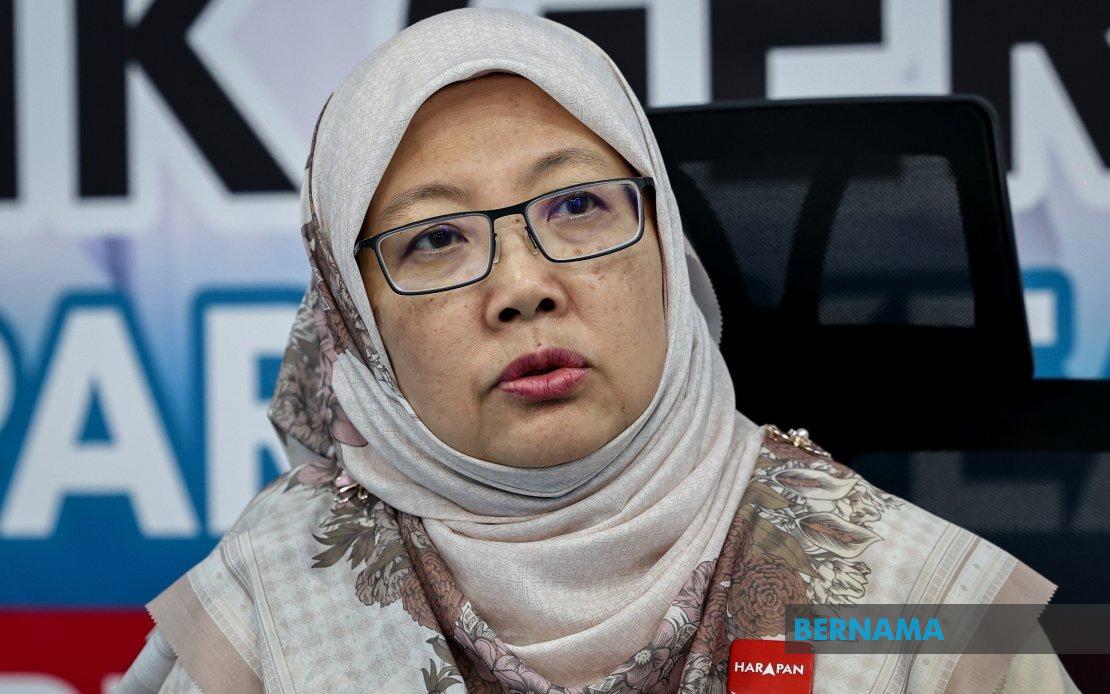
Pakatan Harapan has moved to settle constitutional questions surrounding the role of Johor's Sultan ahead of upcoming state elections, formally committing to honour the reigning monarch's prerogative to select the Menteri Besar should the opposition coalition gain enough seats to form government. The pledge represents PH's effort to deflect attention from questions about succession planning and redirect public discourse toward its policy platform, even as incumbent leaders continue to press the issue.
Johor PKR chairman Datuk Seri Dr Zaliha Mustafa articulated the position in a statement responding to recent comments by current Menteri Besar Datuk Onn Hafiz Ghazi, who had publicly urged PH to declare its candidate for the post well ahead of polling day. Rather than engage in the naming game, Dr Zaliha chose to emphasise the coalition's respect for constitutional arrangements, grounding her response in the Johor State Constitution 1895, which expressly vests appointment powers in the Sultan.
The constitutional question at stake carries historical weight in Malaysian politics. Johor's monarchical system has long been regarded as one of the country's strongest sultanates in terms of institutional independence and executive reach. By explicitly pledging fealty to these arrangements, PH appears intent on avoiding the perception of circumscribing royal authority—a fraught political territory in Malaysia's constitutional monarchy. The move also signals recognition that any electoral victory would still require the Sultan's formal approval and blessing, a reality that shapes coalition strategy.
Dr Zaliha's statement underscores PH's strategic calculation that naming a Menteri Besar candidate prematurely risks diverting campaign messaging away from bread-and-butter governance issues. The coalition has positioned itself as a challenger offering concrete solutions to economic challenges, job creation, and improved living standards for ordinary Johoreans. By insisting that policy proposals deserve centre stage rather than personality politics or succession intrigue, PH is attempting to set the terms of electoral debate and control the narrative around its competence to govern.
The incumbent's push for clarity on PH's preferred candidate likely stems from a desire to highlight potential divisions within the opposition or to force PH into premature commitments that could later become liabilities. In Malaysian state politics, the choice of chief minister carries immense symbolic and practical weight, and making that choice stick often depends on factional dynamics within winning coalitions. By pressing PH to name names, Onn Hafiz may be banking on exposing fractures or on creating ammunition for later criticism should the coalition win but struggle to command consensus around a successor.
From a broader Malaysian perspective, the Johor election reflects ongoing tensions between constitutional monarchy and democratic franchise. While elections determine which party or coalition commands the most seats in the state assembly, the Sultan retains discretionary power to decide who becomes chief executive. This dual dynamic has occasionally produced uncertainty and political drama in other Malaysian states, making it prudent for aspiring governments to emphasise their respect for royal prerogatives.
PH's emphasis on having multiple qualified leaders capable of handling the Menteri Besar's responsibilities reflects another layer of political calculation. By suggesting that the coalition possesses a deep bench of experienced administrators, PH implies that the specific identity of the eventual appointee matters less than the coalition's overall capacity to deliver effective governance. This framing also hedges against the possibility that internal negotiations or factional interests might ultimately constrain PH's choice, should voters deliver a mandate.
The statement further signals that PH intends to compete on substance rather than personality or succession drama. In Malaysian electoral contests, voters are increasingly attentive to concrete policy offerings—economic plans, infrastructure proposals, education initiatives, and social welfare commitments. By refusing to be drawn into pre-election speculation about who will hold the top post, PH is attempting to keep voter attention focused on comparative governmental capacity and vision for the state's future direction.
For Malaysian observers, this exchange illuminates how state-level elections operate within Malaysia's constitutional framework. Unlike some democracies where executives are elected directly, Malaysia's system channels voters' choices through state assemblies, which then deal with the sovereign's role in selecting the chief minister. This arrangement has occasionally produced surprise outcomes or forced coalitions to negotiate intensively with the Crown, reminding political actors that electoral victories do not automatically guarantee ministerial positions.
The Johor contest also reflects competitive dynamics between Pakatan Harapan and Barisan Nasional in a state where both coalitions maintain significant organisational capacity and voter support. By committing early to constitutional respect and emphasising policy substance, PH is working to present itself as a stable, institutionally-minded alternative government capable of stewarding a major Malaysian state. The strategy implicitly acknowledges that voters want reassurance about both policy direction and governmental stability.
Looking forward, the Johor election will test whether PH's emphasis on governance and policy resonates more powerfully than Barisan's incumbent advantage and appeals to continuity. The coalition's decision to refrain from naming a Menteri Besar candidate also preserves internal flexibility, allowing PH to make final decisions about leadership once the electoral arithmetic becomes clear. This tactical positioning, while potentially frustrating to journalists and observers seeking clarity, reflects pragmatic recognition of how Malaysian politics actually operates at the intersection of democratic choice and constitutional monarchy.
%22%2F%3E%3C%2Fpattern%3E%3C%2Fdefs%3E%3Crect%20width%3D%22100%25%22%20height%3D%22100%25%22%20fill%3D%22url(%23ph4fp9sg)%22%2F%3E%3Crect%20width%3D%22100%25%22%20height%3D%22100%25%22%20fill%3D%22url(%23ph4fp9sp)%22%2F%3E%3Ctext%20x%3D%2250%25%22%20y%3D%2250%25%22%20text-anchor%3D%22middle%22%20dominant-baseline%3D%22central%22%20fill%3D%22rgba(255%2C255%2C255%2C0.95)%22%20font-family%3D%22Georgia%2C%20'Times%20New%20Roman'%2C%20serif%22%20font-weight%3D%22700%22%20font-size%3D%22320%22%20letter-spacing%3D%22-0.02em%22%3EKTMB%3C%2Ftext%3E%3C%2Fsvg%3E)