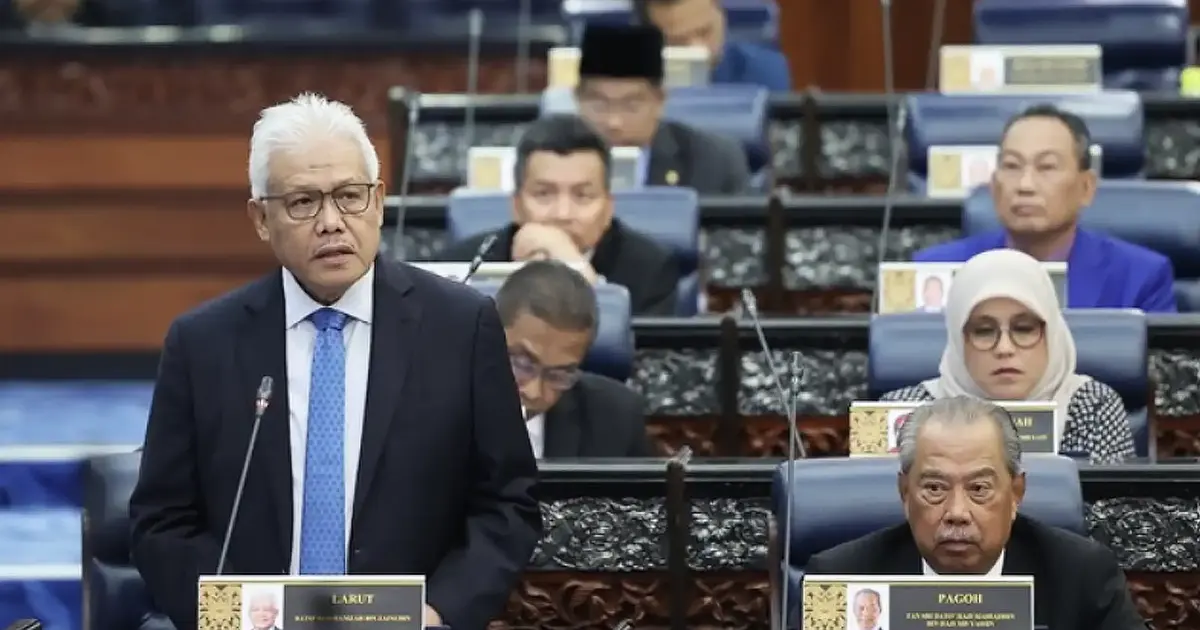
Hamzah Zainudin has returned to the opposition leader's prominent front-row position in the Dewan Rakyat, signalling a reshuffling of parliamentary hierarchy that reflects the ongoing flux within Malaysia's political opposition bloc. The repositioning has displaced Bersatu president Muhyiddin Yassin, who previously occupied the seat beside the opposition leader's bench, now finding himself eight seats removed from that prime parliamentary location.
The seating rearrangement in parliament's lower house carries symbolic weight beyond mere administrative convenience. In Westminster-style legislatures, the physical positioning of opposition figures carries immediate political significance, as the front rows command direct eye contact with the government and maximise media visibility during parliamentary proceedings. The movement underscores the competitive dynamics at play within Malaysia's opposition coalition, where different blocs continue to jostle for recognised leadership and leverage.
Muhyiddin's previous proximity to the opposition leader's seat reflected his status as head of Bersatu, a party that has fundamentally reshaped Malaysian politics since its formation. The party emerged from the fractured remains of the United Malays National Organisation and quickly became a pivotal kingmaker in successive governments. His positioning in the opposition benches had represented Bersatu's attempt to maintain a leadership identity independent from other opposition components, a posture reinforced by his previous tenure as prime minister from 2020 to 2021.
Hamzah's restoration to the premier opposition seat likely signals broader recognition of the Democratic Action Party's continued relevance as the longest-serving opposition force in Malaysian parliament. His party has maintained consistent representation across multiple parliamentary cycles and carries substantial weight in Chinese-majority constituencies and urban battlegrounds. The return to the frontmost opposition position may also reflect institutional acknowledgement of the DAP's organisational strength and parliamentary experience relative to newer entrants to the opposition benches.
The timing of this parliamentary reconfiguration warrants attention given Malaysia's current political landscape. With the government maintaining its majority through the unity coalition formed in late 2022, the opposition has been working to establish credible alternative messaging and develop policy platforms for potential future electoral competition. The seating arrangements within parliament become part of this broader positioning strategy, determining which leaders receive visual prominence during televised parliamentary sessions and which parties project themselves as the opposition's public face.
Previous iterations of Malaysian government have witnessed similar musical chairs within parliamentary seating, often correlating with shifts in coalition composition or recognition of party hierarchies. The Pakatan Harapan coalition that governed from 2018 to 2020 went through multiple reconfigurations of front-bench prominence as its constituent parties negotiated their relative standing. The transition to Perikatan Nasional and subsequently to the broader unity government further scrambled these arrangements, with different configurations reflecting the momentary balance of power.
For Bersatu specifically, the movement down the parliamentary hierarchy marks another step in the party's complex trajectory. Despite its earlier kingmaker status and Muhyiddin's own service as prime minister, the party has struggled to establish a consistent political identity and has faced internal challenges. Its decision to align with the unity government rather than leading opposition efforts may have contributed to reduced parliamentary prominence, though the party maintains substantial legislative numbers from the 2022 elections.
The practical implications for parliamentary proceedings remain significant. Opposition leader seating arrangements determine who leads questioning of government ministers, who receives preferential recognition from the Speaker during debates, and whose facial expressions during government announcements receive camera attention. These procedural advantages translate into political messaging capacity and can influence how opposition narratives gain traction in public discourse and media reporting.
Regional observers of Malaysian politics will note that opposition cohesion remains fragile despite tactical cooperation. The opposition's numerical strength fluctuates based on defections and coalitional arrangements, and symbolic gestures like seating positions become especially important when parliamentary arithmetic remains tight. Clear designation of opposition leadership through front-row positioning helps stabilise expectations around which figures speak for the opposition bloc during critical legislative moments.
The reconfiguration also reflects ongoing processes of opposition party renewal and repositioning. Following a period of governing through various arrangements, opposition parties must rebuild their images as credible alternatives. Hamzah's return to prominence positions the DAP as a visible voice during parliamentary scrutiny of government policy. This enhanced visibility becomes crucial as opposition parties prepare for electoral competition, particularly in constituencies where voters may have limited awareness of opposition leadership beyond parliamentary television appearances and news coverage.
Looking forward, parliamentary seating arrangements will likely continue evolving as opposition coalitions negotiate their composition and messaging strategy. The current positioning suggests that established opposition parties with long institutional histories may be reasserting influence over newer formations. Whether this translates into substantive policy coordination or remains purely symbolic will depend on broader developments within the opposition coalition and evolving dynamics with the government benches.
The shift ultimately illustrates how parliament functions simultaneously as a legislative body and as a stage for political positioning. While Dewan Rakyat procedures and debate rules govern the mechanics of legislation, the visual and symbolic dimensions of parliamentary work remain equally consequential for political competitors seeking to establish authority, visibility, and claims to leadership within Malaysia's fractious opposition landscape.