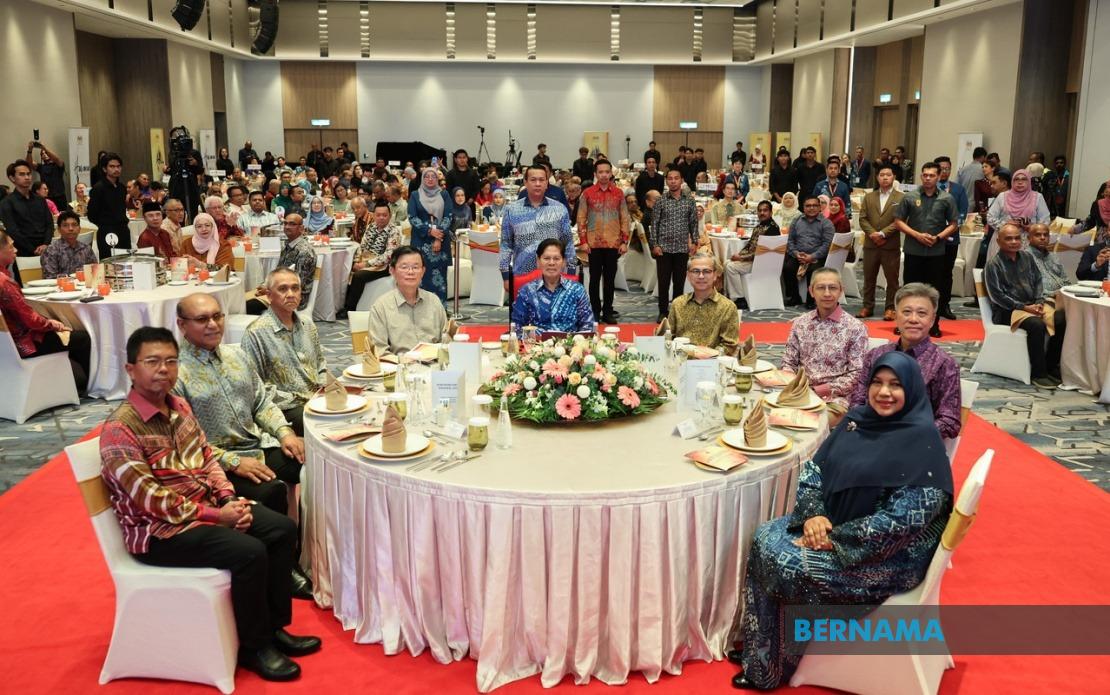
Penang has become the focal point of Malaysia's media community this week as the state hosts the National Journalists' Day celebrations, known as HAWANA 2026, drawing recognition from state leadership for facilitating what has become a significant platform for the journalism fraternity. The initiative to decentralise these annual observances across different states represents a strategic shift in how the country celebrates and engages with its media practitioners, moving beyond the confines of a single location to build broader national participation and appreciation. Penang Governor Tun Ramli Ngah Talib expressed his satisfaction with this approach, emphasising that the rotation model enables communities throughout Malaysia to develop a deeper understanding of journalism's fundamental contribution to national progress and social development.
The selection of Penang as this year's host carries particular significance for the state, which has positioned itself as a progressive, economically dynamic centre within the Malaysian federation. Tun Ramli framed the honour within the broader context of Penang's development trajectory, suggesting that hosting this media industry gathering reinforces the state's standing as a modern, competitive hub. The symbolic importance extends beyond logistics; having such a prominent national event held in Penang amplifies the state's visibility internationally and domestically, particularly among influential media figures and communication professionals.
The HAWANA 2026 programme has attracted substantial participation, with approximately one thousand media practitioners assembling in Penang since the previous day, creating one of the largest gatherings of journalists in the region for this event. The delegate composition reflects the expanded geographic scope of modern journalism in Southeast Asia, with representation from multiple ASEAN nations alongside Malaysian media organisations. This regional dimension transforms HAWANA from a domestic recognition ceremony into a platform for cross-border professional networking and knowledge exchange among journalists operating across diverse media landscapes.
The gala dinner held the evening before Tun Ramli's comments drew nearly 350 attendees representing the upper echelon of Malaysia's media establishment. The guest list encompassed editors-in-chief, senior management of both local and international news organisations, veteran journalists whose careers have spanned decades, and government officials. Communications Minister Datuk Fahmi Fadzil's presence underscored the government's institutional commitment to recognising press contributions, while international representation, including Timor-Leste's Secretary of State for Social Communication Expedito Loro Dias Ximenes, illustrated the pan-regional dimensions of contemporary journalism collaboration.
The overarching theme selected for HAWANA 2026—'Media Integrity Strengthens Credibility'—reflects a conscious emphasis on professional standards within an increasingly fragmented information environment. The choice of this thematic direction suggests recognition among organisers that journalism's societal value depends fundamentally on maintaining ethical practices and trustworthiness. For Malaysian media practitioners, this theme carries particular weight as the industry navigates challenges including digital disruption, audience polarisation, and evolving definitions of credible news sourcing in an era of rapid technological change.
Tun Ramli articulated a comprehensive vision of journalism's multifaceted role in modern society, describing media practitioners as essential bridges for information dissemination, catalysts for intellectual discourse, and architects of an informed citizenry. This framing positions journalism not merely as a commercial enterprise or entertainment medium but as a foundational institution within democratic societies. The governor's language emphasised that recognising individual journalists through events like HAWANA serves broader societal interests by validating the profession's contribution to national knowledge-building and civic development.
The HAWANA framework specifically creates structured recognition for veteran journalists whose lengthy careers have shaped Malaysia's media landscape across periods of significant national transformation. By formally honouring these individuals alongside contemporary practitioners, the event acknowledges journalism as a continuity of professional practice and institutional memory. This multi-generational approach strengthens professional cohesion within the media fraternity and provides emerging journalists with tangible reminders of institutional values and standards established by their predecessors.
Beyond individual recognition, HAWANA functions to consolidate professional networks and cooperative relationships among media organisations operating across Malaysia and Southeast Asia. Tun Ramli specifically noted this dimension, highlighting how the gathering strengthens bonds between domestic and regional media entities. For a region characterised by diverse political systems, economic conditions, and information ecosystems, such regular professional convening creates valuable channels for informal dialogue and best-practice sharing among journalists confronting similar operational challenges.
The coordination between the Communications Ministry and the Malaysian National News Agency (Bernama) as the implementing body reflects a structured institutional approach to professionalising the media sector. Bernama's leadership role across the HAWANA 2026 Working Committee positions the national news agency as steward of journalistic standards, a function that carries symbolic weight within Malaysia's media governance framework. The involvement of multiple government levels—federal ministry, state government, and individual state officials—demonstrates how media recognition has become integrated into broader government communications strategy.
Prime Minister Datuk Seri Anwar Ibrahim's planned officiation of the main HAWANA 2026 event at the PICCA Convention Centre @ Butterworth Arena signals the highest levels of political endorsement for journalism as an institution. When sitting heads of government commit their presence to media industry gatherings, such appearances communicate official acknowledgement of the press's role in governance and public discourse. This public validation occurs at a moment when journalism globally faces questions about institutional credibility and societal relevance, making prime ministerial participation particularly symbolically significant.
For Malaysian media organisations and individual journalists, particularly those based outside Kuala Lumpur, hosting HAWANA in Penang represents an opportunity to participate in professional recognition and networking without the logistical burden of travelling to the capital. This decentralisation effect may prove consequential for strengthening professional identity and cohesion among journalists dispersed across Malaysia's peninsula and East Malaysian states. By rotating hosting responsibilities, the government effectively signals that journalism's value transcends geographic boundaries and that regional media communities merit equivalent recognition to their metropolitan counterparts.
The participation of international media representatives and ASEAN journalists underscores how journalism operates increasingly within transnational professional frameworks. Events like HAWANA facilitate the emergence of regional journalistic standards and ethical frameworks that transcend national boundaries, contributing to gradual harmonisation of professional practices across Southeast Asia. For Malaysian journalists, such exposure to international media practitioners and comparative professional contexts enriches individual expertise and contributes to knowledge transfer regarding innovations in reporting, digital journalism, and audience engagement methodologies.
%22%2F%3E%3C%2Fpattern%3E%3C%2Fdefs%3E%3Crect%20width%3D%22100%25%22%20height%3D%22100%25%22%20fill%3D%22url(%23ph2z7t1g)%22%2F%3E%3Crect%20width%3D%22100%25%22%20height%3D%22100%25%22%20fill%3D%22url(%23ph2z7t1p)%22%2F%3E%3Ctext%20x%3D%2250%25%22%20y%3D%2250%25%22%20text-anchor%3D%22middle%22%20dominant-baseline%3D%22central%22%20fill%3D%22rgba(255%2C255%2C255%2C0.95)%22%20font-family%3D%22Georgia%2C%20'Times%20New%20Roman'%2C%20serif%22%20font-weight%3D%22700%22%20font-size%3D%22272%22%20letter-spacing%3D%22-0.02em%22%3EAnwar%3C%2Ftext%3E%3C%2Fsvg%3E)