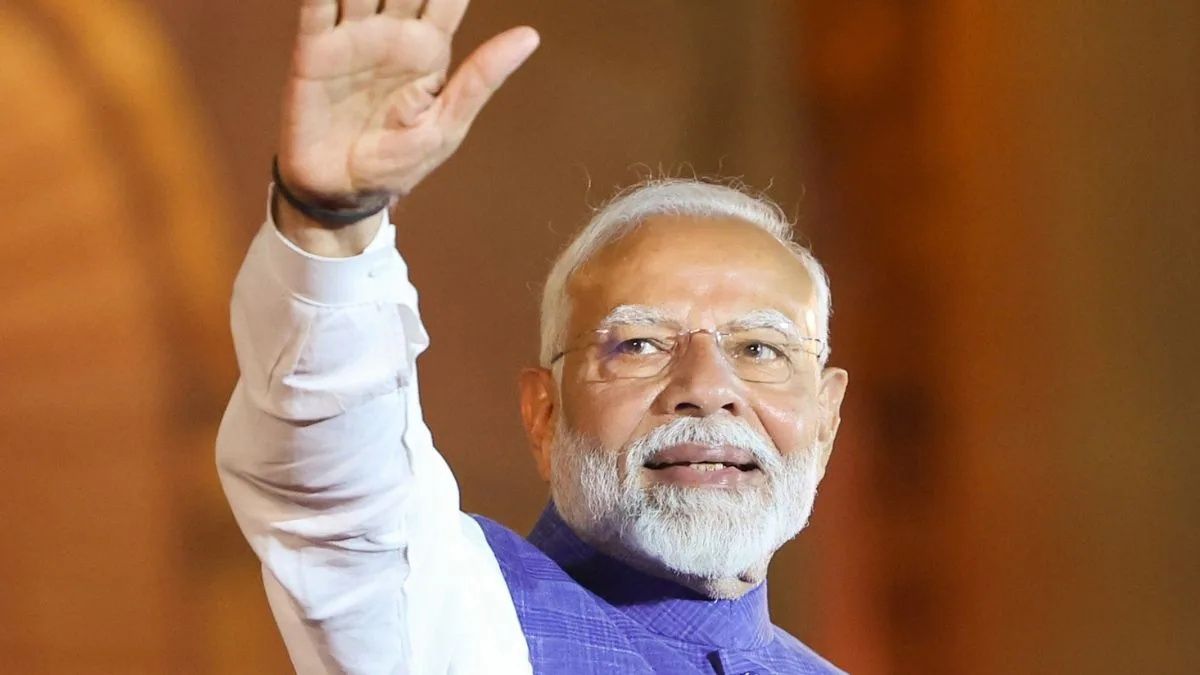
Prime Minister Narendra Modi will spearhead India's 12th International Day of Yoga celebrations from Kolkata's historic Red Road on Sunday, June 21, marking a significant moment for both the wellness movement and India's broader political narrative. The early morning gathering in the "City of Joy" will feature thousands of participants engaged in demonstrations of the Common Yoga Protocol, alongside government dignitaries and ordinary citizens united in practising this ancient discipline.
The selection of Kolkata as the host city carries substantial political implications beyond the surface celebration of yoga. The timing arrives on the heels of the Bharatiya Janata Party's decisive victory in West Bengal's recent Assembly elections, displacing the Trinamool Congress from its decades-long hold on power. Senior BJP leadership has signalled that the state will receive heightened attention and resources in the coming years, with party figures pledging accelerated development initiatives to address what they characterise as historical administrative shortcomings. The choice of venue thus functions as both ceremonial commitment and symbolic assertion of new governance priorities in the eastern state.
Red Road itself represents a carefully deliberate choice as the epicentre for India's national yoga observance. One of Kolkata's most significant public spaces, the venue embodies layers of historical importance spanning military heritage, civic engagement, and environmental consciousness. By anchoring the celebration here, organisers project yoga not as a peripheral wellness activity but as central to contemporary Indian civic life and cultural identity. The symbolism resonates particularly in a city known for its intellectual and political activism, positioning yoga as compatible with progressive values rather than exclusively aligned with particular ideological movements.
The 12th International Day of Yoga operates under the overarching theme "Yoga for Healthy Ageing," reflecting global demographic realities. India's Ministry of Ayush has constructed this framework around a compelling observation: lengthening lifespans present both opportunity and challenge. Union Minister Prataprao Jadhav articulated the fundamental tension—while increased longevity is a genuine achievement, ensuring those additional years remain characterised by physical vitality, mental sharpness, and meaningful engagement represents the more complex undertaking. Yoga, the ministry contends, offers a time-tested pathway addressing this multidimensional challenge through integrated approaches to physical conditioning, psychological well-being, and overall quality of life enhancement.
The scale of participation this year demonstrates unprecedented institutional mobilisation. The Ministry's Yoga Sangam Portal has registered over 600,000 organisations, an expansion reflecting both governmental promotion and genuine grassroots enthusiasm. These registered entities span educational institutions, corporate organisations, community groups, and civic bodies across India and abroad. The portal's success indicates that yoga advocacy has transcended niche wellness circles to permeate mainstream institutional structures, fundamentally reshaping how major Indian organisations conceptualise employee and community health programming.
International participation underscores yoga's evolution from localised practice to globally recognised wellness methodology. Approximately 2,500 organised events will occur worldwide, coordinated through 211 Indian diplomatic missions operating overseas. This dispersion represents both India's soft power strategy and genuine international demand for yoga-based wellness solutions. For Malaysian and Southeast Asian readers, the international scope warrants attention—yoga infrastructure is expanding rapidly throughout the region, often utilising frameworks developed through India's state-sponsored initiatives. Understanding these patterns helps contextualise the growing professionalization and institutionalisation of yoga instruction across Southeast Asia.
Kolkata's preparatory activities have cultivated momentum preceding the main event. An initiative titled "Daud Se Dhyan 2026 – From Movement to Stillness" operated under the broader Swachhata Se Swagat Programme, integrating health promotion with civic cleanliness and environmental responsibility. This complementary programming approach reveals how Indian authorities conceptualise yoga beyond isolated physical practice—as foundational to comprehensive wellness systems encompassing sanitation, environmental stewardship, and community consciousness. The initiative's framing demonstrates yoga's utility as integrative platform for multiple governance objectives.
The Ministry of Culture's parallel initiative to conduct yoga programming at 100 iconic locations nationwide adds cultural dimension to the wellness narrative. These venues, selected for historical and cultural significance, position yoga as descendant of India's heritage traditions rather than modern import. The approach appeals to cultural nationalist constituencies while simultaneously promoting international wellness standards, effectively bridging nationalist and cosmopolitan frameworks through yoga's symbolic flexibility. For a diverse nation managing competing identity narratives, this strategic placement proves strategically useful.
West Bengal government directives imposing mandatory participation in International Day of Yoga celebrations for all government employees merit critical examination. Requiring public sector staff to participate at designated venues represents significant mobilisation of state apparatus, effectively transforming a voluntary health initiative into a compliance obligation. Participation channels include workplace celebrations, residential complexes, and major venues like Red Road and Milan Mela grounds, creating multiple enforcement mechanisms. This mandatory framework raises questions about voluntary participation's nature—while authorities may frame participation as pro-health, institutional compulsion alters the character of engagement fundamentally.
For regional observers in Malaysia and Southeast Asia, India's Yoga Day expansion holds particular relevance. As Southeast Asian nations increasingly prioritise wellness and preventive health approaches, India's systematic promotion of yoga through state-sponsored celebrations, diplomatic networks, and institutional registration provides an instructive model. The integration of wellness messaging with cultural nationalism and political messaging—whether explicit or subtle—offers lessons regarding how health initiatives become intertwined with broader governance narratives. Understanding these dynamics proves essential for regional policymakers considering similar wellness promotion strategies.
The convergence of spiritual practice, geopolitical positioning, public health messaging, and electoral politics in India's International Day of Yoga celebrations reflects contemporary governance complexity. While yoga's physical and psychological benefits remain substantively documented and uncontested, the framework through which India's government presents and promotes these benefits incorporates multiple layers of strategic calculation. The Kolkata gathering will undoubtedly showcase impressive mass participation and genuine wellness enthusiasm, yet observers should maintain simultaneous awareness of the political contexts and broader governance objectives conditioning how this ancient practice has been revived and reimagined for contemporary India.