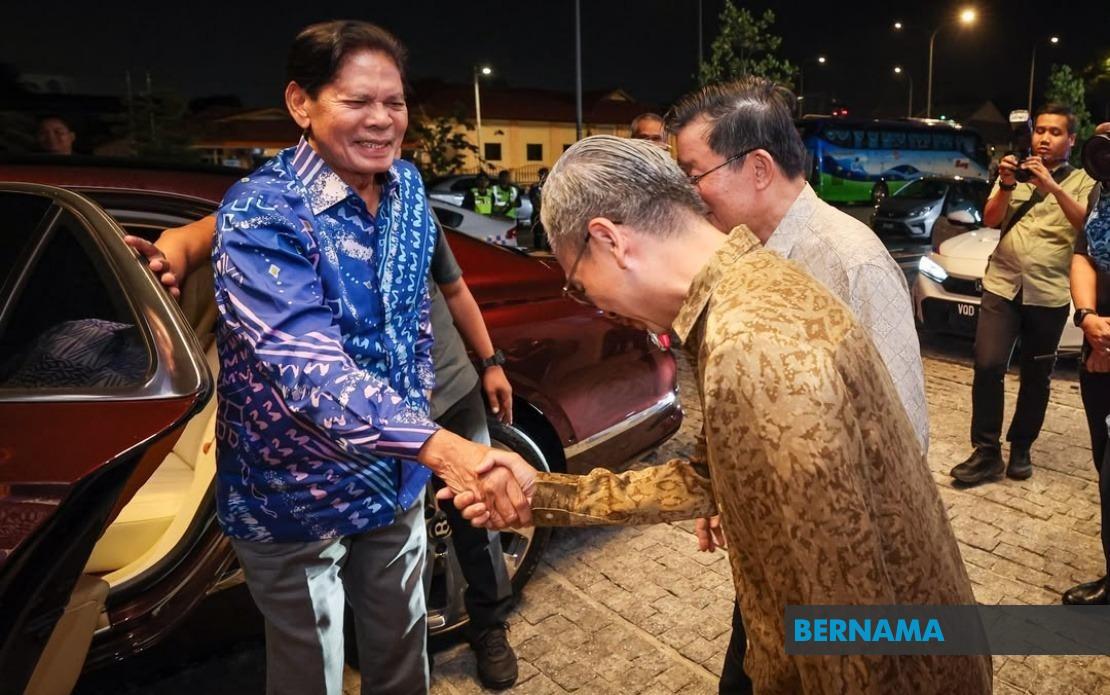
Penang Governor Tun Ramli Ngah Talib brought together nearly 350 media professionals from across Malaysia and the broader ASEAN region at a prestigious dinner on June 19, marking the eve of National Journalists' Day (HAWANA) 2026 celebrations in Butterworth. The gathering reflected the state government's appreciation for the indispensable contributions that journalists and media organisations make to the nation's democratic fabric and socioeconomic progress. The event demonstrated official recognition of media's evolving role in an increasingly complex information landscape where credibility and integrity have become paramount concerns for both public discourse and institutional trust.
The dinner attracted an impressive cross-section of Malaysia's media leadership, with representation from virtually every major news organisation operating in the country. Present were Penang Chief Minister Chow Kon Yeow and Communications Minister Datuk Fahmi Fadzil, alongside senior civil servants including Penang State Secretary Datuk Seri Zulkifli Long and Communications Ministry Secretary-General Datuk Abdul Halim Hamzah. The attendance of such high-ranking officials underscored the government's commitment to positioning journalism and press freedom as central to Malaysia's development agenda, a message particularly significant given contemporary global challenges to media independence and the spread of misinformation.
Among the media figures honoured were Bernama Chairman Datuk Seri Wong Chun Wai and Chief Executive Officer Datin Paduka Nur-ul Afida Kamaludin, whose national news agency remains pivotal to Malaysia's information infrastructure. Editors-in-chief from the country's most influential publications attended, including Sin Chew Daily's Chan Aun Kuang, the New Straits Times Group's Farrah Naz Karim, and representatives from Star Media Group, Daily Express Sabah, and Astro Awani. This breadth of participation reflected the collaborative spirit underlying HAWANA 2026, transcending the competitive dynamics that typically characterise the media industry to emphasise shared professional values and collective responsibility to audiences.
The international dimension of the event proved particularly noteworthy, with delegations from several ASEAN and Asian nations participating. Timor-Leste's Secretary of State for Social Communication Expedito Loro Dias Ximenes attended, alongside Noemio Mateus Soares Falcao, president of Timor-Leste's national news agency TATOLI. Indonesian media representatives, including the Indonesia chapter president of the Ikatan Setiakawan Malaysia-Indonesia (ISWAMI) Asro Kamal Rokan and ANTARA Bureau Chief Rangga Pandu Asmara Jingga, also graced the occasion. This international presence signalled HAWANA's growing prominence as a regional platform for professional discourse among Southeast Asian media communities, fostering cross-border understanding and cooperation at a time when journalism faces unprecedented challenges from technological disruption and pressures on traditional funding models.
The HAWANA 2026 celebrations themselves represent a significant moment for Malaysia's media sector. Approximately 1,000 journalists and media practitioners from Malaysia and across ASEAN had converged in Penang by the time of the dinner, with the main event scheduled for the following day at the PICCA Convention Centre at Butterworth Arena. Prime Minister Datuk Seri Anwar Ibrahim was set to provide the official launch, lending government's highest-level endorsement to an initiative focused on professional journalism standards. The theme, 'Media Integrity Strengthens Credibility', directly addresses contemporary anxieties about fake news, misinformation, and the erosion of public trust in institutions—concerns that resonate deeply across Malaysia and Southeast Asia, where digital literacy remains variable and false narratives can have genuine political and social consequences.
The broader HAWANA 2026 programme extends well beyond the professional gathering of journalists. A three-day carnival branded RIUH Pi HAWANA commenced the evening of the dinner, designed to engage the general public in celebrating media and creative culture. Expected to draw approximately 30,000 visitors, the carnival represents an effort to democratise conversations about journalism and media literacy beyond the professional sphere. This public engagement dimension acknowledges that media credibility ultimately depends on audience understanding and appreciation of journalistic standards, making community involvement essential to the sustainability of professional journalism in an era when many citizens obtain news through social media rather than traditional outlets.
The carnival itself showcases Malaysia's creative industries, featuring more than 24 local creative product brands and 20 food and beverage vendors, thereby connecting media celebration with broader cultural and economic narratives. Sixteen stage performances featuring established Malaysian artists including Exists, Bunkface, Masdo, Sakura Band, Budak Nakal Hujung Simpang, and Chelsea Ng are scheduled, with free public admission. This programming reflects a sophisticated understanding that celebrations of professional journalism must also celebrate the creative expression and cultural vitality that independent media systems enable and protect. The inclusion of interactive workshops allowing visitors to engage in creative activities suggests recognition that media literacy and creative engagement are increasingly intertwined in the digital age.
For Malaysia specifically, HAWANA 2026 arrives at a moment when the relationship between government, media, and public has undergone considerable evolution. The post-2018 political transition reshaped expectations around press freedom and government accountability, establishing precedents that successive administrations have attempted to maintain despite institutional pressures. The gathering in Penang, with its official endorsement spanning from state and federal levels, signals institutional commitment to professional journalism as essential infrastructure for democratic governance and economic development. Significantly, the presence of international delegates demonstrates that Malaysian media continues to command regional respect and that professional journalistic standards remain aspirational across Southeast Asia.
The event also reflects broader structural shifts in Malaysia's media landscape. Traditional print and broadcast organisations remain well-represented, yet the inclusion of digital-native and alternative media voices suggests recognition that journalism's future encompasses diverse formats and platforms. The participation of both legacy media executives and younger journalists creates opportunities for intergenerational dialogue about how professional standards translate across evolving technological contexts. This is particularly important in Malaysia, where social media consumption rivals or exceeds traditional news consumption among younger demographics, yet concerns about misinformation and coordinated disinformation campaigns persist.
For regional observers, HAWANA 2026 illuminates how Southeast Asian democracies grapple with press freedom challenges in an era of technological disruption and geopolitical tension. Malaysia's approach—combining state recognition of journalism's professional importance with space for diverse media voices and public engagement—offers one model among various approaches in the region. The theme of media integrity speaks to concerns shared across ASEAN about maintaining public trust amid information abundance and the challenge of distinguishing credible reporting from propaganda or deliberate falsehoods. The international participation suggests that these conversations transcend national boundaries, with media practitioners across the region recognising common professional interests and standards despite competitive commercial dynamics and different regulatory environments.