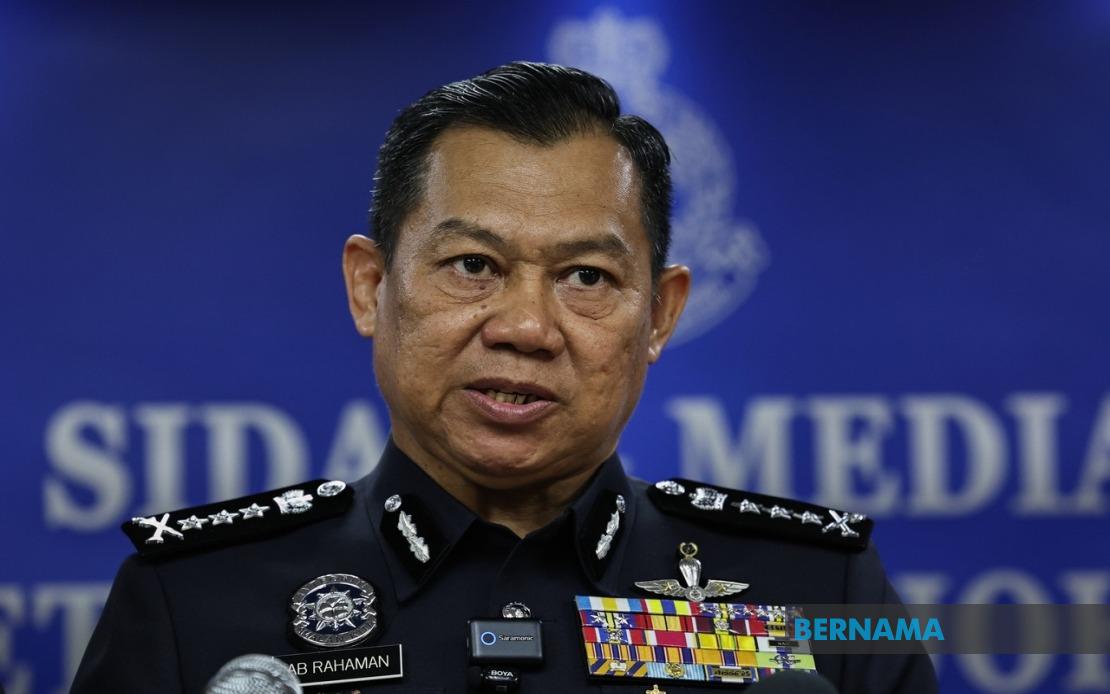
The Royal Malaysia Police has committed a substantial force of 11,926 officers and personnel to oversee the Johor State Election, reflecting the scale of security arrangements required for the poll. Johor Police Chief Datuk Ab Rahaman Arsad outlined the comprehensive deployment strategy during a briefing at the Johor Police Contingent Headquarters, emphasising the phased approach designed to respond flexibly to evolving operational circumstances.
The five-phase deployment structure represents a standard operational protocol refined through decades of managing electoral processes across Malaysia's states. Rather than maintaining a fixed presence throughout, the phased approach allows police resources to concentrate personnel where and when they are most needed, whether during candidate registration, campaign activities, polling day itself, or the subsequent counting and results announcement period. This flexibility acknowledges that different phases of an election cycle present distinct security challenges and public order considerations.
Johor presents particular operational complexities that justify the substantial personnel commitment. As Malaysia's second-largest state by population and a crucial political battleground, Johor elections attract intense attention from rival political factions and engage a geographically dispersed electorate across urban, suburban, and rural constituencies. The state's position as a major economic hub adjacent to Singapore also means that maintaining order and preventing disruptions carries wider implications for regional stability and investor confidence.
Beyond the core PDRM deployment, law enforcement coordination extends to specialised units under the Internal Security and Public Order Department (KDNKA), which contribute an additional 54 officers and 701 personnel. These reinforcements draw from the General Operations Force, Federal Reserve Unit, PDRM Air Unit, and Marine Police Force, each bringing distinct capabilities. The General Operations Force brings paramilitary training suitable for managing civil disturbances, while the Federal Reserve Unit functions as a rapid-response contingency force. Air and marine units enable surveillance and mobility across Johor's extensive geography, including approaches to the state's numerous coastal areas and islands.
The integrated command structure reflects how modern Malaysian elections depend on seamless coordination across multiple enforcement hierarchies. Centralising decision-making while distributing tactical responsibility across specialist units allows senior commanders like Datuk Ab Rahaman to respond rapidly to emerging situations without micromanaging field operations. This architecture proved essential during recent elections, where social media amplified tensions and required police to distinguish genuine security threats from ordinary campaign rhetoric.
Election security in Johor must account for the state's historical significance as a battleground between Barisan Nasional and opposition forces. Previous elections have witnessed intense competition for marginal constituencies, organised campaign activities that sometimes stretched boundaries of permitted conduct, and sporadic tensions at political gatherings. The deployment strategy thus implicitly acknowledges that electoral contests in Johor carry higher risk profiles than some other Malaysian states, necessitating proportionally greater police presence.
From a regional perspective, securing a Johor election competently serves Malaysia's broader democratic credentials within ASEAN. Other Southeast Asian nations frequently scrutinise Malaysian electoral processes, and visible police professionalism during sensitive elections demonstrates institutional maturity. The deployment's scale and sophistication signal that Malaysia views its electoral framework as sufficiently important to justify substantial resource investment, a message relevant to international observers evaluating democratic practices across the region.
The coordination of 11,926 police personnel alongside 755 specialists from support units also reflects Malaysia's capacity to conduct complex operations without resorting to martial law or suspending civil liberties. Unlike some regional counterparts, Malaysian electoral management maintains law enforcement within civilian oversight frameworks while still achieving adequate security. This balance matters considerably for maintaining public confidence and preventing the militarisation of politics that has destabilised other democracies.
For ordinary Johor voters, the visible police presence during elections typically generates mixed reactions. Some appreciate the security reassurance and perception that authorities take disruption seriously. Others express concern that heavy-handed policing might inhibit legitimate campaign activity or that disproportionate force concentration suggests authorities anticipate disorder rather than trusting electoral norms to hold. Managing these perceptions requires clear police communication about deployment purposes and restrained operational conduct.
The five-phase approach also acknowledges that different electoral stages present specific vulnerabilities. Candidate nomination periods must protect registration processes from obstruction. Campaign phases require management of rival gathering sites and transportation routes. Polling day itself demands prevention of voter intimidation and ballot manipulation. Counting operations require protection of election commission personnel and vote security. Each phase benefits from tailored force composition and positioning, explaining why static deployment figures cannot capture the strategy's actual sophistication.
Looking forward, the Johor election deployment will generate lessons applicable to future state elections elsewhere in Malaysia. Police evaluations of what worked and what required adjustment feed into iterative improvements in electoral security frameworks. As Malaysian electoral politics continues evolving, with emerging technologies creating fresh challenges and changing voter demographics reshaping constituency dynamics, police deployment strategies necessarily adapt accordingly.
The commitment to station nearly 12,000 officers underscores that Malaysia's political establishment views electoral security not merely as law enforcement function but as institutional investment in democratic legitimacy. By ensuring orderly elections free from violence or systematic irregularities, police deployment protects not just election day operations but the broader consent framework that sustains constitutional governance across Southeast Asia's most stable democracy.

%22%2F%3E%3C%2Fpattern%3E%3C%2Fdefs%3E%3Crect%20width%3D%22100%25%22%20height%3D%22100%25%22%20fill%3D%22url(%23ph40buhg)%22%2F%3E%3Crect%20width%3D%22100%25%22%20height%3D%22100%25%22%20fill%3D%22url(%23ph40buhp)%22%2F%3E%3Ctext%20x%3D%2250%25%22%20y%3D%2250%25%22%20text-anchor%3D%22middle%22%20dominant-baseline%3D%22central%22%20fill%3D%22rgba(255%2C255%2C255%2C0.95)%22%20font-family%3D%22Georgia%2C%20'Times%20New%20Roman'%2C%20serif%22%20font-weight%3D%22700%22%20font-size%3D%22320%22%20letter-spacing%3D%22-0.02em%22%3EGRS%3C%2Ftext%3E%3C%2Fsvg%3E)