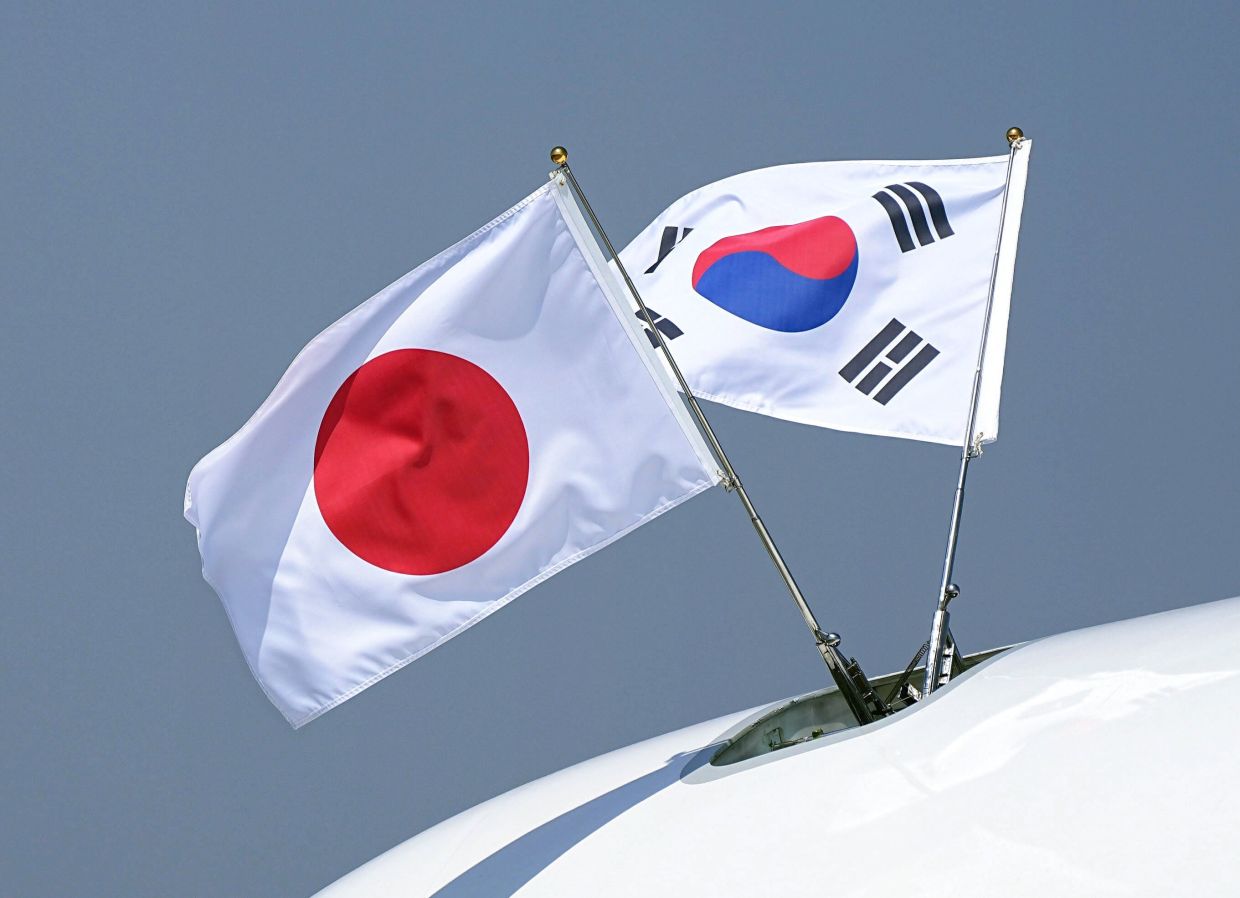
A landmark survey by Washington's Centre for Strategic and International Studies has uncovered a paradox at the heart of northeast Asian security: while defence planners and government officials in both Japan and South Korea firmly oppose nuclear weapons development, this consensus is fragile enough to shatter instantly if either nation's neighbour takes the plunge. The research, which drew responses from serving and retired officials, lawmakers, academics, and business leaders in both countries, exposes a dangerous vulnerability in the region's strategic architecture—one that experts say could prove far more destabilising than a reduction in United States military presence.
The scale of elite opposition to nuclear weapons appears clear on paper. Three-quarters of South Korea's strategic establishment and nearly four-fifths of Japan's express resistance or ambivalence toward their respective countries going nuclear. Yet this apparent consensus masks deep anxiety. Respondents indicated that should one neighbouring state acquire nuclear weapons, support for a matching capability in the other would surge dramatically. The implications are sobering: what appears today as a unified position against proliferation could unravel within months, reshaping the entire security framework of one of the world's most economically vital regions.
This elite caution stands in striking contrast to public sentiment, particularly in South Korea. A 2024 Gallup poll commissioned by the Chey Institute for Advanced Studies found that over seventy per cent of ordinary South Koreans back their country possessing nuclear weapons. No equivalent gap exists in Japan, where public and expert opinion align more closely—around four-fifths of Japanese citizens, like their elite counterparts, oppose nuclear weapons acquisition. Yet media narratives sometimes suggest Japan's policy-making class harbours stronger nuclear ambitions than data supports, according to Kristi Govella, the CSIS Japan chair who helped lead the research.
The motivations driving those few elites who support nuclear weapons in each country reveal divergent concerns shaping the region's future. South Korean advocates focus almost entirely on deterrence against North Korea—a state that has actively tested nuclear weapons and shows no signs of abandoning them. Japanese supporters, by contrast, cite uncertainty about long-term American commitment to the alliance, reflecting anxiety that Washington might reduce its security footprint in the region at a moment when China's military capabilities are expanding rapidly. These different drivers suggest that proliferation, should it occur, would stem from distinct security dilemmas rather than a unified regional trend.
The American side of this equation has been actively reinforcing the nuclear umbrella to prevent such defection. The Department of Defense held bilateral meetings in Seoul earlier this month to discuss nuclear cooperation frameworks with South Korea, while simultaneously conducting extended deterrence discussions in Tokyo with Japanese counterparts. These talks underline Washington's recognition that providing credible security assurances remains cheaper and cleaner than managing a proliferated northeast Asia. Yet the timing reveals anxiety: these talks follow months of diplomatic manoeuvring around broader nuclear questions.
Within the United States government, perspectives on nuclear strategy have been shifting in ways that could reverberate across Asia. Brandon Williams, the Department of Energy's under secretary for nuclear security, declared on Thursday at the Hudson Institute that America must accelerate nuclear weapons production to counter unspecified adversaries—widely understood to mean China and Russia. His agency plans to invest six hundred million dollars in artificial intelligence systems this year, aiming to shrink the current ten-to-fifteen-year development cycle for new weapons. Such moves signal to allies that the nuclear enterprise remains at Washington's core, yet simultaneously suggest Washington views deterrence through expanded capabilities rather than through reassurance and arms control.
More contentious still are internal American debates about what weapons should carry nuclear warheads. Senior experts at CSIS have argued the United States should equip hypersonic missiles with nuclear payloads, not merely conventional ones. Proponents argue that ambiguity about which missiles carry nuclear warheads complicates adversary calculations and stretches American response options. Yet this logic—that uncertainty enhances deterrence—runs directly counter to the reassurance strategy needed to keep Japan and South Korea from pursuing their own arsenals. When strategic doctrine emphasises unpredictability and expanded nuclear options, allied nations seeking security rationales for their own weapons gain persuasive ammunition.
China's role in this tightening strategic spiral deserves careful examination. Beijing has repeatedly denounced Tokyo as pursuing militarisation and creeping nuclear weapons development, claims that Japanese officials deny. Yet such accusations, however politically motivated, reinforce Japanese anxieties about long-term security and provide domestic constituencies with arguments for independent capabilities. Meanwhile, Washington has been pressing China to join negotiations on nuclear arms control, proposals Beijing has consistently rebuffed. China maintains that it will not participate in bilateral arms control agreements between the United States and Russia, viewing such constraints as constraining its own freedom to expand capabilities.
The CSIS survey offers a critical insight that transcends northeast Asia: assured allies remain less likely to proliferate. This principle, ancient in security studies yet frequently forgotten in practice, suggests that the path away from nuclear weapons in Japan and South Korea runs through credible, consistent, and sustained American security guarantees rather than through expanded nuclear forces or strategic ambiguity. When South Korea's strategic elite fear abandonment and Japan's worry about long-term commitment, both countries edge toward indigenous solutions. Conversely, transparent commitments and robust military-to-military cooperation reinforce the logic of reliance on Washington's deterrent.
For Southeast Asia and the broader region, the stakes of northeast Asian nuclear restraint cannot be overstated. A proliferation cascade involving Japan or South Korea—or worse, both—would shatter the non-proliferation consensus that has underpinned regional stability for decades. Other nations, from Vietnam to the Philippines facing their own security anxieties about China, would confront new rationales for weapons programmes. The nuclear threshold that has held across Asia for seventy years could collapse, not with dramatic fanfare but through the seemingly rational calculations of nations seeking to defend themselves.
The path forward requires clarity from Washington about durability of its commitments, honesty from Seoul and Tokyo about their security requirements, and mechanisms to ensure that strategic competition does not accidentally trigger an arms race nobody consciously chose. The CSIS findings suggest the window for preventive diplomacy remains open but is narrowing. The nuclear question in northeast Asia is not fundamentally about whether Japan or South Korea want weapons today; it is about whether their strategic environment will eventually force acquisition as the only rational choice.