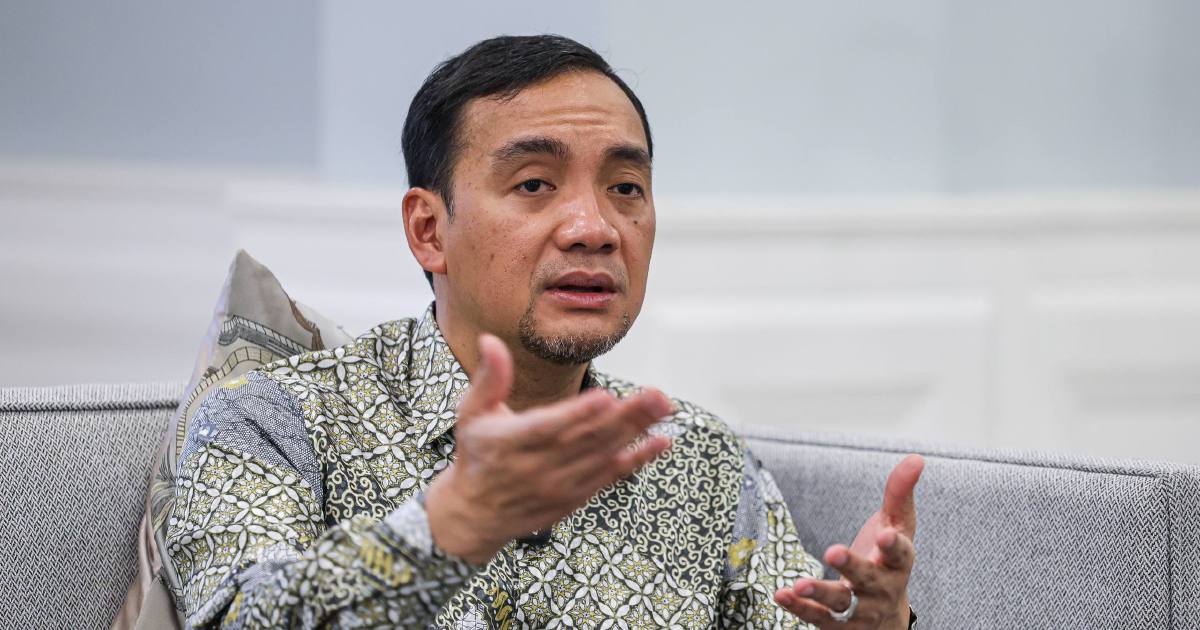
The royal household of Johor has stepped into the political arena ahead of the state election, issuing a clear directive to candidates and party operatives to refrain from acrimonious personal attacks and uncivil conduct during campaigning. His Majesty Sultan Ibrahim, the King of Malaysia, alongside Tunku Mahkota Ismail, the Regent of Johor, has communicated this expectation through Johor Barisan Nasional chairman Datuk Onn Hafiz Ghazi, signalling the palace's concern that electoral competition should not descend into character assassination or disruptive behaviour.
The intervention by Johor's monarchy underscores a recurring tension in Malaysian electoral politics, where the line between robust political contestation and unacceptable personal conduct frequently blurs. Royal patronage of civility standards carries particular weight in Johor, where the sultanate has historically exercised considerable influence over state affairs and social norms. By publicly articulating this position, the palace has effectively set a benchmark for acceptable campaign rhetoric, making clear that political candidates cannot rely on inflammatory personal attacks without risking reputational damage or institutional displeasure.
For Malaysian voters accustomed to increasingly polarized political discourse, the palace's reminder represents an attempt to elevate campaign standards at a time when social media and partisan echo chambers have amplified divisive rhetoric. The emphasis on "civility" speaks to concerns that campaigns have become platforms for delegitimization rather than substantive policy debate, with candidates attacking opponents' character and backgrounds rather than engaging with competing visions for governance. In Johor particularly, where Barisan Nasional has dominated state politics for decades, such guidance may carry special significance in shaping how the ruling coalition and opposition parties conduct their respective campaigns.
Datuk Onn Hafiz, as the conveyor of this royal message, positions himself as both a political operator and a custodian of monarchical wishes. His role in articulating the palace's concerns gives the Barisan Nasional apparatus an apparent advantage in framing campaign norms, as opposition parties may struggle to similarly invoke royal authority. This dynamic reflects the complex interplay between Malaysia's constitutional monarchy, state-level politics, and party competition, where institutional actors beyond elected politicians can meaningfully influence electoral conduct.
The timing of this palace intervention is noteworthy. Johor's state election, when it occurs, will take place within Malaysia's broader political context of coalition realignment and shifting electoral preferences. The state has historically served as a BN stronghold and a crucial revenue generator for the federal government, making its electoral outcome symbolically and financially significant. By encouraging civility at this juncture, the palace may be attempting to preserve the institutional legitimacy of the electoral process itself, guarding against the kind of disorder or delegitimization that could undermine public confidence in democratic competition.
Personal attacks in political campaigns often exploit divisive social and religious issues, or resurrect past controversies about candidates' backgrounds and conduct. The palace's cautionary stance implicitly warns against weaponizing such matters, suggesting that campaign discourse should remain focused on policy platforms, administrative records, and political vision rather than character assassination. This distinction between legitimate political criticism and unacceptable personal attack is conceptually clear but practically contested, creating space for ongoing debate about what constitutes "civility" in electoral competition.
For opposition parties in Johor, the palace's directive presents both constraints and opportunities. While it may inhibit more aggressive personal attack strategies, it also establishes a shared standard applicable to all contestants, potentially constraining Barisan Nasional's own campaign practices. The public nature of this guidance means that voters and media observers can hold all parties accountable against this royally-endorsed civility benchmark, creating a mechanism for civil society and journalists to evaluate campaign conduct against an explicit institutional standard.
The broader Southeast Asian context adds significance to Johor's palace intervention. Malaysian electoral politics operates within a constitutional monarchy system where royal institutions retain considerable symbolic and, in some cases, practical authority. Unlike purely presidential or parliamentary systems, the Malaysian model incorporates monarchical input into political affairs, particularly at state levels. Johor's sultanate, in particular, has historically exercised notable influence over governance and public conduct, making its election-period guidance a meaningful assertion of institutional prerogative.
The emphasis on civility also reflects concerns about election-related violence and disorder that have surfaced in Malaysian campaigns. By establishing clear expectations about acceptable conduct, the palace aims to prevent campaign activities from escalating into confrontations that could compromise the integrity and inclusivity of the electoral process. This protective stance acknowledges that elections, however competitive, ultimately depend on acceptance of results and respect for democratic norms among all participants and supporters.
Moving forward, the palace's caution will likely become a reference point for evaluating Johor's election campaign. Media organizations will scrutinize whether candidates from all parties adhere to civility standards, using the royal directive as a measuring stick. This scrutiny may encourage politicians to moderate their rhetoric or risk public criticism for flouting monarchical guidance, thereby creating indirect incentives for campaign comportment improvement.
The intervention also signals that Malaysia's institutional framework extends beyond elected representatives to include traditional authorities invested with moral and symbolic authority. This institutional plurality means that election campaigns operate within multiple normative frameworks simultaneously—party platforms, electoral law, public opinion, and royal preference—creating a complex landscape where political actors must navigate competing expectations about appropriate conduct and discourse.

%22%2F%3E%3C%2Fpattern%3E%3C%2Fdefs%3E%3Crect%20width%3D%22100%25%22%20height%3D%22100%25%22%20fill%3D%22url(%23ph40buhg)%22%2F%3E%3Crect%20width%3D%22100%25%22%20height%3D%22100%25%22%20fill%3D%22url(%23ph40buhp)%22%2F%3E%3Ctext%20x%3D%2250%25%22%20y%3D%2250%25%22%20text-anchor%3D%22middle%22%20dominant-baseline%3D%22central%22%20fill%3D%22rgba(255%2C255%2C255%2C0.95)%22%20font-family%3D%22Georgia%2C%20'Times%20New%20Roman'%2C%20serif%22%20font-weight%3D%22700%22%20font-size%3D%22320%22%20letter-spacing%3D%22-0.02em%22%3EGRS%3C%2Ftext%3E%3C%2Fsvg%3E)