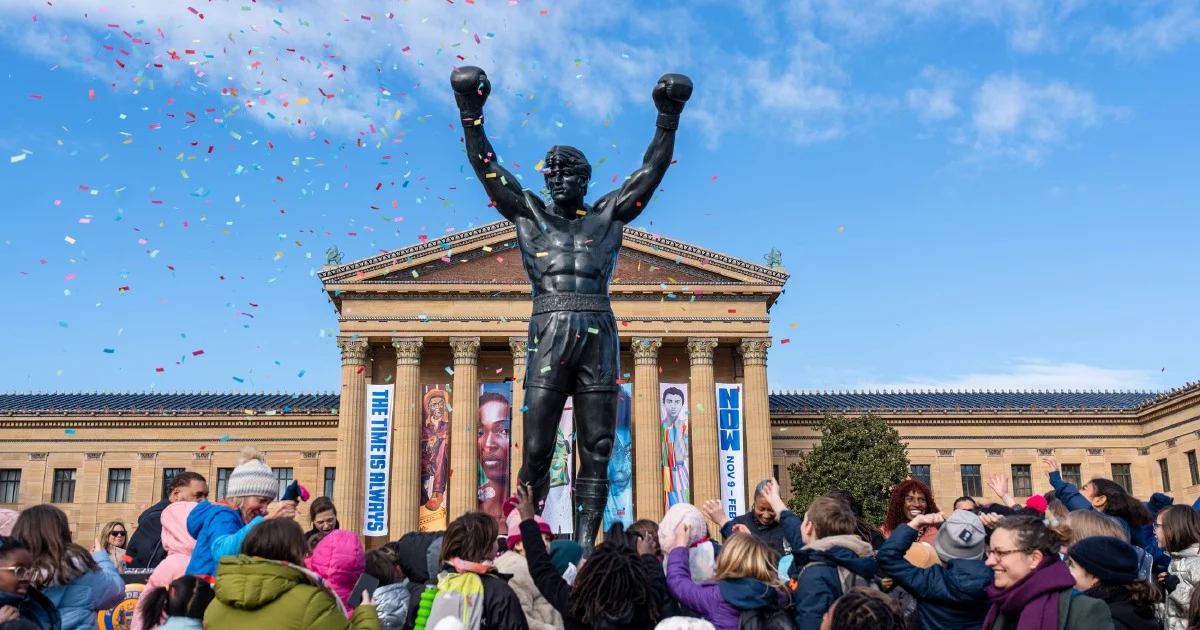
French supporters converging on Philadelphia for World Cup fixtures have received an unusual advisory: steer clear of the city's most celebrated monument to an underdog fighter. The warning centres on the bronze statue of Rocky Balboa, the fictional boxer immortalised in cinema and now an institution in American popular culture. Local authorities and organisers issued the guidance after observing a troubling pattern—teams whose fans dressed the statue in national colours subsequently suffered unexpected defeats and tournament disappointments.
The superstition surrounding the Rocky statue represents a curious intersection of sports psychology, cultural tradition, and modern sporting anxiety. What began as harmless fan behaviour—draping national scarves, jerseys, and colours across the statue's shoulders—has become widely regarded as a jinx that no serious football federation wants to risk. The phenomenon resonates particularly strongly in European football culture, where superstition permeates every level from grassroots academies to elite clubs competing for continental honours. Even the most rational managers and administrators often make allowances for the unquantifiable forces that passionate supporters believe govern competitive outcomes.
The statue itself, located in Philadelphia near the steps immortalised in the 1976 film, has become an unexpected lightning rod for sporting destiny. Originally erected to commemorate the film's enduring legacy and its celebration of perseverance against overwhelming odds, the monument had transformed into something more complex—a touchstone where international football fans projected their hopes, fears, and folkloric beliefs. Each World Cup cycle brings fresh cohorts of supporters eager to claim victory through symbolic gestures. Yet the cumulative record suggested that such acts of devotion carried unintended consequences.
The French national team's approach to the World Cup has traditionally incorporated meticulous preparation across all dimensions—tactical, physical, and psychological. The federation's warnings to supporters reflect an institutional understanding that while scientific training dominates modern football strategy, the collective belief systems of fan bases matter. Momentum in tournament football remains partly psychological, built on confidence, unity, and the sense that destiny favours disciplined preparation and respect for tradition. Any perceived breach of established customs, even those grounded in superstition, could theoretically destabilise team morale before crucial matches.
The broader context here involves how international sporting events amplify the intersection between rational competition and irrational belief. Football remains one of the few global pursuits where millions of people invested emotionally in outcomes they cannot directly influence. This powerlessness, paradoxically, strengthens rather than weakens superstitious behaviour. Fans embrace elaborate rituals and taboos because they provide a sense of agency—a mechanism through which they believe they contribute to their nation's success. Whether such behaviour objectively matters becomes irrelevant when entire supporter bases have internalised it as integral to their identity and purpose.
The warning also reflects how deeply globalised World Cup preparations have become. French football authorities must now consider not merely on-field preparation but also the behaviour of supporters in foreign cities thousands of kilometres from home. This expansion of concern demonstrates football's reach—it encompasses training camps, medical facilities, opposition scouting, but also the superstitious landscape that travelling fans navigate. Organisers must balance welcoming international visitors with protecting the competitive integrity of their tournament.
Southeast Asian football fans, many of whom follow European leagues closely and many of whom will compete in upcoming World Cup qualifying campaigns, may recognise similar superstitions within their own sporting cultures. The phenomenon of avoiding particular actions before crucial matches, the importance of collective fan behaviour, and the belief that symbolic gestures influence real outcomes transcend geography. Regional football communities maintain their own elaborate systems of lucky charms, avoided behaviours, and rituals believed to shape tournament outcomes.
The Rocky statue incident also highlights how American pop culture, even fictional narratives about underdog triumph, acquire unexpected dimensions when intersecting with international sport. The statue's original meaning—celebrating individual perseverance—became absorbed into tournament folklore, transformed into something simultaneously sacred and dangerous for visiting supporters. This cultural layering demonstrates how monuments transcend their creators' intentions, acquiring new significance through collective sporting imagination.
For France specifically, the warning represents a calculated risk assessment. Recent French squads have achieved remarkable success, winning the World Cup in 2018 and reaching the final in 2022. The federation evidently believes that no detail warrants neglect, and if travelling supporters might inadvertently jeopardise preparation through superstitious missteps, guidance becomes justified. The instruction essentially channels collective fan energy toward constructive participation rather than potentially counterproductive symbolic interventions.
The episode ultimately reveals how sport transcends simple competition between athletes on a field. Football encompasses entire communities, their histories, beliefs, and the invisible forces they believe govern human endeavour. Whether the Rocky statue genuinely carries a curse remains scientifically unknowable. What remains undeniable is that millions of people believe it does, and that belief itself becomes a force capable of shaping behaviour, expectation, and ultimately, tournament outcomes through the complex psychology of collective confidence and institutional morale.