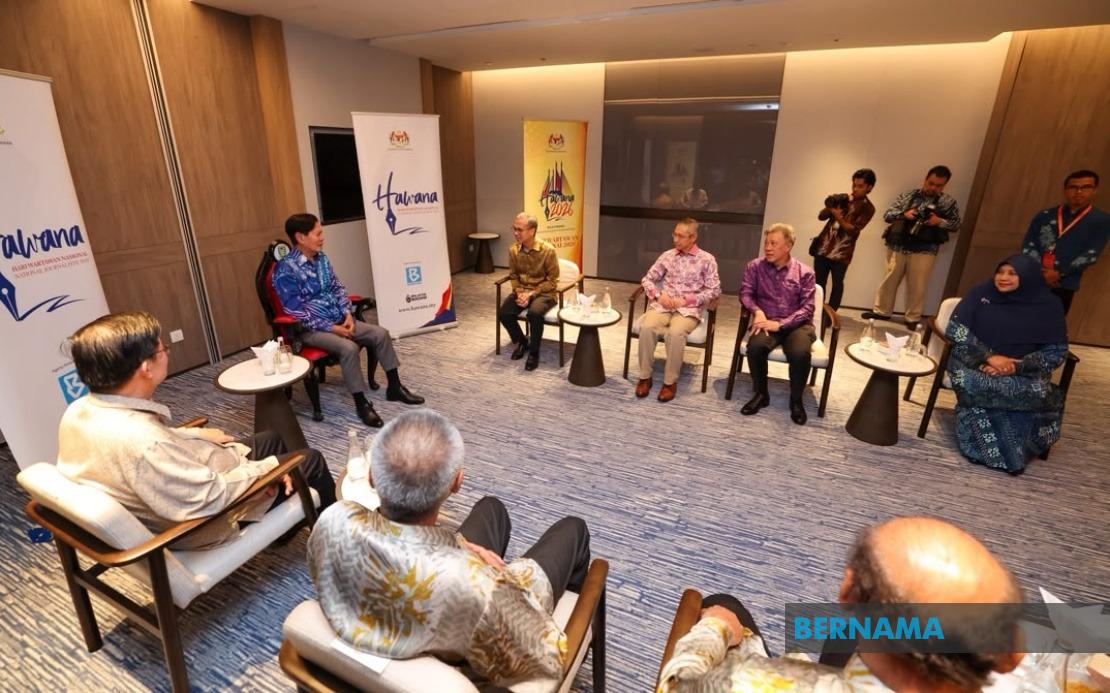
Communications Minister Datuk Fahmi Fadzil has made an urgent appeal for media professionals across Southeast Asia to deepen their cooperative efforts in tackling the escalating problem of misinformation. Speaking during the National Journalists' Day (HAWANA) 2026 celebration dinner in Butterworth on June 19, Fahmi emphasised that coordinated action across ASEAN borders represents a critical pathway towards preserving the credibility of regional journalism and protecting public discourse from deliberate falsehoods.
The Minister's intervention highlights a growing anxiety within policymaking circles about the corrosive effects of unreliable information on public trust and democratic institutions. By positioning media collaboration as essential infrastructure for regional stability, Fahmi framed the challenge not merely as a technical journalistic problem but as a fundamental threat to ASEAN's collective peace and economic development. His remarks signal that governments increasingly view cross-border media partnerships as a strategic necessity rather than a peripheral concern.
Fahmi articulated a vision of journalism as foundational to societal functioning, describing media as the vital conduit through which citizens access reality and policymakers communicate with the public. In an environment where information spreads instantaneously and competing narratives jostle for dominance, he argued that professionally rigorous reporting grounded in verifiable facts and ethical principles has become more indispensable than ever. This framing underscores a tension evident throughout the region: while digital technologies have democratised information distribution, they have simultaneously enabled the rapid proliferation of false and misleading content that undermines public understanding.
The HAWANA 2026 celebration, hosted by Penang and attended by officials from across ASEAN, represents a deliberate institutional effort to reinforce the media's standing as a strategic partner in national development. By elevating the profession's status through government recognition and high-level engagement, Malaysian authorities are attempting to strengthen journalism's role during a period when media outlets face unprecedented economic pressures and declining public confidence. The event provided a platform not only to honour journalists but to articulate a shared commitment to professional standards and ethical practice across the region.
Penang's hosting of this celebration reflects the state government's recognition of media's importance to societal wellbeing. Chow Kon Yeow's participation alongside other senior state officials underscores how misinformation and media integrity have become concerns at multiple levels of governance. The gathering brought together Bernama leadership, including chairman Datuk Seri Wong Chun Wai and chief executive officer Datin Paduka Nur-ul Afida Kamaludin, alongside representatives from private media organisations and ASEAN communications ministers, creating a rare convergence of stakeholders typically operating in separate spheres.
The initiative assumes particular significance for Malaysia given the country's experience with political division and the documented spread of false narratives during contentious periods. By advocating for stronger knowledge-sharing mechanisms among ASEAN journalists, Fahmi implicitly acknowledged that no single nation can effectively combat misinformation in isolation. Regional media ecosystems remain interconnected, with falsehoods originating in one country rapidly spreading across borders, particularly through social media platforms. Coordinated fact-checking, shared investigative resources, and common standards for verification could amplify the impact of individual newsrooms struggling against resource constraints.
The minister's emphasis on exchange of best practices suggests recognition that different ASEAN nations have developed varying approaches to media challenges, each potentially valuable to neighbours facing similar pressures. Thailand's experience in managing political misinformation, the Philippines' battle against health-related disinformation, and Indonesia's grappling with communal tensions fuelled by false narratives all offer lessons applicable across the region. Institutionalising mechanisms for journalists to learn from these divergent contexts could strengthen the profession's resilience against coordinated disinformation campaigns and foreign interference.
However, the call for stronger collaboration also raises complex questions about editorial independence and the distinction between legitimate criticism and state-sponsored censorship. ASEAN nations maintain widely varying approaches to press freedom, with some allowing considerable autonomy and others imposing substantial restrictions. Any regional framework for combating misinformation must carefully navigate the tension between coordinating against genuinely false information and inadvertently creating mechanisms that suppress legitimate journalism or dissenting voices. The challenge lies in building trust among editors and reporters across diverse political systems while maintaining the independence essential to journalism's credibility.
The deteriorating information environment represents a particular concern for ASEAN economies increasingly dependent on investor confidence and regional integration. When misinformation distorts public understanding of trade agreements, investment policies, or cross-border initiatives, it can undermine the policy coordination necessary for regional prosperity. By positioning media collaboration as integral to economic stability, Fahmi connected journalism to the material interests of governments and businesses, potentially creating broader political support for protective measures and professional development initiatives.
The recognition that journalism remains indispensable reflects a counterintuitive reality: even as traditional media outlets have declined in economic influence, their role in establishing authoritative facts has become more valuable. Social media and messaging platforms have fragmented the information landscape, allowing users to construct personalised realities that exclude inconvenient facts. Professional journalists, despite their reduced audience reach, maintain credibility precisely because they employ verification procedures and face accountability for errors. Strengthening this profession through regional collaboration represents a modest but meaningful investment in information quality across the region.
Moving forward, the success of such collaborative efforts will depend on securing resources, establishing clear governance structures, and building trust among participants representing different political interests. Whether ASEAN can develop genuinely effective mechanisms for journalists to identify and counteract misinformation while respecting the editorial independence essential to credible reporting remains an open question. The ambitions articulated during HAWANA 2026 will be tested when regional media organisations confront the competing pressures of political loyalty, commercial viability, and professional integrity that characterise contemporary journalism across Southeast Asia.