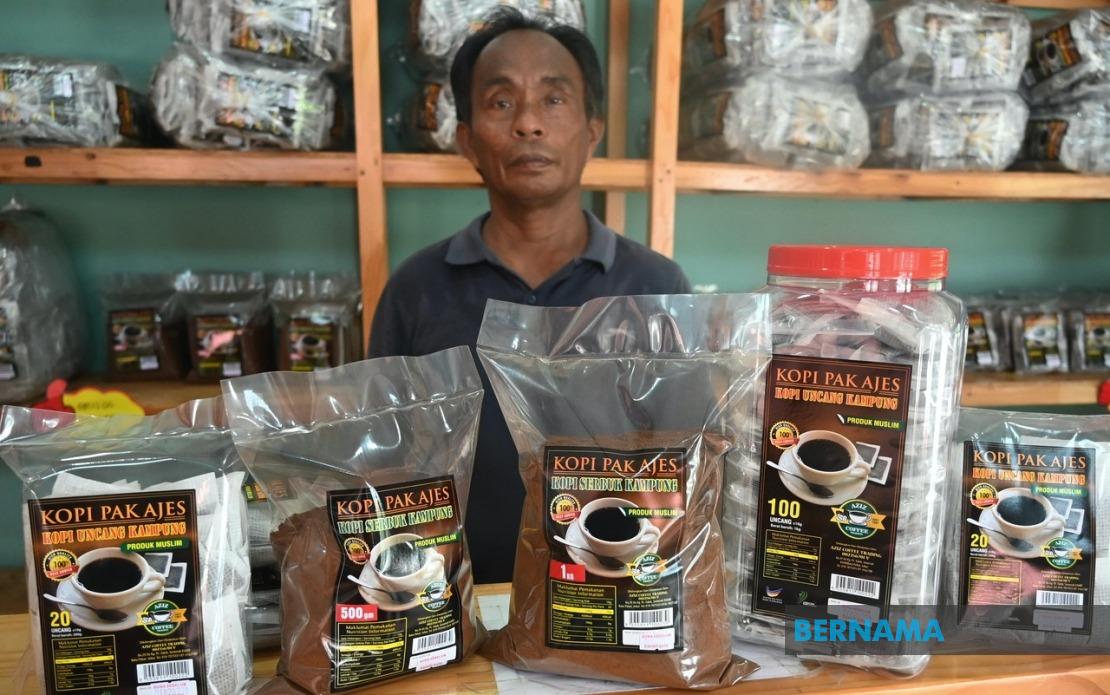
The intensity of the 16th Johor state election has delivered an unexpected commercial blessing to one local business operator. Aziz Mohd, known throughout the Semerah area as Pak Ajes, has witnessed his three-decade-old coffee enterprise experience unprecedented demand as campaign machinery and election workers across multiple state constituencies scramble to source refreshments. The uptick in orders from candidates' teams and their operatives in constituencies including Semerah, Sungai Balang and Bukit Naning has forced the 65-year-old entrepreneur to significantly expand his production capacity just to keep pace with consumption patterns. For a business accustomed to steady, predictable demand, the election season has opened an unexpected revenue window that Pak Ajes has seized with characteristic entrepreneurial energy.
Pak Ajes, who heads Aziz Coffee Trading, described the current period as a rare commercial opportunity that does not materialise frequently in his working calendar. Preparing ahead after receiving advance notice from representatives affiliated with various political parties and their candidates, he and his son mobilised resources to amplify output. The supply chain challenge became immediate and substantial—sourcing adequate quantities of quality coffee beans required reaching into distant suppliers at Rengit and Kluang to supplement local stocks, a logistical undertaking that underscores both the scale of demand and the tight timeframes within which Malaysian election campaigns operate. Yet despite these pressures, Pak Ajes expressed satisfaction that operations have proceeded without significant disruption.
The journey that positioned Pak Ajes at this juncture began in 1991, when he observed coffee beans accumulating in excessive supply within his immediate vicinity. Rather than seeing waste, he perceived opportunity. Initial experimentation involved processing beans for personal consumption and supplying beverage stall operators within his network. This modest beginning reflected a broader entrepreneurial pattern—before establishing his coffee processing operation, Pak Ajes had ventured into quail farming for egg production and cultivated mushrooms destined for local market distribution. These seemingly disparate ventures represented early lessons in agricultural value addition and direct customer engagement.
Capital formation presented the typical obstacle facing rural entrepreneurs. Working with approximately RM200 accumulated from quail egg and mushroom sales, Pak Ajes initiated coffee powder sales structured around customer demand specifications. His initial product offering consisted of modest 100-gram packets, a format that acknowledged both consumer purchasing patterns and his nascent production capabilities. This humble scale contrasts starkly with current operations, which now deliver approximately 1,500 packets daily and accumulate over five tonnes of processed powder monthly. His client base has expanded to encompass multiple coffee shops scattered across the Muar and Batu Pahat regions, establishing Aziz Coffee Trading as a recognised supplier within the local hospitality sector.
Understanding the coffee production process reveals why the election-driven surge presents both opportunity and operational complexity. The transformation from raw bean to market-ready powder demands meticulous execution across sequential stages. The initial separation of beans from their stems and husks requires careful attention to avoid contamination. Subsequently, sun-drying extends across approximately 15 days, a stage demanding consistent environmental monitoring. Following this preparatory phase, roasting activates the complex chemical compounds that define coffee flavour profiles. The subsequent grinding stage reduces beans to the powder texture consumers expect, while packaging represents the final but equally critical operation. Pak Ajes emphasises that packaging demands particular vigilance—the powder's tendency toward spillage, combined with its susceptibility to hardening and clumping when exposed to ambient air, necessitates protective measures that preserve quality from factory to consumer.
Recognising the scalability limitations of purely production-focused operations, Pak Ajes and his 22-year-old son Muhammad Fitri took a strategic step in 2022 by establishing Kupi Nang Ajes Cafe in front of their residence. This retail outlet transformed their business model from exclusively supply-oriented into a customer-facing enterprise offering direct consumption options. The café menu spans popular preparations including Americano and latte, priced to remain accessible across income brackets within their community. This vertical integration represents a deliberate expansion strategy that captures greater value within the coffee supply chain whilst strengthening brand presence within Kampung Parit Sidek.
Ambitions for further expansion reflect entrepreneurial confidence grounded in demonstrated market demand. Pak Ajes articulates plans to establish a second café outlet positioned within a high-traffic commercial area, with Batu Pahat town and Muar representing primary considerations. More ambitiously, he envisions a multi-state franchise operation that would position Kupi Nang Ajes as a recognisable brand across Malaysia's geography. Such aspirations, whilst ambitious for a operator whose journey began with subsistence-level agricultural ventures, reflect the business confidence generated by recent electoral demand and the operational proof-of-concept that his coffee products command genuine consumer preference.
Institutional support has reinforced Pak Ajes's expansion trajectory. The Department of Agriculture has provided material assistance encompassing equipment donations—specifically coffee grinders and bagging machinery—alongside training interventions addressing packaging standards and product labelling compliance. These interventions represent targeted public sector engagement that acknowledges the role small-scale agricultural processing plays within rural economic development. For Pak Ajes, such support has translated into operational capacity improvements that would have required prohibitive private capital investment.
The 16th Johor state election, encompassing 172 candidates contesting 56 state legislative seats, has created temporary but measurable economic stimulus for micro-enterprises positioned within campaign geographies. Whilst the election campaign period remains finite, the surge in Pak Ajes's business activity illustrates how political cycles generate economic opportunities for local suppliers willing to mobilise resources rapidly. The demand for beverages and refreshments during intensive campaign operations, though temporary, has enabled Pak Ajes to test production scaling, strengthen supplier relationships, and potentially convert temporary clients into permanent customers who experienced his product quality under election-driven urgency. As polling scheduled for Saturday concludes this electoral cycle, the question becomes whether this electoral windfall catalyses sustained business expansion or represents an isolated spike within his operational calendar—a distinction that will partly depend on whether the heightened demand from campaign workers translates into ongoing relationships with candidates' permanent political machinery and supporter networks.

