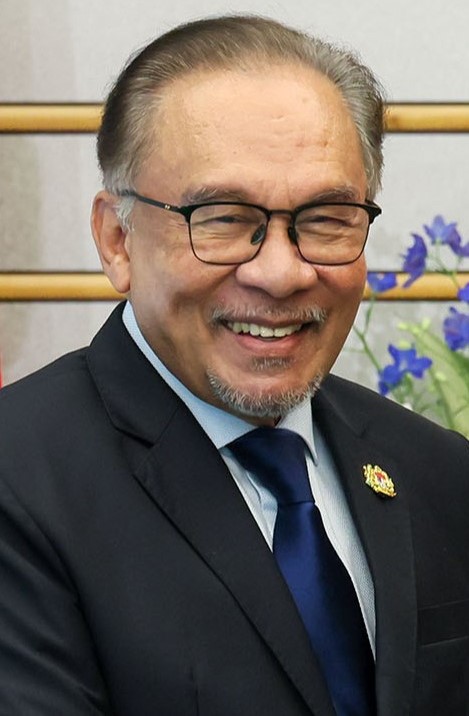
JOHOR BAHRU, June 25 — In a stunning political bombshell dropped just two days before Johor's candidate nomination day, sitting state assemblyman Datuk Dr. Mohd. Puad Zarkashi resigned from UMNO with immediate effect today — and walked out the door taking one explosive secret with him.
Puad, who holds the DUN Rengit seat and is a member of UMNO's Supreme Council, did not leave quietly. In a Facebook post that sent shockwaves through Malaysian political circles, he alleged that the Johor Royal Palace has been directly pulling the strings inside UMNO Johor — and that Menteri Besar Datuk Onn Hafiz Ghazi told him so himself.
The most incendiary claim in Puad's statement is this: that Onn Hafiz personally told him, during a private meeting at Saujana on June 21, 2026, that it was the Johor Istana — not UMNO leadership — that instructed him to dissolve the state assembly on June 1, triggering the very election now underway.
"UMNO Johor is no longer free to make its own decisions. UMNO Johor is controlled by the Palace," Puad wrote. "One clear proof: Onn Hafiz himself made this admission to me during our meeting at Saujana on June 21, 2026. He informed me that it was the Palace that commanded him to dissolve the Johor DUN on June 1."
If accurate, the claim strikes at the heart of Malaysia's constitutional order — raising serious questions about the boundary between royal advisory powers and direct interference in elected party governance.
Puad was clearly anticipating the cynics. He pre-empted accusations of personal opportunism with pointed defiance. "Why would I leave now, when UMNO is seen as strong enough to contest all 56 seats solo? I am leaving UMNO at a time when many leaders are flocking back in because the party looks powerful. So ask yourself — who really has something to gain here? Them, or me?"
The question lands hard. With UMNO riding a wave of pre-election confidence in Johor, walking away now carries real political cost — which is precisely what makes Puad's resignation so credible and so damaging.
Puad's frustration went beyond the Palace allegation. He lashed out at UMNO's candidate selections, calling BN picks "recycled", lacking any aspiration for young voters, and "mediocre at best" — words likely to sting ahead of a bruising campaign. He said he refused to remain in a party led by those he described as political cowards — leaders too afraid to stand up to external pressure, let alone inspire a new generation.
In perhaps the most chilling lines of his statement, Puad acknowledged the personal risk he was taking. "I am aware I will be condemned and humiliated. My safety may even be threatened. But armed with political courage, I am prepared to fight under any circumstances." He closed his statement with a prayer: "I place my trust in Allah. You are the protector without equal."
Puad's resignation lands like a grenade at the worst possible moment for UMNO Johor. With nomination day on June 27 and polling on July 11, the party now faces a two-front war — defending its seats while managing a damaging internal narrative about royal control and recycled leadership.
The allegation that a sitting Menteri Besar privately admitted to being ordered by the Palace on a matter as consequential as the dissolution of a state assembly is, if true, a constitutional crisis in slow motion. It will force a public response from Onn Hafiz, from UMNO's national leadership, and potentially from the Palace itself.
Puad has lit the fuse. The question now is how big the explosion gets.