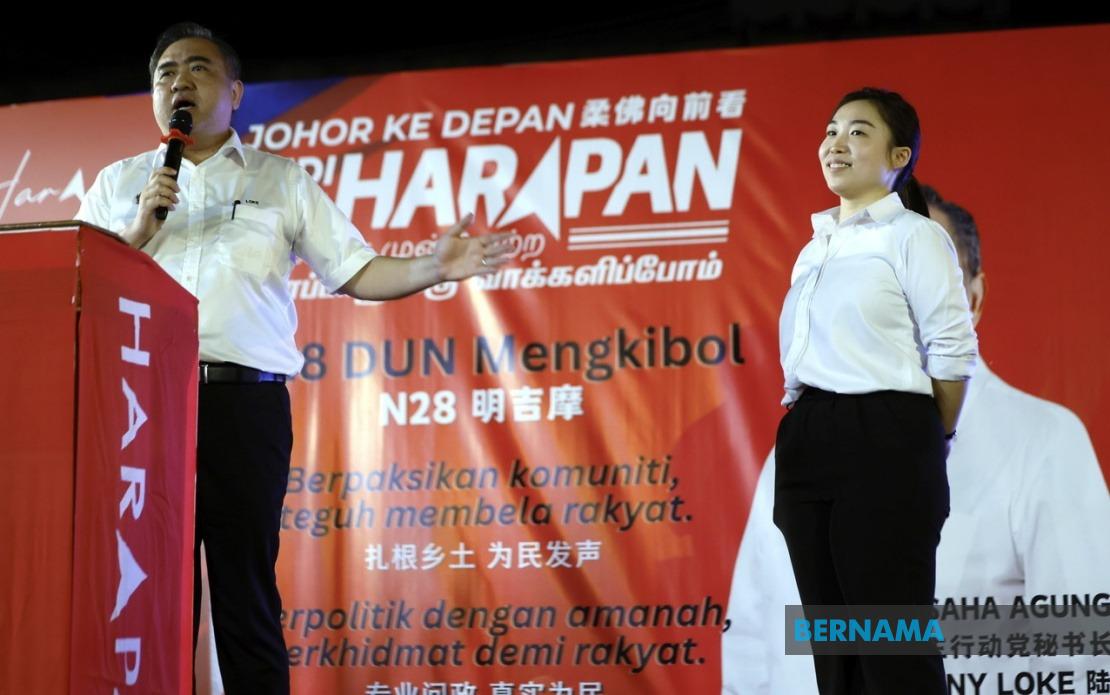
The Democratic Action Party made a significant move in its Johor electoral strategy by naming 33-year-old lawyer Chu Poh Yee as its candidate for the Mengkibol state assembly seat at an announcement ceremony in Kluang on June 18. The selection marks a generational shift in a constituency held by the same representative for two consecutive terms, reflecting broader party efforts to inject fresh perspectives into its slate of contenders across the state.
Party secretary-general Anthony Loke explained that the decision to field Chu represents a deliberate transition plan within DAP's leadership structure. Incumbent assemblyman Chew Chong Sin, who has represented Mengkibol since his initial election two terms ago, will be repositioned to pursue a parliamentary seat rather than seek re-election at the state level. This restructuring demonstrates how regional parties are attempting to leverage their stronger performers in lower-tier positions to advance them into federal representation.
Chew's prospective move to contest the Labis parliamentary constituency stems from the incumbent MP Pang Hok Liong's decision not to stand for another term in the next General Election. By identifying Chew as a suitable replacement at the federal level, DAP aims to maintain continuity in the area's representation while creating an opening for new talent at the state assembly. This succession planning approach reflects the party's confidence in Chew's administrative record and electoral viability in a broader district.
Loke positioned Chu's nomination as reflective of the party's commitment to expanding opportunities for female representation in elected office. He highlighted her professional background in legal practice, particularly her involvement in providing legal aid assistance to local elected representatives and constituents navigating administrative and legal complexities. Such work demonstrates practical engagement with grassroots community concerns, a quality the party considers essential for effective state assembly representation.
The party leadership unanimously endorsed Chu's candidacy, according to Loke, based on several attributes they believe make her an effective campaigner in Mengkibol. Her educational qualifications, multilingual abilities, and established connections within the constituency form the foundation of DAP's confidence that she can successfully defend the seat. The emphasis on her familiarity with local issues and networks suggests a calculated effort to mitigate the risks typically associated with replacing a long-serving representative.
Chu's appointment contributes to broader patterns within the opposition coalition regarding gender balance in candidate selection. While Malaysian political representation remains heavily male-dominated, both DAP and its coalition partners have incrementally increased the proportion of women candidates fielded in recent electoral cycles. However, converting nominations into elected positions remains considerably more challenging, and Chu's success in Mengkibol would represent a meaningful addition to women's representation in Johor's state assembly.
The party's selection process for Johor extended across all 17 state seats that DAP intends to contest in the election. According to Loke's disclosure, this allocation comprises ten seats currently held by DAP incumbents—including Mengkibol—alongside four constituencies the party previously lost but seeks to reclaim, plus three additional new seats. This distribution strategy attempts to balance the consolidation of existing strongholds with an expansion into additional territory.
DAP scheduled subsequent candidate announcements in deliberate stages, with four additional names destined for public revelation on the following Saturday for the Tiram, Johor Jaya, Senai, and Bukit Permai seats. The staggered announcement approach allows the party to maintain media attention and sustain campaign momentum across multiple news cycles rather than overwhelming the public with a comprehensive candidate slate simultaneously. Such tactical pacing reflects contemporary political communications strategy employed across Malaysian political parties.
The remaining DAP candidates for Johor would be unveiled in coordination with the broader Pakatan Harapan coalition's candidate announcements, scheduled for the subsequent Monday and led by the Prime Minister. This synchronized rollout underscores the coalition's emphasis on presenting a unified front heading into the state election. By having the premier introduce candidates alongside DAP's selection, Pakatan Harapan signals both the election's significance within national political calculations and the component parties' alignment on coalition priorities.
Chu's nomination also reflects DAP's strategic positioning within Johor's evolving political landscape. The state has witnessed significant electoral volatility in recent years, with different coalitions gaining and losing ground. By selecting candidates perceived as capable of broadening appeal beyond traditional party supporters, DAP aims to capitalize on opportunities in constituencies where demographic shifts or political realignments might benefit opposition candidates. Chu's professional credentials and gender may resonate particularly strongly with urban, educated voters increasingly significant in Johor's electoral composition.
The broader implications for Malaysian opposition politics extend beyond a single state election. DAP's emphasis on systematic succession planning and generational renewal demonstrates institutional maturation within the party. Rather than perpetually recycling the same leadership cohort, the party is demonstrating willingness to transition proven performers into higher office while creating space for emerging figures. This approach could enhance opposition competitiveness in future elections by ensuring consistent renewal of talent at multiple governance levels.

%22%2F%3E%3C%2Fpattern%3E%3C%2Fdefs%3E%3Crect%20width%3D%22100%25%22%20height%3D%22100%25%22%20fill%3D%22url(%23ph40buhg)%22%2F%3E%3Crect%20width%3D%22100%25%22%20height%3D%22100%25%22%20fill%3D%22url(%23ph40buhp)%22%2F%3E%3Ctext%20x%3D%2250%25%22%20y%3D%2250%25%22%20text-anchor%3D%22middle%22%20dominant-baseline%3D%22central%22%20fill%3D%22rgba(255%2C255%2C255%2C0.95)%22%20font-family%3D%22Georgia%2C%20'Times%20New%20Roman'%2C%20serif%22%20font-weight%3D%22700%22%20font-size%3D%22320%22%20letter-spacing%3D%22-0.02em%22%3EGRS%3C%2Ftext%3E%3C%2Fsvg%3E)