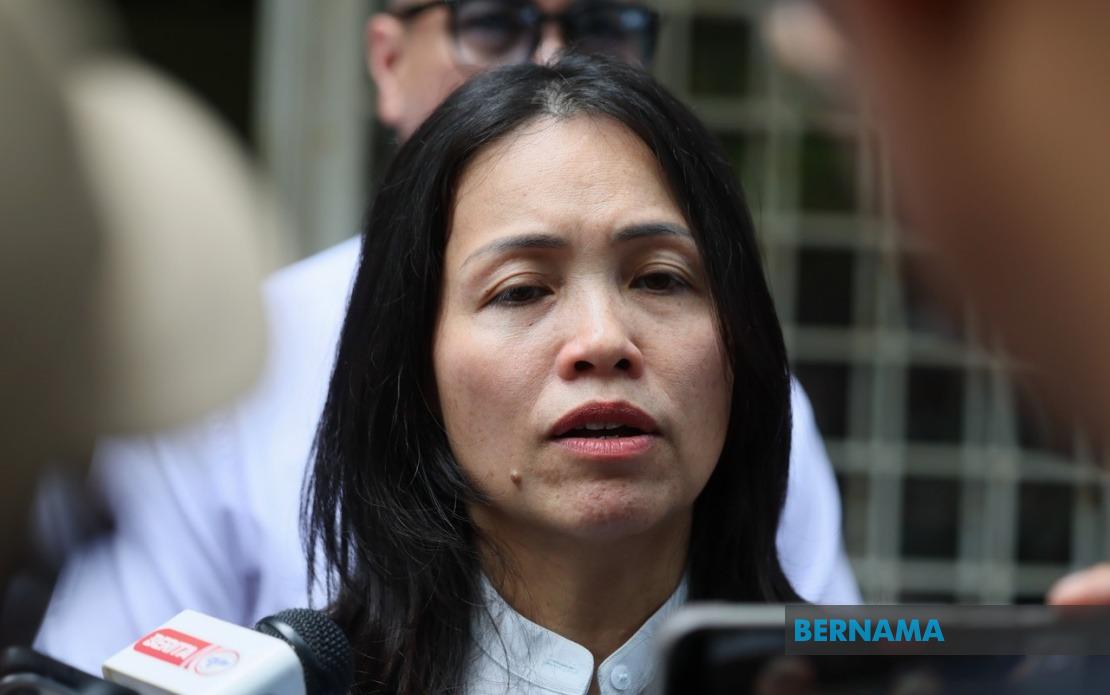
Johor DAP chairman Teo Nie Ching has issued a strong rebuke against what she characterises as a coordinated disinformation campaign targeting her party's candidates in the upcoming state election, calling on the voting public to resist attempts at voter manipulation through doctored campaign materials. The Deputy Communications Minister took to social media to draw attention to allegations that rival political factions have deliberately altered DAP posters depicting potential candidates, falsely portraying them as Muslim women wearing headscarves in what she describes as an improper manner. This strategy, Teo argues, represents a calculated effort to sow discord and erode support among non-Malay communities, particularly Chinese voters who constitute a significant voting bloc in Johor.
The poster manipulation scheme, according to Teo's account, appears designed to weaponise religious imagery and cultural sensitivities for political gain. By presenting DAP candidates in altered imagery that misrepresents their identity and religious affiliation, the perpetrators aim to create confusion and distrust among voters who might otherwise consider supporting Pakatan Harapan in the forthcoming ballot. Such tactics exploit existing communal anxieties and leverage religious symbolism to drive a wedge between different voter demographics, potentially fragmenting the multiethnic coalition that has become central to PH's electoral strategy across Malaysia.
Teo's statement emphasises DAP's longstanding commitment to religious pluralism and respect for all faiths. She stressed that the party has consistently advocated for the protection of minority rights whilst simultaneously respecting the religious practices and sensibilities of Malaysia's Muslim majority. The deliberate misrepresentation of the Islamic headscarf as a tool in a political smear campaign, she argued, constitutes not only an attack on her party but also a broader disrespect for the religious convictions of Muslim women themselves. This framing positions the controversy as one that transcends partisan politics, instead touching on fundamental questions of dignity and respect across religious lines.
As Wanita DAP chief, Teo particularly highlighted the gender dimension of the campaign tactics, viewing the manipulation of female candidates' images as a form of disrespect directed at women in political life. The altered posters objectify the women depicted and reduce them to religious caricatures rather than engaging with their policy positions or qualifications for public office. This gendered aspect of the smear campaign reflects broader patterns in Malaysian electoral politics where women candidates, regardless of party affiliation, often face distinctly personal and appearance-based attacks rather than substantive policy critiques.
The timing of these allegations carries particular significance given the compressed electoral calendar for Johor. The Election Commission designated June 27 as the nomination day for the state poll and July 11 as polling day, following the dissolution of the State Legislative Assembly on June 1. This abbreviated campaign period means that false information and misleading imagery can circulate with outsized impact, as voters have limited time to distinguish between authentic materials and doctored content. The speed at which misinformation spreads in such compressed timeframes gives manipulated posters potential to influence electoral outcomes disproportionately.
Johor's political landscape entering this election reflects a fragmented multiparty environment with no single faction commanding overwhelming support. Barisan Nasional held 40 of the 56 state seats before dissolution, whilst Pakatan Harapan controlled 12 seats, Perikatan Nasional held three, and MUDA held one. This distribution suggests a competitive race where swing votes in marginal constituencies could prove decisive, making the demographic and communal dimensions of the campaign particularly consequential. Any successful effort to suppress or redirect votes among specific ethnic or religious communities could materially alter the election's outcome and shift the balance of power in the state assembly.
The incident exemplifies a broader challenge facing Malaysian democracy during the post-2018 reform period: the weaponisation of identity politics and religious sensitivities as electoral tools. Rather than focusing campaigns on substantive policy differences, governance records, or competing visions for state development, certain actors resort to divisive messaging that exploits communal anxieties. This degradation of electoral discourse undermines voters' ability to make informed choices based on substantive grounds and instead encourages decision-making driven by fear and misinformation.
Teo's call for voters to "choose harmony, unity and peace" reflects a deliberate attempt to reframe the campaign narrative around shared values rather than divisive identities. By appealing to multiracial consciousness and common Malaysian identity, she positions DAP and its coalition partners as defenders of social cohesion, whilst implicitly characterising opponents as purveyors of disunity. This rhetorical strategy carries particular resonance in diverse states like Johor, where successful governance depends on maintaining communal peace and building cross-ethnic coalitions.
The poster manipulation allegations also highlight the vulnerability of electoral processes to abuse in the digital age. The ease with which images can be doctored and rapidly distributed through social media means that election authorities face unprecedented challenges in combating misinformation. Unlike traditional campaign materials that undergo scrutiny before distribution, digitally altered content can proliferate before fact-checkers can respond, making it essential that voters develop media literacy skills and maintain healthy scepticism toward unverified campaign imagery.
Looking forward, the Johor election will test whether Malaysian voters can resist divisive campaigning tactics and maintain commitment to peaceful democratic competition. The state's economic importance to Malaysia, combined with its multiethnic composition and swing-state electoral dynamics, means that the outcome will carry implications extending well beyond Johor's borders. A campaign mired in smear tactics and misinformation would represent a troubling regression for Malaysian democracy, whilst a contest decided on substantive grounds would affirm voters' commitment to principled electoral behaviour.

%22%2F%3E%3C%2Fpattern%3E%3C%2Fdefs%3E%3Crect%20width%3D%22100%25%22%20height%3D%22100%25%22%20fill%3D%22url(%23ph40buhg)%22%2F%3E%3Crect%20width%3D%22100%25%22%20height%3D%22100%25%22%20fill%3D%22url(%23ph40buhp)%22%2F%3E%3Ctext%20x%3D%2250%25%22%20y%3D%2250%25%22%20text-anchor%3D%22middle%22%20dominant-baseline%3D%22central%22%20fill%3D%22rgba(255%2C255%2C255%2C0.95)%22%20font-family%3D%22Georgia%2C%20'Times%20New%20Roman'%2C%20serif%22%20font-weight%3D%22700%22%20font-size%3D%22320%22%20letter-spacing%3D%22-0.02em%22%3EGRS%3C%2Ftext%3E%3C%2Fsvg%3E)