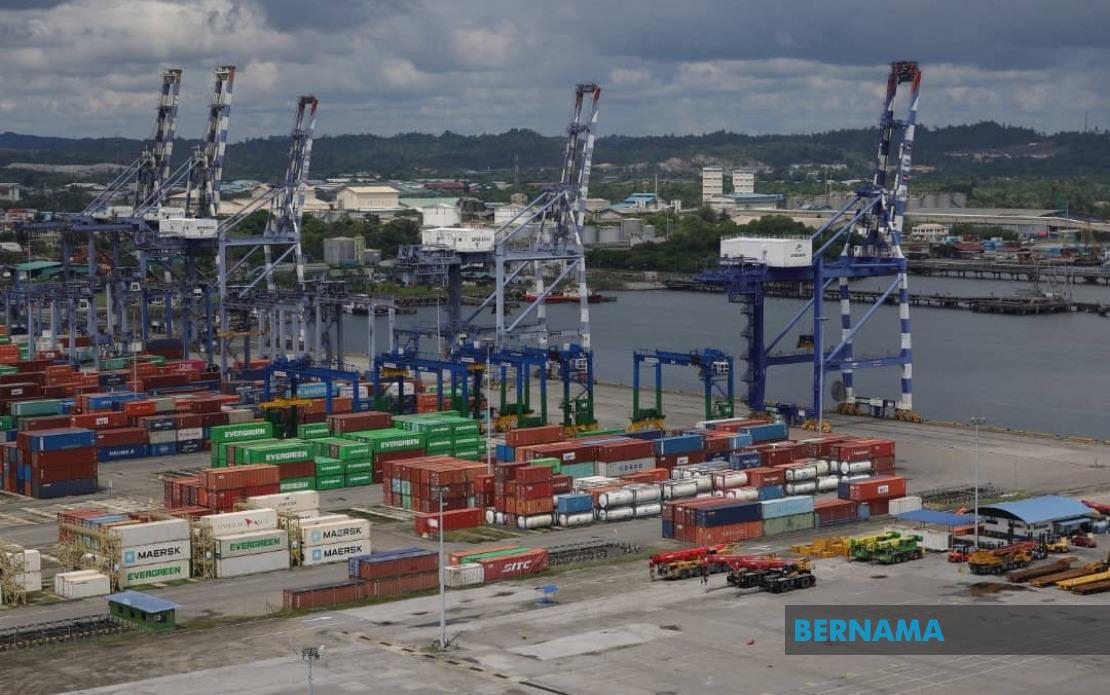
The regulatory handover of Bintulu Port to Sarawak's government marks a watershed moment in the implementation of the Malaysia Agreement 1963, according to Datuk Mustapha Sakmud, Minister in the Prime Minister's Department with responsibility for Sabah and Sarawak affairs. The transition, formalised at a ceremony in Bintulu attended by Prime Minister Datuk Seri Anwar Ibrahim and Sarawak Premier Tan Sri Abang Johari Tun Openg, underscores the federal administration's commitment to recognising the constitutional rights that Sarawak held as a founding partner when Malaysia was established in 1963.
This development carries symbolic weight beyond the administrative reclassification of the port's status. For Sarawak, the shift from federal to state port management represents a restoration of control over a strategic economic asset that has served as the country's primary liquefied natural gas export facility. The change acknowledges historical agreements and power-sharing arrangements that were embedded in Malaysia's founding documents but have been subject to varying interpretations and implementation across successive administrations.
Mustapha's framing of the handover emphasises that the federal government views the devolution of authority not as a diminishment of its own standing but rather as a rational deployment of governance in service of national cohesion. This rhetorical positioning matters significantly in Malaysian federalism, where tensions between centre and periphery have occasionally threatened political stability. By presenting MA63 implementation as beneficial to all parties, the government attempts to establish a template for resolving outstanding disputes between Kuala Lumpur and the East Malaysian states.
The minister highlighted Bintulu's evolving economic trajectory, noting that the port has transcended its historical role as an LNG export terminal. The facility is developing into a multi-functional hub encompassing industrial production, logistics operations, and clean energy infrastructure. This diversification aligns with broader regional shifts towards decarbonised commerce and reflects investor appetite for operations built on renewable foundations.
Sarawak's positioning as a renewable energy powerhouse becomes particularly significant in this context. The state commands substantial hydroelectric resources accumulated through major dam projects developed over recent decades. The combination of abundant low-cost clean power and port infrastructure capable of handling high-volume cargo creates competitive advantages for manufacturing and processing activities that require intensive electricity inputs. Industries focused on green hydrogen production, sustainable chemical processing, or low-carbon materials manufacturing could find Sarawak's cost structure and environmental credentials increasingly attractive.
This development carries implications that extend beyond Sarawak's borders into the broader Southeast Asian economic landscape. The Asia-Pacific region faces intensifying competition to capture investment in clean technology sectors as supply chains reorganise around environmental and carbon considerations. A state-controlled port positioned as the centrepiece of a green industrial corridor could capture regional and international capital flows seeking operations aligned with net-zero transition pathways. Malaysia's credentials as a stable, infrastructure-equipped jurisdiction with skilled workforces could amplify this appeal.
Mustapha's characterisation of the port handover as demonstrating successful federal-state cooperation within the MA63 framework carries political implications for ongoing negotiations between Kuala Lumpur and Sarawak regarding other disputed powers and fiscal arrangements. The Malaysia Agreement contains provisions addressing revenue sharing, immigration control, and judicial arrangements that remain sources of periodic tension. Successfully implementing this port transfer establishes a precedent suggesting that contentious issues can be resolved through negotiation rather than confrontation, potentially clearing pathways for addressing other outstanding matters.
The ceremony's attendance by both Prime Minister Anwar Ibrahim and Premier Abang Johari carried choreographic significance, signalling alignment between federal and state leadership on constitutional implementation. In Malaysian politics, such visual demonstrations of unity serve important purposes in legitimising decisions that might otherwise generate skepticism among constituents concerned about power transfers or resource distribution. The high-level participation suggested that both administrations viewed the port handover as politically valuable and worthy of high-profile validation.
For Malaysia's broader federal structure, the Bintulu precedent introduces complexity into centre-state relations. If Sarawak successfully leverages port control to drive economic development, other state governments may advance claims for similar devolutions of authority over strategic assets. Conversely, if the transition generates unforeseen complications or fails to deliver anticipated economic benefits, it could embolden opponents of further MA63 implementation and strengthen arguments for maintaining centralised control. The actual outcomes will shape how Malaysian federalism evolves in coming years.
The development also touches on questions about resource nationalism and economic sovereignty that resonate throughout Southeast Asia. Smaller nations and subnational jurisdictions increasingly seek direct control over assets that generate wealth and employment, viewing such control as essential to authentic self-determination. Sarawak's acquisition of port regulatory authority reflects this global trend, positioning the state to shape how Bintulu develops rather than accepting development directions determined by federal authorities.
Investors watching Malaysia's investment environment will likely monitor the port transition carefully. Smooth implementation demonstrating effective state-level governance could enhance Sarawak's attractiveness to foreign capital seeking political stability and clear authority structures. Conversely, administrative friction or disputes between state and federal authorities regarding port operations could signal governance risks that discourage investment. The stakes extend beyond Bintulu to Malaysia's overall reputation as an investment destination.
The emphasis on Bintulu's transformation into a green energy centre reflects global momentum towards climate-conscious economic development. Sarawak and Malaysia more broadly are positioning themselves to benefit from capital flows seeking assets aligned with environmental, social and governance criteria that increasingly determine institutional investment patterns. The state's hydroelectric abundance and port infrastructure combine to create genuine competitive positioning rather than mere rhetoric about sustainability.
Looking forward, the Bintulu port handover establishes a template that will influence how Malaysia manages federalism and constitutional implementation. Whether this transition succeeds in delivering shared economic benefits while respecting state autonomy will shape political relations between Kuala Lumpur and Sarawak for years to come. The port's evolution into a clean energy hub represents both an opportunity and a test case for whether Malaysia's federal framework can effectively accommodate regional development aspirations while maintaining national cohesion.