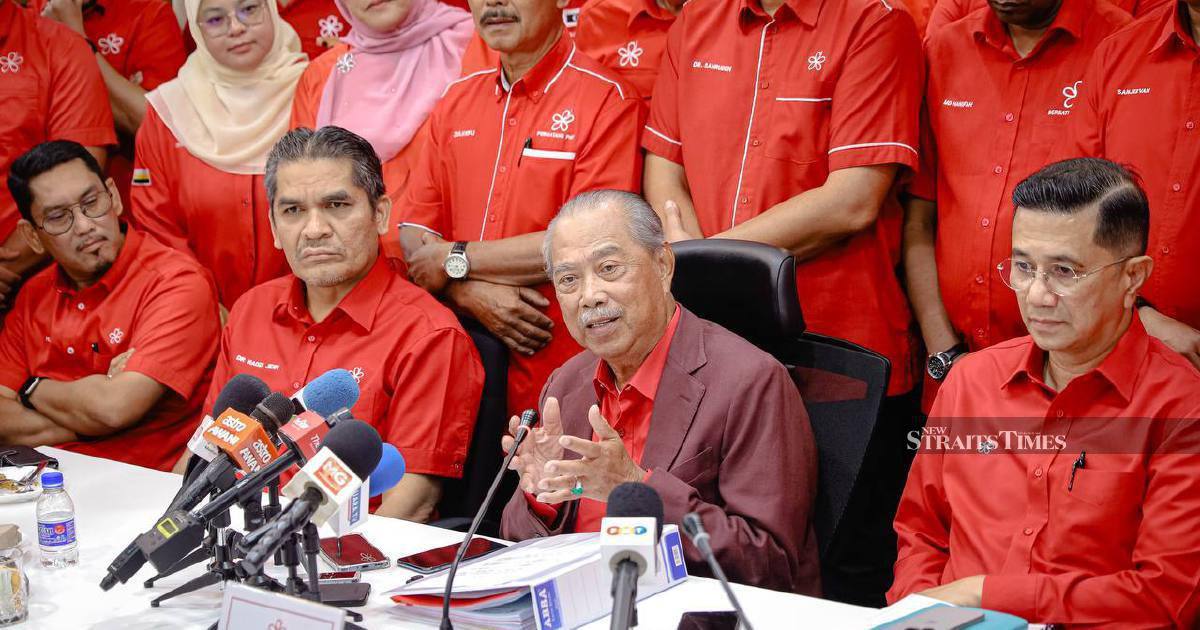
Parti Pribumi Bersatu Malaysia has signalled it will not shy away from direct electoral competition with Pas should seat allocation negotiations break down in Johor, according to party president Tan Sri Muhyiddin Yassin. His statement reflects underlying tensions within Malaysia's Islamic-oriented political groupings as both parties position themselves for advantage in a crucial state that remains politically significant for federal coalition stability.
The willingness to contest Pas-held seats represents a notable shift in tone from Bersatu's leadership and underscores the fragility of seat-sharing arrangements that have historically bound Islamist parties together. Rather than adopt a posture of avoidance, Muhyiddin's comments suggest Bersatu views itself as capable of securing votes in constituencies where Pas has established presence, challenging the notion of fixed territorial boundaries between allied parties.
Johor's political landscape has long been a testing ground for national coalition strategies, given the state's substantial number of parliamentary and state seats. Any fracturing of unified opposition or government coalition strategies there reverberates through federal politics, making seat negotiations extraordinarily consequential. The state's voters have demonstrated capacity to shift loyalties decisively, making seat allocation particularly contentious as parties attempt to optimize their representation.
Bersatu's competitive posture may stem partly from internal assessments of voter sentiment and party organisational strength in specific constituencies. The party has worked to rebuild its grassroots presence following the political realignments of recent years, and leadership may believe certain electoral divisions are winnable regardless of which coalition partner contests them. This reflects confidence in the party's capacity to mobilise supporters independently.
Historically, seat-clashes between allied parties have produced unpredictable outcomes, occasionally benefitting neither party if votes split unfavourably. However, Muhyiddin's public declaration appears designed to strengthen Bersatu's negotiating position by signalling it need not acquiesce to unfavourable seat divisions to maintain coalition relationships. Such posturing often precedes intensive behind-the-scenes negotiations where both parties seek optimal arrangements.
Pas, as the larger Islamic party with deeper institutional roots particularly in state governance, may view such statements with concern given its traditional electoral dominance in several Johor constituencies. The party's established networks within religious organisations and community structures have historically translated into voting advantage, yet competition from Bersatu could fracture this support base if both parties appeal to overlapping voter demographics.
The tensions surfacing between these Islamist-oriented parties reflect broader fragmentation within Malaysia's political structure, where historical alliances have become increasingly fluid. Coalition arrangements that once seemed permanent have given way to more transactional relationships where parties calculate seat-by-seat advantages rather than maintaining blanket power-sharing agreements.
For Malaysian voters in Johor, direct electoral competition between Bersatu and Pas could reshape campaign dynamics significantly. Rather than facing unified Islamic-leaning options, constituencies might experience genuinely contested races where voter preferences determine outcomes more directly. This could potentially increase voter engagement in regions accustomed to more predictable electoral patterns.
Bersatu's declaration also carries implications beyond Johor, potentially signalling the party's broader approach to coalition negotiations across other states with upcoming elections. If the party proves willing to contest against Pas in one jurisdiction, similar dynamics may emerge elsewhere, suggesting Malaysian politics continues transitioning toward more fluid, competitive arrangements where no party enjoys guaranteed support.
The strategic calculation underlying Muhyiddin's statement likely extends beyond immediate electoral mathematics. By publicly asserting readiness to compete, Bersatu may be positioning itself as an increasingly independent political force rather than a subordinate coalition partner. This repositioning could attract voters and party members who perceive Bersatu as more assertive in pursuing its electoral interests.
For coalition partners monitoring these developments, Bersatu's competitive stance raises questions about the stability of existing arrangements and the likelihood that seat negotiations will proceed smoothly across multiple states simultaneously. Political observers suggest that successful coalition management depends heavily on participants viewing agreements as mutually beneficial, a condition that becomes harder to maintain as parties emphasise their competitive capabilities.
The coming months will reveal whether such public statements represent genuine preparation for electoral competition or constitute tactical positioning designed to extract concessions during negotiation phases. Historical precedent suggests that between bold declarations and actual election-day contests, significant diplomatic activity typically occurs as party leaders attempt to preserve coalition arrangements while satisfying their own electoral ambitions.

%22%2F%3E%3C%2Fpattern%3E%3C%2Fdefs%3E%3Crect%20width%3D%22100%25%22%20height%3D%22100%25%22%20fill%3D%22url(%23ph40buhg)%22%2F%3E%3Crect%20width%3D%22100%25%22%20height%3D%22100%25%22%20fill%3D%22url(%23ph40buhp)%22%2F%3E%3Ctext%20x%3D%2250%25%22%20y%3D%2250%25%22%20text-anchor%3D%22middle%22%20dominant-baseline%3D%22central%22%20fill%3D%22rgba(255%2C255%2C255%2C0.95)%22%20font-family%3D%22Georgia%2C%20'Times%20New%20Roman'%2C%20serif%22%20font-weight%3D%22700%22%20font-size%3D%22320%22%20letter-spacing%3D%22-0.02em%22%3EGRS%3C%2Ftext%3E%3C%2Fsvg%3E)