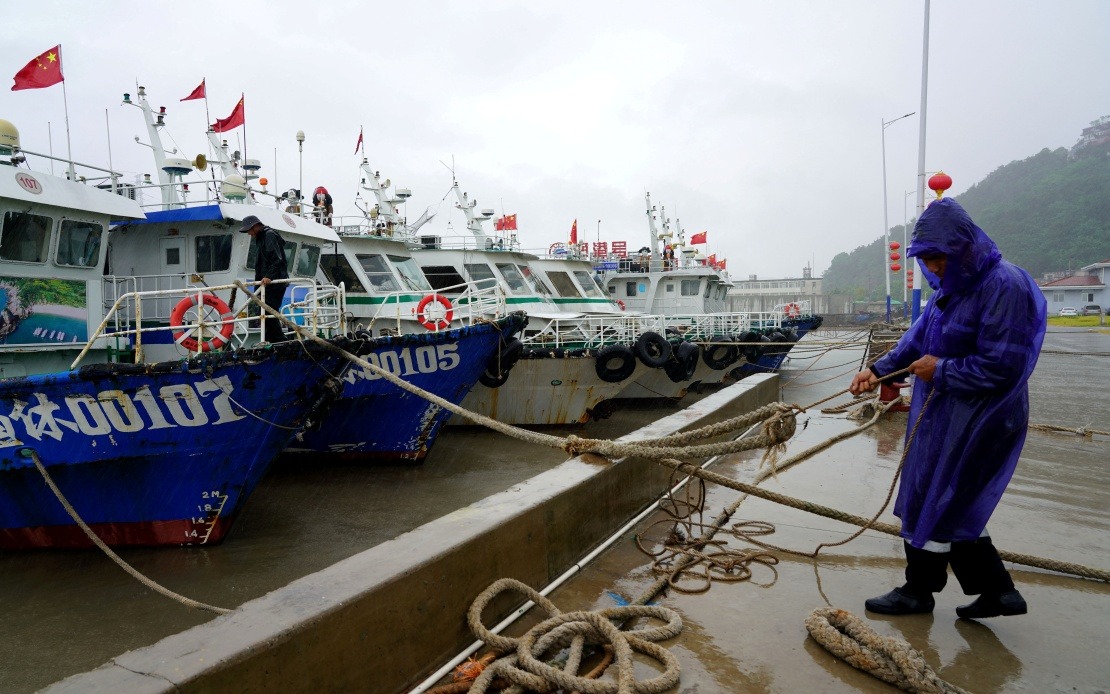
Authorities in Zhejiang Province, located in eastern China, have upgraded their emergency protocols for approaching Typhoon Dolphin, moving from Level IV to Level III designation at midday on Friday. The decision reflects growing concern about the 13th typhoon of the year as it bears down on China's densely populated eastern coastline, where millions of residents and critical infrastructure face potential exposure to severe weather conditions.
At eight o'clock on Friday morning, the Zhejiang Meteorological Observatory confirmed that Typhoon Dolphin remained positioned approximately 763 kilometres east of Wenling, a coastal city in Zhejiang. Despite this distance, weather models suggest the storm will maintain a westward trajectory at a speed of between 15 and 20 kilometres per hour, with current strength expected to hold steady or potentially intensify during its approach to land. Such consistency in forward motion and intensity patterns increases the likelihood of a direct impact on the region.
China's National Meteorological Centre issued a yellow-level weather alert on Thursday evening, establishing a specific threat window for the system's arrival. The forecast indicates that Typhoon Dolphin will make landfall somewhere along the Chinese coast between Shanghai to the north and Fuqing in Fujian Province to the south, with the most probable timing falling on Sunday or Monday. Upon reaching the coast, the system is anticipated to achieve a level ranging from typhoon to severe typhoon classification, meaning sustained winds and rainfall will pose substantial danger across a wide geographic area.
Lou Xiaofen, chief forecaster at the Zhejiang Meteorological Observatory, has highlighted particular vulnerability for Zhejiang itself, which sits squarely between Shanghai and Fujian. Given the province's geographical positioning and the typhoon's forecast trajectory, there exists a notably elevated probability that the system will make a direct strike on Zhejiang territory rather than passing to either side. Such a direct impact would trigger cascading consequences for residents, agriculture, transportation networks, and industrial operations throughout the province.
In preparation for the approaching danger, provincial authorities have taken sweeping precautionary measures across maritime and commercial sectors. All 162 passenger ferry routes operating within Zhejiang have been suspended, effectively halting civilian waterborne transportation. Simultaneously, work has ceased at all 193 offshore projects, preventing construction activities and industrial operations in vulnerable coastal and near-shore environments where personnel and equipment would face unacceptable risk from typhoon-force conditions.
The evacuation and securing of maritime assets represents a crucial component of the response strategy. Provincial authorities have directed all construction vessels—a total of 474 vessels engaged in offshore building and infrastructure work—to return to protected harbour facilities. The Zhejiang maritime authorities have simultaneously launched an intensive communication campaign, transmitting 86,000 early warning messages to maritime stakeholders, harbour operators, vessel owners, and fishing communities. Complementing these notifications, maritime inspectors have physically examined 24,000 vessels to verify their seaworthiness and preparedness for severe weather conditions.
Emergency response teams have positioned high-powered tugboats at strategic locations along the coast, maintaining them in a state of immediate readiness for rescue operations. Should vessels encounter distress during typhoon passage or if mariners become trapped in deteriorating sea conditions, these powerful craft can be rapidly deployed to effect rescues and provide towing assistance to disabled vessels, significantly improving survival prospects for those caught in maritime emergencies.
Under Zhejiang's Level III typhoon response protocol, regional authorities must undertake several critical responsibilities to minimise casualties and property damage. These obligations include continuous monitoring of the storm system's track, intensity, and development patterns as it approaches land; issuance of timely warnings and updated forecasts allowing residents and businesses to prepare; proactive evacuation of vulnerable populations from exposed areas to designated shelter facilities; and provision of clear public guidance enabling individuals to make informed decisions about their safety and protection of assets.
For regional observers, the Zhejiang response demonstrates the sophistication and scale of disaster preparedness systems in densely populated coastal regions of East Asia. The rapid escalation from Level IV to Level III, combined with coordinated action across maritime, transportation, and industrial sectors, reflects lessons learned from previous typhoons and represents institutional capacity built over decades of managing severe tropical cyclones. Such preparedness, while costly and disruptive, has proven essential in a region where typhoon impacts once caused enormous casualties and economic losses. The efficiency with which authorities mobilise personnel, coordinate messaging, and remove vulnerable assets from harm's way offers instructive parallels for Southeast Asian nations similarly exposed to tropical cyclone risk, particularly those with comparable coastal population densities and economic infrastructure vulnerability.

