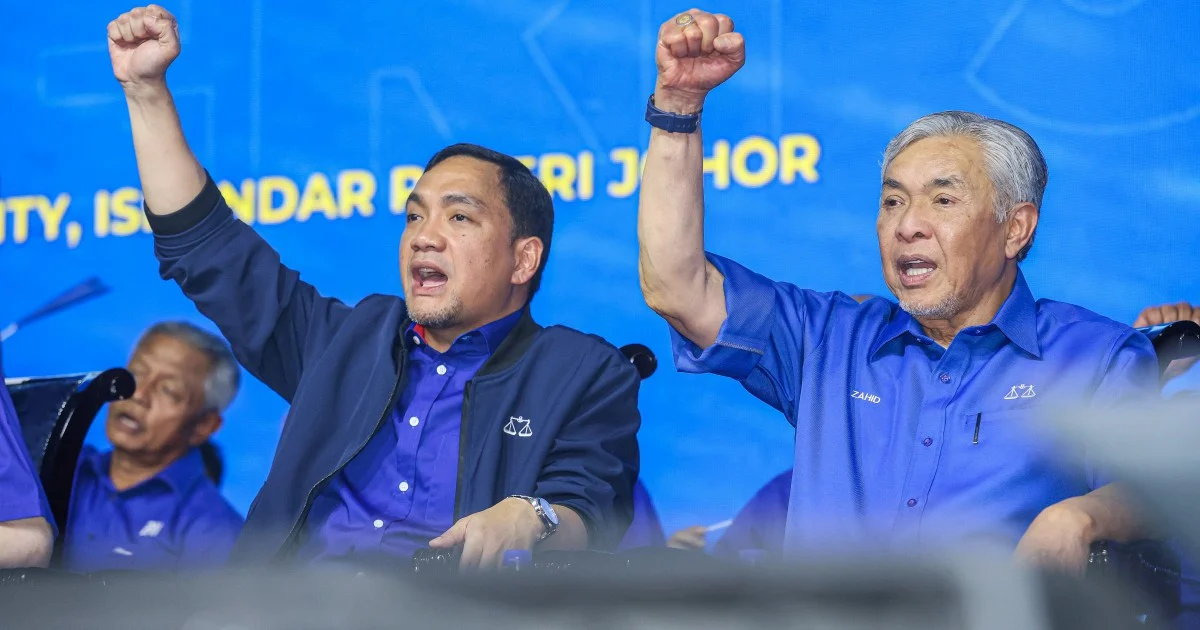
Barisan Nasional chairman Datuk Seri Dr Ahmad Zahid Hamidi has signalled flexibility regarding possible coordination with Islamic parties and newer political movements in the contest for Johor, declining to categorically dismiss the notion of exploratory talks between party operatives at the ground level.
Zahid's measured remarks, delivered in Simpang Renggam, suggest the ruling coalition recognises the evolving political landscape in Malaysia's southern bastion, where fractured opposition support and shifting electoral dynamics have created openings for unconventional alliances. The statement neither confirms nor categorically denies active negotiations, instead framing any such discussions as internal deliberations that might occur between mid-ranking party figures rather than through formal leadership channels.
The possibility of tripartite coordination involving Pas and Parti Wawasan Negara alongside BN reflects broader strategic calculations in Malaysian electoral politics. Johor remains a critical battleground for BN's federal standing, given its historical dominance in the state and the symbolic importance of maintaining strongholds. Recent elections have demonstrated that even traditional BN territories face mounting competition from revitalised opposition movements and emerging political forces that carve out niches by positioning themselves as alternatives to both established governing and opposition camps.
Pas has consolidated its position as a formidable political force in several states, particularly in the east coast region and increasingly in urban areas where its messaging around Islamic governance resonates with particular voter demographics. Meanwhile, Wawasan Negara represents a relatively new entrant seeking to establish relevance in the national political ecosystem. For BN, accommodation at lower organisational levels could reduce three-cornered contests that fragment anti-opposition votes, a persistent challenge that has cost the coalition seats in recent elections.
The language Zahid employed—distinguishing between "lower-level leader" discussions and formal coalition arrangements—indicates careful calibration. Such grassroots coordination allows plausible deniability regarding formal alliances while enabling practical cooperation in candidate selection and campaign efforts. This approach avoids the public commitment of a binding coalition while preserving flexibility as electoral mathematics shift across different constituencies and state-level contests evolve.
For Malaysian voters and observers, such strategic ambiguity reflects the transactional nature of contemporary Malaysian politics, where ideological coherence often takes second place to electoral arithmetic. BN's willingness to explore arrangements with Pas, despite theological and organisational differences, underscores the pragmatism that shapes coalition formation at the operational level. Conversely, Pas's openness to coordination with secular-nationalist BN demonstrates that religious-nationalist parties also pursue pragmatic political advancement.
The Johor election carries implications extending well beyond the state itself. Results here could influence calculations in other state-level contests and shape the political momentum heading toward the next federal election. For BN, retaining Johor with comfortable majorities is essential to narrative control and member morale, particularly given losses in other formerly secure states. Any arrangement that solidifies anti-opposition voting blocs without requiring explicitly formalised pledges therefore serves multiple strategic objectives.
Wawasan Negara's potential participation in such discussions reflects its strategy to position itself as a serious political player willing to engage across ideological lines. Young parties seeking to break through the established duopoly of Pakatan Harapan and the traditional opposition require opportunities to demonstrate relevance. Involvement in Johor negotiations, even at preliminary levels, offers visibility and suggests seriousness about electoral ambitions beyond niche constituencies.
Zahid's remarks also signal BN's recognition that rigid hierarchical control of coalition members has become less tenable in fragmented political environments. Discussions occurring at lower organisational tiers, involving state assemblymen, division heads, and branch leaders, reflect organic networking and grass-level consensus-building rather than top-down diktat. This diffusion of decision-making processes across party structures actually strengthens coalition flexibility by allowing experimentation without binding entire organisations.
For Johor specifically, constituencies vary considerably in their electoral profiles. Urban areas demonstrate different voter preferences than rural constituencies; constituencies with large Indian or Chinese communities have distinct dynamics from those with overwhelming Malay majorities. Lower-level coordination enables tailored approaches reflecting local conditions rather than one-size-fits-all strategies imposed centrally. If discussions between BN, PAS, and Wawasan operatives can produce mutually acceptable candidate arrangements in specific constituencies while avoiding conflicts in others, all three entities benefit through reduced intra-coalition competition.
The political significance of Zahid's non-denial extends to opposition forces as well. Whether Pas and Wawasan choose to coordinate with BN rather than supporting opposition candidates will shape contest dynamics considerably. For Pakatan Harapan and other opposition movements, fragmentation on BN's side might appear advantageous, yet consolidated anti-opposition voting through coordination between previously separate entities could prove more formidable than straightforward two-cornered contests.
Looking forward, Johor's electoral outcome will provide crucial signals about whether Malaysian politics continues trending toward fluid, transactional coalitions based on electoral convenience or whether stronger ideological and organisational coherence reasserts itself. Zahid's willingness to entertain lower-level discussions suggests the former trajectory remains operative, though formal coalition structures and publicly stated positions will continue shaping the political narrative even as practical coordination occurs beneath the surface.

