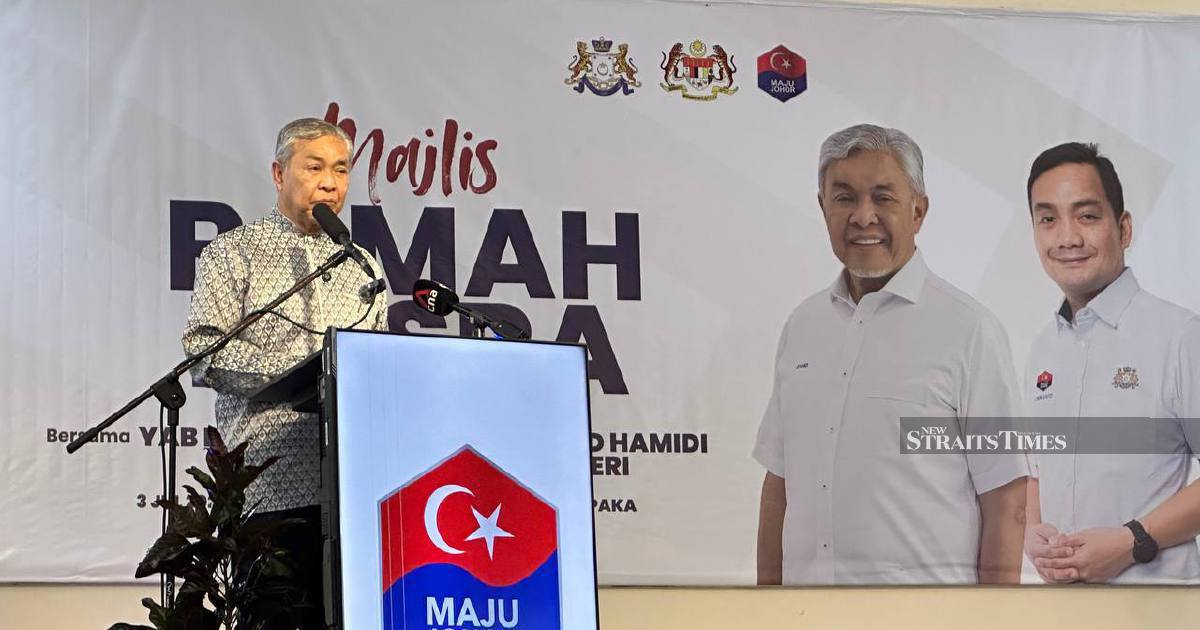
Datuk Seri Dr Ahmad Zahid Hamidi, the chairman of Barisan Nasional, has made an appeal to the coalition's unity government partners to move beyond historical grievances and avoid targeting Umno and the broader BN alliance during the ongoing Johor state election campaign. Speaking in Johor Baru, the senior political figure highlighted the importance of maintaining a cohesive front among alliance members as they contest for voter support in the crucial state election.
The call reflects broader tensions within Malaysia's unity government framework, which has united traditionally opposing political blocs to govern since 2022. The coalition brings together Umno-led Barisan Nasional, the Democratic Action Party (DAP)-led Pakatan Harapan, and other political parties in an unprecedented power-sharing arrangement. While the partnership has provided political stability at the federal level, tensions periodically surface when component parties campaign separately at state elections, creating opportunities for partners to highlight past disputes or policy disagreements.
Zahid's intervention suggests that party strategists are concerned about the potential damage that could result from coalition members using the campaign period to settle old scores or remind voters of previous controversies. In Malaysian politics, state elections often serve as testing grounds for national coalition dynamics, with campaign rhetoric sometimes becoming unnecessarily inflammatory when partners compete for the same electoral space.
The Johor election holds particular significance for both Umno and the broader unity government. Johor remains a traditional BN stronghold with deep historical ties to Umno, and BN's performance here will be closely watched as a barometer of the coalition's strength. Any poor showing could be interpreted as a rejection of the unity government arrangement itself, creating pressure on all partners to maintain a positive campaign narrative.
Umno's influence within Barisan Nasional has been significant, and the party has long served as the backbone of the coalition's electoral machinery. However, the current unity government setup means that Umno must operate within constraints imposed by its partnership with DAP and other former adversaries. This arrangement has required both sides to make compromises and, in some cases, to publicly downplay historical criticisms that were once central to their political positioning.
The timing of Zahid's appeal is strategic. As campaign season intensifies, there is a natural tendency for individual parties to emphasize their distinct identities and electoral brand. Some coalition partners might be tempted to leverage voter criticism of Umno or BN to position themselves as alternatives or as custodians of particular causes. By requesting that allies refrain from raising old issues, Zahid is attempting to establish guardrails that prevent the campaign from degenerating into attacks that could ultimately weaken the entire coalition.
For DAP and other Pakatan Harapan component parties, accepting Zahid's appeal means restraining from raising issues related to Umno's governance record, past scandals, or policy differences that have historically divided the blocs. Such restraint can be politically difficult, particularly when parties are trying to mobilize their base and demonstrate their relevance to voters. Nevertheless, the unity government framework depends on all partners maintaining sufficient coherence to prevent the arrangement from collapsing under electoral strain.
Malaysian voters in Johor will be watching closely to see whether the unity government maintains its composure during this electoral contest. A fractious campaign characterized by cross-coalition attacks could undermine public confidence in the partnership and suggest that the unity government is merely a tactical arrangement rather than a genuine commitment to collaborative governance. Conversely, a disciplined campaign could demonstrate that the coalition has matured beyond personal rivalries and is capable of functioning effectively despite historical differences.
The appeal also reflects awareness within BN that the party's electoral prospects are not guaranteed. While BN retains organizational advantages and deep roots in many communities, the political landscape has shifted considerably since the 2018 general election. Umno's credibility was damaged by corruption scandals and internal strife, and the party has had to work to rebuild its standing. Zahid's recent leadership of the party has involved attempts to modernize BN's image and reconnect with voters who had drifted away in recent electoral cycles.
For the unity government as a whole, the Johor election represents a test of whether this experiment in political partnership can produce coherent campaign messages and synchronized electoral performance. The coalition's ability to campaign together while respecting individual party identities remains one of the more significant challenges it faces. Zahid's intervention suggests that party leadership recognizes these challenges and is actively seeking to manage them through direct communication with coalition partners.
The coming weeks will reveal whether Zahid's appeal gains traction among BN's allies. If respected, the campaign could proceed with mutual restraint that benefits all coalition members. If ignored, the election could become a proxy battle within the unity government itself, with potentially serious consequences for the broader political arrangement that has held Malaysia's government together for the past several years.

