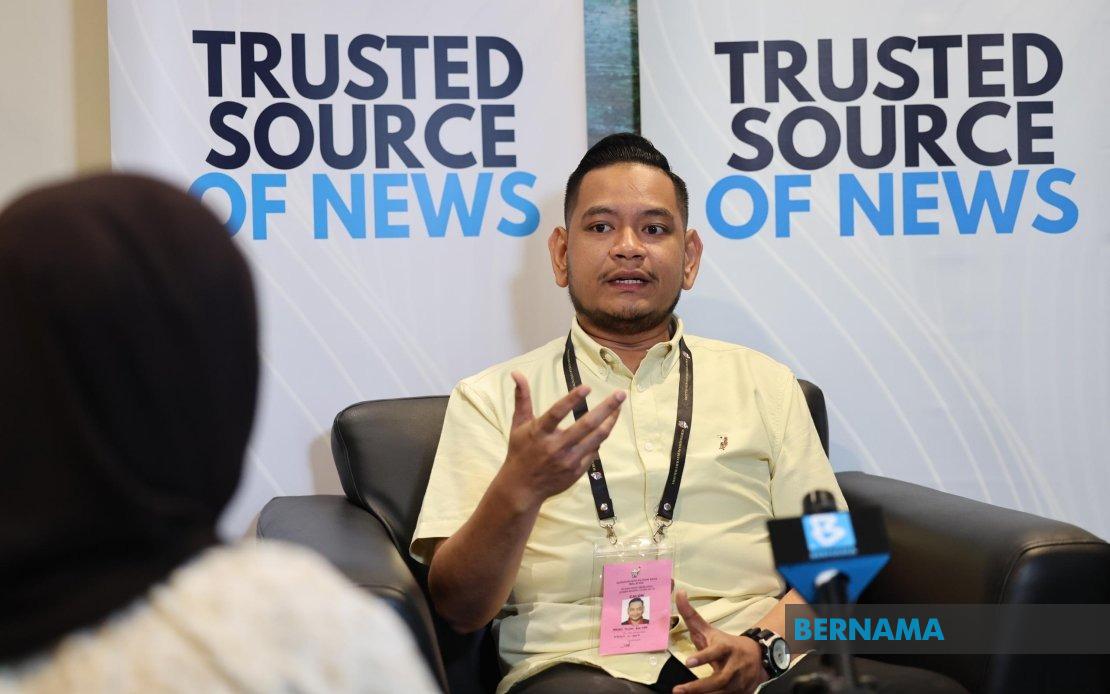
Johor's Sedili state seat has become an unlikely arena for testing whether a youthful political newcomer can overcome the entrenched machinery of Malaysia's traditional coalitions. Amirul Huzni Onn, the 29-year-old Pakatan Harapan candidate and chief of Parti Amanah Negara's youth wing, is mounting a campaign that consciously reframes political inexperience as an advantage rather than a weakness—a messaging strategy that reflects broader demographic shifts within the electorate and the rising impatience with conventional political narratives.
The Sedili contest presents what many would regard as formidable obstacles. Amirul Huzni must contend with Muszaide Makmor, Barisan Nasional's sitting representative, and Rasman Ithnain, a Perikatan Nasional candidate who previously held the seat for three consecutive terms. Both rivals bring years of institutional experience and established grassroots networks—the traditional currency of electoral politics in Malaysia. Yet rather than acknowledging these as insurmountable disadvantages, Amirul Huzni has adopted a countercultural positioning that speaks directly to younger voters frustrated by incremental governance and political entrenchment.
His core argument hinges on a disarmingly simple proposition: fresh faces unburden by past political failures represent genuine vehicles for change. When voters assess a candidate, he suggests, they encounter a political blank slate without the accumulated baggage of unfulfilled promises or policy shortcomings that dog long-serving politicians. This framing deliberately inverts the conventional wisdom that experience equals competence, instead proposing that the absence of a political record becomes a competitive strength. For an electorate increasingly questioning whether traditional politicians have adequately addressed their concerns, such messaging carries psychological resonance even if it contradicts entrenched campaign methodologies.
Amirul Huzni acknowledges the mathematics of conventional influence work against him. The institutional advantages possessed by Barisan Nasional and Perikatan Nasional—administrative resources, party machinery, community relationships cultivated over decades—represent formidable structural advantages that no individual candidate can neutralize through charisma alone. Yet his campaign philosophy reflects a generational conviction that electoral contests ultimately reduce to binary outcomes: winning or losing. This deceptively simple framing rejects the notion that the campaign is somehow already decided based on incumbent status or political seniority, instead positing that each generation must discover its own political relevance and capacity to govern.
The candidate's policy positioning demonstrates equal sophistication in managing expectations. Rather than promising sweeping reforms or ambitious developmental programmes that subsequent reality might contradict, Amirul Huzni has concentrated his attention on a single, concrete infrastructure project with measurable deliverables. The proposed fuel station in Sedili represents precisely the kind of localized, tangible improvement that directly affects residents' daily lives—particularly fishermen and traders whose livelihoods depend on reliable fuel supply. That the site has been identified and land cleared for over a year without implementation suggests not technical impossibility but rather administrative lethargy or political deprioritization, making its completion both achievable and symbolically powerful as evidence of renewed governance attention.
This focused approach contrasts sharply with the expansive manifestos and grand policy declarations that characterize many Malaysian political campaigns. By restricting his primary commitment to a single deliverable initiative, Amirul Huzni effectively stakes his political credibility on demonstrable performance rather than rhetorical flourishes. Should he succeed in accelerating the fuel station's construction, he would transform a piece of stalled infrastructure into evidence of youthful dynamism and administrative competence. Conversely, the narrowness of his initial pledges leaves limited surface area for the criticism that inevitably attends unfulfilled campaign promises.
The candidate's approach to campaign conduct itself merits attention as an indicator of broader generational attitudes toward political competition. His emphasis on mature, respectful engagement with opponents and maintenance of community harmony reflects a conscious rejection of the acrimonious, personally antagonistic campaign styles that have increasingly characterized Malaysian electoral contests. Rather than viewing opponents as adversaries to be destroyed rhetorically, Amirul Huzni frames them as colleagues within a shared political profession whose relationships must transcend electoral competition. This positioning appeals particularly to voters—increasingly common in urban and semi-urban constituencies—who have grown weary of divisive, personality-driven politics and seek instead substantive governance focused on service delivery.
The Sedili contest occurs within the larger context of Malaysia's ongoing political realignment, where voters across multiple constituencies increasingly question whether traditional coalitions adequately represent their interests. Johor, historically a Barisan Nasional stronghold with deep institutional roots, nonetheless demonstrated surprising volatility in recent elections as younger voters and professionals from urban constituencies sought alternatives. Amirul Huzni's campaign exploits this opening not through frontal ideological assault but through a quiet confidence that youthful energy and genuine attentiveness to local needs represent sufficient differentiation from incumbency.
For the Pakatan Harapan coalition, Amirul Huzni represents exactly the demographic renewal party strategists have emphasized as essential to remaining relevant with voters born after 2000. While his prospects in the heavily competitive Sedili constituency remain uncertain, the campaign itself serves as a test case for whether Malaysian voters will embrace the unconventional positioning that experience may be liability rather than asset. The upcoming July 11 polling will provide important data on whether such messaging resonates beyond urban progressive enclaves where skepticism toward traditional politics runs deepest.
The dynamics of Sedili also illustrate how Malaysian electoral competition has grown more granular and localized. Rather than broad ideological competition between major coalitions, constituency-level contests increasingly turn on which candidate best understands and addresses specific community needs. Amirul Huzni's identification of the fuel station—a project of consequence only within Sedili's geographic boundaries and economy—reflects sophisticated understanding that electoral victory requires intimate knowledge of hyperlocal priorities rather than statewide or national policy frameworks.
Ultimately, whether Amirul Huzni succeeds or falls short in Sedili, his campaign embodies larger questions about political succession and generational authority in Malaysian democracy. His willingness to reframe political inexperience as strength rather than weakness, combined with genuine engagement with substantive local problems, suggests that the coming generation of politicians may approach electoral competition according to fundamentally different rules than their predecessors. The Sedili result will reveal whether Malaysian voters are prepared to embrace such alternatives to familiar political geographies and conventional wisdom about competence and experience.

