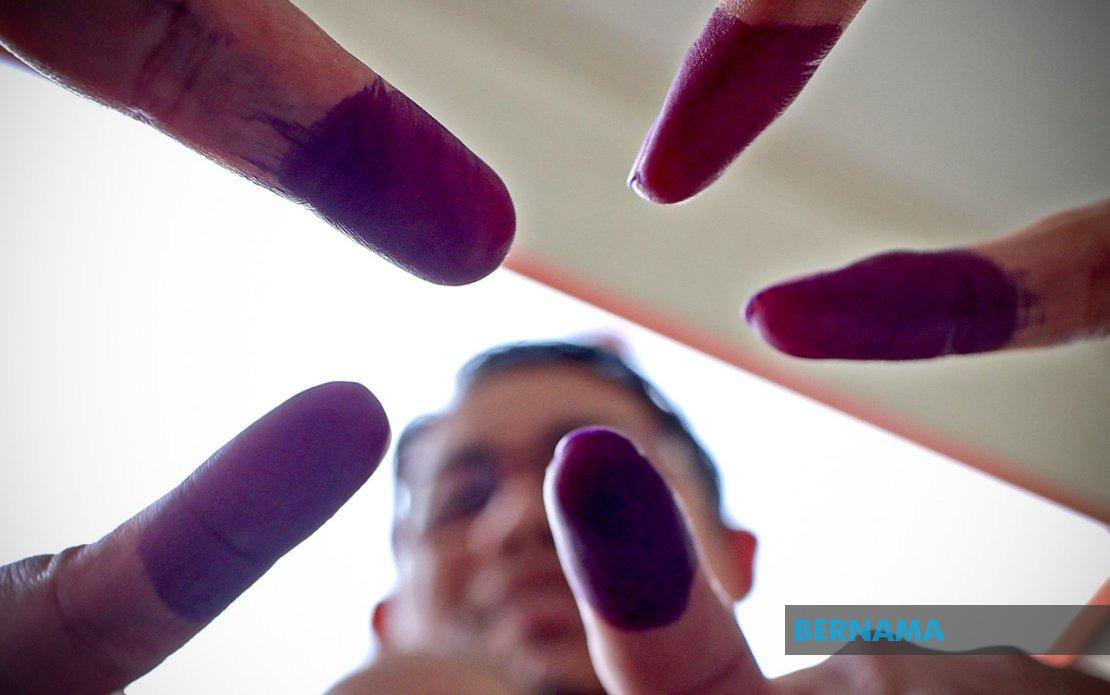
Johor's forthcoming state election on July 11 is shaping up to be decided by voters who have never cast a ballot before and those sitting on the fence between rival coalitions. Political analysts highlight that the combination of Undi18 legislation and automatic voter registration has dramatically expanded the cohort of young, first-time voters—a group with no strong traditional affiliation to any party. In marginal constituencies where victory margins are historically razor-thin, this demographic bloc could emerge as the crucial swing vote that determines who forms the next state government.
The scale of this younger voter base is substantial. Election Commission data reveals that more than 1.29 million registered voters in Johor are aged under 40. Breaking this down further, the commission recorded 587,888 voters between 30 and 39 years old, 544,657 aged 21 to 29, and 165,386 between 18 and 20. This youngest cohort—many casting their votes for the very first time—comprises a significant electoral force that previous state elections did not have to contend with. For political parties accustomed to relying on established voter bases and long-standing loyalties, this represents both opportunity and unpredictability.
Associate Professor Dr Mohd Yusri Ibrahim, research chief at the Ilham Centre, explains that the sheer number of debut voters scattered across every constituency ensures they cannot be ignored or taken for granted. He notes that in tightly contested races, these first-time voters possess the mathematical power to shift the outcome decisively. Unlike voters entrenched in traditional party structures, young and fence-sitting voters are far less bound by historical political identities or familial voting patterns. This independence makes them both attractive to parties seeking to expand their support base and resistant to conventional campaign messaging.
However, winning these voters requires a fundamentally different approach than mobilising core party supporters. According to Mohd Yusri, successful campaigns must recognise that demographic groups respond to distinct messaging channels and appeals. Urban young voters gravitate toward social media platforms where political discourse unfolds in real time, shaped by viral moments, influencer commentary, and peer networks. Older rural voters, by contrast, remain anchored to face-to-face interactions with candidates, community leaders, and local networks built over decades. Parties that recognise this divide and tailor their strategies accordingly gain considerable advantage.
Dr Mohammad Tawfik Yaakub, a senior lecturer in political science at Universiti Malaya, emphasises that the approximately 1.2 million voters aged 18 to 39 represent the election's most influential constituency. This cohort differs fundamentally from older voters in how they evaluate candidates and parties. Rather than defaulting to party loyalty or ethnic and religious appeals, younger voters increasingly demand proof of a candidate's competence, track record, and ability to solve concrete problems affecting their daily lives. They scrutinise whether officials have delivered on past promises and whether they demonstrate genuine understanding of challenges facing younger Malaysians—from employment opportunities and wage stagnation to housing affordability and cost-of-living pressures.
The tension between digital and ground-based campaigning has become critical to electoral success. While social media campaigns can generate awareness, create talking points, and mobilise online activism, they do not automatically convert into votes at the polling station. Dr Mohammad Tawfik warns that parties with strong digital presence but weak grassroots machinery often find their online momentum dissipates when voters actually enter the voting booth. Conversely, traditional parties with entrenched ground networks but limited digital sophistication risk failing to reach and persuade younger, urban voters who consume information primarily through online channels. The parties that excel in this election will be those capable of orchestrating sophisticated campaigns operating simultaneously across multiple platforms and spaces.
Voter sentiment increasingly transcends traditional identity politics, reflecting broader shifts in Malaysian political consciousness. Younger and undecided voters demonstrate greater receptivity to policy-focused platforms that address their material circumstances rather than appeals rooted in ethnicity, religion, or historical party loyalty. Economic concerns—particularly the rising cost of living, stagnant wages, housing affordability, and employment prospects—weigh heavily on younger voters' minds. Parties that articulate credible, detailed solutions to these bread-and-butter issues position themselves advantageously. Conversely, those relying on slogans and identity-based messaging find these arguments less persuasive to fence-sitting voters evaluating their options.
Johor voters are increasingly willing to consider new faces and fresh candidates, breaking away from entrenched incumbent dynamics. However, youth alone does not guarantee electoral support. A young candidate without demonstrated competence, prior track record, or clear policy platform struggles to persuade pragmatic voters. This represents a recalibration of voter expectations: candidates are evaluated on their capacity to perform and deliver, not merely on demographic characteristics or party affiliation. This shift creates opportunities for both new entrants who can credibly position themselves as problem-solvers and challenges for established politicians unable to demonstrate recent achievements.
The election's outcome will ultimately hinge on three interconnected factors. First, the actual turnout among younger and undecided voters—will they participate at historically high rates, or will apathy depress their voting numbers? Second, how these fence-sitters ultimately distribute their votes across competing coalitions and candidates. Third, which parties most successfully address voter anxieties about economic security and opportunity. These calculations are particularly acute in Johor, a state with a competitive political history where marginal constituencies regularly shift allegiances based on electoral tides.
For Malaysia's broader political trajectory, the Johor election serves as a bellwether for evolving voter behaviour. The declining salience of traditional political identities and rising prominence of pragmatic, issue-based voting suggests that future electoral competitions will increasingly resemble consumer choice markets, where voters shop for solutions and performance rather than inherit party affiliation. This evolution challenges established political machines accustomed to stable, predictable voter blocs. As Johor prepares for July 11, political parties across the spectrum will be closely watching whether younger and undecided voters respond to digital-savvy, grassroots-active campaigns that centre on practical solutions to the cost-of-living crisis.

