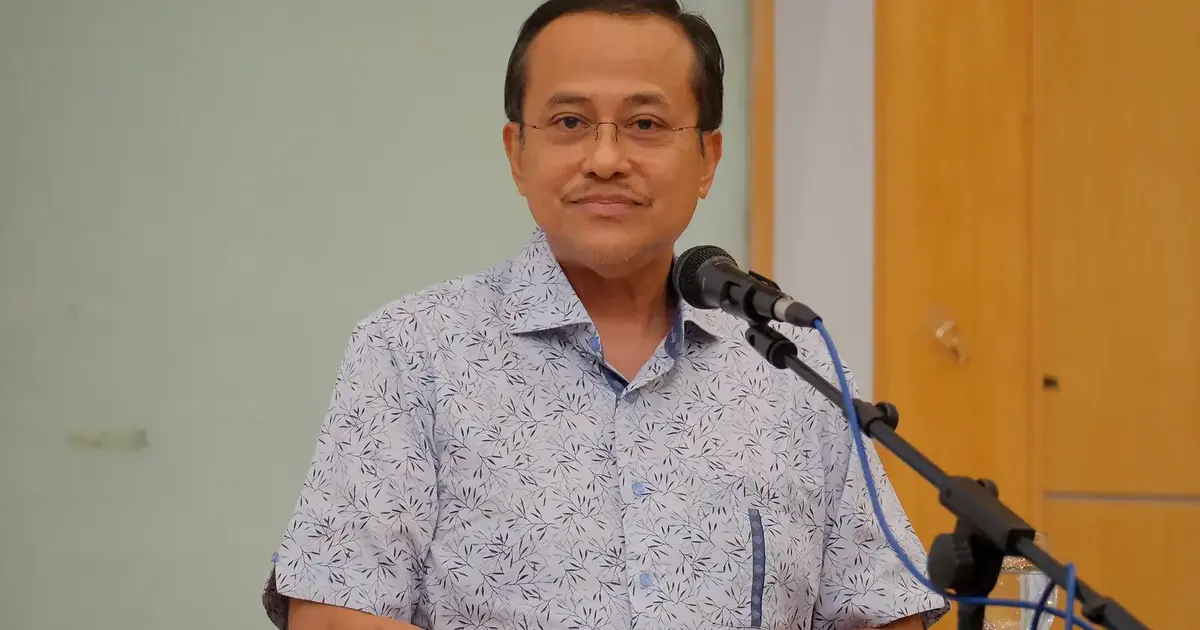
The political temperature in Malaysia appears to be cooling, according to Shahril Hamdan, the former chief of Umno's information department, who suggests that voters are actively searching for leaders who embody restraint and steady-handedness rather than those who rely on aggressive oratory. His observation comes as the nation navigates a complex political landscape where the electorate seems to be reassessing what qualities it values most in its public figures.
Shahril's commentary reflects a broader realignment in voter expectations that extends beyond mere personal preference. The shift towards preferring calm, measured leaders indicates a potential fatigue among the Malaysian public with the prolonged periods of intense political confrontation and polarisation that have characterised recent years. This inclination suggests that voters may be prioritising stability and rational governance over the emotional intensity that has often dominated political discourse.
The emphasis on composure and temperament comes at a significant juncture in Malaysian politics, where numerous leaders compete for public attention and support. By highlighting the appeal of figures who eschew fiery rhetoric, Shahril is essentially charting a new direction that political operatives and candidates might consider as they seek electoral validation. This represents a departure from strategies that have previously relied on stirring speeches and confrontational stances to mobilise bases.
Grand promises, another staple of political campaigning, appear to have similarly lost their lustre with the electorate. Voters increasingly demonstrate scepticism towards sweeping commitments that lack grounded implementation pathways. This wariness likely stems from accumulated experience with campaign pledges that either failed to materialise or proved impractical once parties entered office. The public's growing demand for realism and achievable agendas reflects a maturation in political consciousness.
The reference to leaders like Samsuri encapsulates the profile that appears to resonate with contemporary voters—individuals who conduct themselves with measured tones, communicate transparently about feasible objectives, and project stability rather than volatility. Such leaders typically build trust through consistency and rational problem-solving rather than through charismatic populism or ideological grandstanding. This preference carries implications for how political parties structure their messaging and select candidates for public office.
For Umno specifically, Shahril's observation suggests that the party might gain advantage by repositioning itself around figures embodying these quieter virtues. Given that his remarks come from someone who previously held a prominent role in the party's communications machinery, they carry particular weight as internal reflection rather than external criticism. His insights potentially signal ongoing discussions within party leadership about adapting strategies to contemporary voter sentiment.
This trend towards preferring composed leadership also has significance for Southeast Asia more broadly, where political volatility and rhetorical extremism have characterised recent years in several countries. Malaysia's apparent movement towards valuing calm, capable administrators could influence regional political culture and demonstrate that electorates across the region are reassessing their priorities after experiencing the consequences of more tumultuous political periods.
The shift carries economic implications as well. Investors and business communities typically favour political environments characterised by predictability and rational governance. When voters prioritise calm, competent leadership, they simultaneously create conditions more conducive to economic confidence and investment. Conversely, periods of heightened political rhetoric often correlate with economic uncertainty and capital flight, making the electorate's apparent preference for measured governance economically rational.
However, this preference for calm does not necessarily indicate depoliticisation or reduced civic engagement. Rather, it suggests voters are becoming more discriminating about the style and substance of political discourse. They remain interested in politics and leadership but increasingly demand that these domains be conducted with professionalism and evidence-based policymaking rather than through inflammatory appeals to emotion or narrow sectarian interests.
The implications for Malaysian political parties are substantial. Those that successfully cultivate and promote leaders known for thoughtful deliberation and reliable follow-through on commitments may find themselves advantaged in upcoming electoral contests. Conversely, parties that continue to rely on provocative rhetoric and impossible pledges may discover their appeal narrowing, particularly among middle-class and younger voters who prioritise competence and stability.
As Shahril's observation gains traction in political commentary, it raises questions about how established political narratives will adapt. The dominance of fiery rhetoric has created certain leader types and communication styles that have become embedded in Malaysian politics. Transitioning towards valuing composure requires not only new candidates but also cultural shifts within party organisations, media practices, and voter expectations themselves.
Ultimately, the preference for calm, capable leadership reflects a maturing electorate willing to reward politicians who treat governance as a serious responsibility requiring expertise and restraint rather than as a platform for ideological performance. Whether this sentiment translates into sustained electoral behaviour or represents a temporary shift in the political mood remains to be seen, but Shahril's assessment suggests that Malaysian voters are sending increasingly clear signals about the leadership qualities they value most.

%22%2F%3E%3C%2Fpattern%3E%3C%2Fdefs%3E%3Crect%20width%3D%22100%25%22%20height%3D%22100%25%22%20fill%3D%22url(%23ph40buhg)%22%2F%3E%3Crect%20width%3D%22100%25%22%20height%3D%22100%25%22%20fill%3D%22url(%23ph40buhp)%22%2F%3E%3Ctext%20x%3D%2250%25%22%20y%3D%2250%25%22%20text-anchor%3D%22middle%22%20dominant-baseline%3D%22central%22%20fill%3D%22rgba(255%2C255%2C255%2C0.95)%22%20font-family%3D%22Georgia%2C%20'Times%20New%20Roman'%2C%20serif%22%20font-weight%3D%22700%22%20font-size%3D%22320%22%20letter-spacing%3D%22-0.02em%22%3EGRS%3C%2Ftext%3E%3C%2Fsvg%3E)