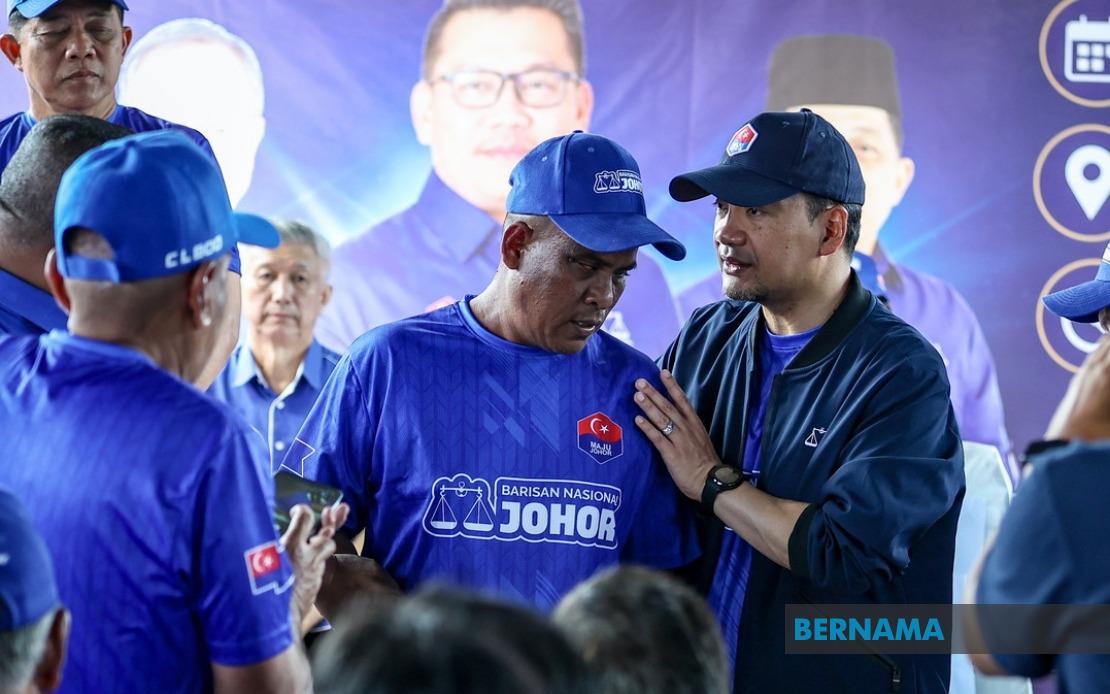
Mohd Hairol Leman refuses to let his blindness from birth constrain his engagement with Malaysia's democratic process. The 46-year-old resident of Kampung Sri Pantai in Senggarang is preparing to cast his ballot in the 16th Johor State Election on July 11, continuing a voting streak that has spanned 16 years and six electoral cycles. His determination to participate underscores how accessibility measures and individual resolve can work together to ensure that persons with disabilities remain active participants in shaping their nation's political future.
For Mohd Hairol, voting transcends mere procedural obligation. He views the act of selecting representatives as a fundamental civic responsibility that directly influences policy outcomes affecting vulnerable communities. His consistent participation since the 12th General Election in 2008 reflects a philosophy that every ballot carries weight in determining the trajectory of both national and state governance. This perspective proves particularly poignant given his status as a recipient of social assistance from the Department of Social Welfare and the Johor State Islamic Religious Council's Baitulmal programme, making him acutely aware of how government decisions ripple through the lives of those most dependent on public support systems.
The mechanics of voting accommodation reveal Malaysia's evolving infrastructure for inclusive democracy. Election Commission officials have facilitated Mohd Hairol's participation by providing assistance during polling periods, enabling him to navigate the voting process independently while receiving necessary support. This arrangement demonstrates that with proper protocols and trained personnel, physical limitations need not exclude anyone from the franchise. The availability of such assistance during the scheduled early voting period on July 7 and main polling day on July 11 ensures that persons with disabilities across the 56 State Legislative Assembly seats can exercise their constitutional rights.
Mohd Hairol's electoral history spans transformative periods in Malaysian politics. His first vote in 2008 coincided with the watershed 12th General Election that reshaped parliamentary composition and ushered in discussions about governance reform. Across subsequent elections—both state and federal—he has witnessed evolving political landscapes, economic challenges, and shifting development priorities. This experience positions him not merely as a spectator to democratic processes but as a participant whose cumulative voting record reflects considered judgment about leadership quality and policy direction.
The upcoming Johor State Election encompasses 172 candidates competing for 56 seats, representing a significant consolidation of political competition at the state level. For voters like Mohd Hairol, this contest holds particular salience because state governments directly administer welfare programmes, social services, and economic development initiatives affecting daily life. His express hope that the incoming administration will sustain empowerment initiatives for vulnerable populations suggests that persons with disabilities are not passive beneficiaries but active voters whose demands for responsive governance shape electoral calculations.
Mohd Hairol's public commitment to voting carries broader implications for disability representation in Malaysian political discourse. By speaking openly about his participation to media at a Barisan Nasional election briefing, he challenges potential stereotypes that disabled persons might be less invested in civic participation. Instead, he models the reality that physical impairment and political engagement operate on entirely separate axes. His willingness to engage with electoral mechanics and express preferences about governance demonstrates that accessibility measures, when properly implemented, unlock participation from demographic segments whose voices might otherwise go unheard in democratic contests.
The trajectory of his voting engagement also illustrates evolving standards in Malaysian electoral administration. Over 16 years, protocols for assisting visually impaired voters have likely become more refined and standardized. The fact that he characterises his voting experiences positively suggests that Election Commission training and procedures have achieved functional effectiveness in accommodating diverse voter needs. This institutional progress reflects broader recognition that democratic legitimacy depends on ensuring that election processes reflect the genuine will of the entire electorate, regardless of physical characteristics.
Mohd Hairol's gratitude toward past leadership contributions to welfare programmes reveals a nuanced understanding of electoral accountability. Rather than viewing elections as abstract political exercises, he connects voter choice directly to material outcomes: cost-of-living assistance, social welfare payments, and targeted support for disadvantaged groups. This transactional understanding of voting demonstrates voter sophistication and an appreciation that electoral mandates carry expectations for continued service delivery. His determination to participate in the July 11 election reflects intention to reward or assess administrative performance against campaign promises and incumbent record.
The psychological dimension of Mohd Hairol's commitment warrants consideration. Maintaining consistent voting participation across six electoral cycles despite living in a society not universally designed for persons with disabilities suggests considerable personal resilience and conviction about democratic principles. Many Malaysian voters cite inconvenience, apathy, or lack of perceived difference between candidates as reasons for non-participation. Mohd Hairol's inverse—maintaining engagement despite considerably greater logistical challenges—indicates that motivation rooted in understanding democracy's value can overcome substantial practical obstacles.
His framing of voting as a reciprocal obligation—both to exercise the franchise himself and to acknowledge past leaders' contributions—positions electoral participation as an expression of mutual accountability. This perspective aligns with democratic theory emphasizing that elections function as mechanisms through which citizens evaluate and hold representatives accountable while representatives remain responsive to constituent needs. For a voter whose welfare depends substantially on public provision, this accountability relationship becomes particularly concrete and consequential.
Looking toward July 11, Mohd Hairol represents a significant proportion of Malaysia's electorate who navigate elections with additional logistical requirements. The 16th Johor State Election provides an opportunity to assess whether electoral infrastructure continues improving to accommodate diverse voter populations. His participation, enabled by Election Commission cooperation, suggests that institutional commitment to inclusive democracy exists, though challenges likely persist in ensuring awareness of available assistance reaches all voters who might benefit from it.
Ultimately, Mohd Hairol's electoral trajectory illuminates how democratic participation functions as both individual choice and collective responsibility. His vision impairment remains secondary to his vision of responsive government, suggesting that Malaysian democracy gains strength when it successfully incorporates perspectives from across the full spectrum of society. As he approaches his sixth voting experience, his continued commitment challenges policymakers to ensure that accessibility improvements match the growing sophistication of voter demands for inclusive, accountable governance.

