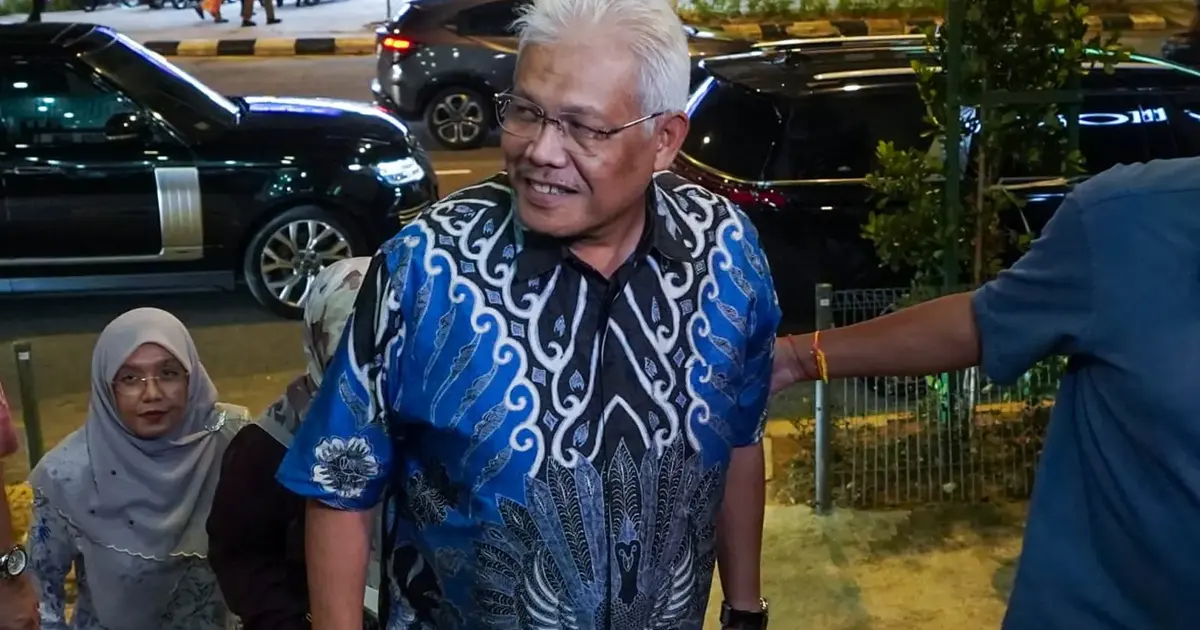
Senior opposition MPs, including Umno deputy president Hamzah Zainudin, were observed entering PAS headquarters for what appears to be an unannounced political engagement, marking the latest move in an increasingly volatile landscape within Malaysia's Perikatan Nasional coalition. The visit underscores the feverish political activity gripping the opposition alliance in the aftermath of last week's dramatic rupture between PAS and Bersatu, a development that has fundamentally altered the arithmetic of Malaysia's fractious multi-party system.
The gathering at the Islamist party's base signals that frontline opposition figures are actively repositioning themselves within the emerging political configuration. Hamzah, a veteran of Malaysian politics who has navigated multiple coalition shifts, arriving at PAS headquarters carries particular weight given Umno's traditional rivalry with the Islamic party. Such a meeting would have been unthinkable during periods of deeper antagonism between the two major conservative Malay-Muslim parties, suggesting that immediate political survival concerns may be overriding longstanding ideological and competitive tensions.
PAS's decision to formally sever its relationship with Bersatu represents one of the most significant realignments within Malaysia's opposition bloc in recent years. The split, announced last week, reflected growing friction over strategic direction, internal governance, and the distribution of political influence within the coalition. For PAS, the break offered an opportunity to reassert its autonomy and chart an independent course, free from what it perceived as Bersatu's inconsistent positioning and perceived drift from core Islamic principles that the party champions.
The implications of this schism extend far beyond internal coalition mechanics. By cutting Bersatu loose, PAS fundamentally weakens the opposition's combined parliamentary presence and disrupts the carefully calibrated balance that Perikatan Nasional had maintained against the government. This fragmentation potentially strengthens the ruling coalition's position, as opposition MPs find themselves dispersed across competing fiefdoms without a unified strategic command structure. Malaysian policymaking may become more susceptible to government initiatives as a result.
For Umno, the timing of Hamzah's appearance at PAS headquarters reflects the party's strategic calculations regarding its own political future. Since losing federal power in 2018, Umno has cycled through different alignments, from supporting the previous Pakatan Harapan government to anchoring the Perikatan Nasional coalition under the Muhyiddin administration. The current configuration finds Umno in formal opposition, though party leaders maintain tacit understandings with government figures, giving the party considerable flexibility in advancing its factional interests.
The meeting's significance also reflects broader trends in Malaysian opposition politics, where the traditional left-right ideological divide has been eclipsed by a more personalistic, patronage-driven competition between rival Malay-Muslim power brokers. Both PAS and Umno derive their primary support from Malay Muslim constituencies, yet they compete fiercely for influence within these overlapping voter bases. Periodic cooperation between the parties represents pragmatic recognition of shared opponents rather than ideological convergence, making such partnerships inherently unstable and opportunistic in character.
Bersatu's position following the PAS split deserves careful scrutiny, as the party faces potential isolation within opposition ranks. Once positioned as a centrist, multi-communal alternative within Perikatan Nasional, Bersatu's loss of PAS partnership leaves it vulnerable to absorption or marginalisation. Party president Muhyiddin Yassin, a seasoned political operator, will likely seek new configurations to maintain relevance, whether through strengthened ties to Umno or by repositioning toward the government coalition itself. Such fluid dynamics create unpredictable parliamentary situations and undermine coherent policy opposition.
From a regional perspective, Malaysia's chronic political instability stemming from coalition fragmentation carries implications for ASEAN governance stability. When domestic politics become consumed by factional manoeuvring and coalition maintenance, governments struggle to prioritise longer-term strategic priorities or implement comprehensive policy agendas. This pattern has repeatedly disrupted Malaysian engagement with regional challenges, from economic competitiveness to climate action and security cooperation.
The upcoming period will likely see intensified negotiations among opposition figures as they attempt to forge workable arrangements within the new post-PAS-Bersatu environment. Whether such meetings lead to formal realignment or represent mere exploratory discussions remains unclear, but the political temperature within opposition ranks has decidedly risen. Malaysian voters observing these developments may reasonably wonder whether their elected representatives' primary concern is advancing substantive policy alternatives or securing personal political survival within fractionalised opposition structures.
The broader lesson from these events concerns the structural weaknesses inherent in Malaysia's multi-party system when coalition discipline breaks down. Without ideological coherence, institutional party structures, or membership-based accountability mechanisms, Malaysian political coalitions function largely as temporary marriage of convenience between power-seeking elites. Such arrangements prove durable only so long as the immediate threat of exclusion from power exceeds the advantages of defection, creating perpetually volatile conditions that work against effective parliamentary oversight and responsible governance.

%22%2F%3E%3C%2Fpattern%3E%3C%2Fdefs%3E%3Crect%20width%3D%22100%25%22%20height%3D%22100%25%22%20fill%3D%22url(%23ph40buhg)%22%2F%3E%3Crect%20width%3D%22100%25%22%20height%3D%22100%25%22%20fill%3D%22url(%23ph40buhp)%22%2F%3E%3Ctext%20x%3D%2250%25%22%20y%3D%2250%25%22%20text-anchor%3D%22middle%22%20dominant-baseline%3D%22central%22%20fill%3D%22rgba(255%2C255%2C255%2C0.95)%22%20font-family%3D%22Georgia%2C%20'Times%20New%20Roman'%2C%20serif%22%20font-weight%3D%22700%22%20font-size%3D%22320%22%20letter-spacing%3D%22-0.02em%22%3EGRS%3C%2Ftext%3E%3C%2Fsvg%3E)