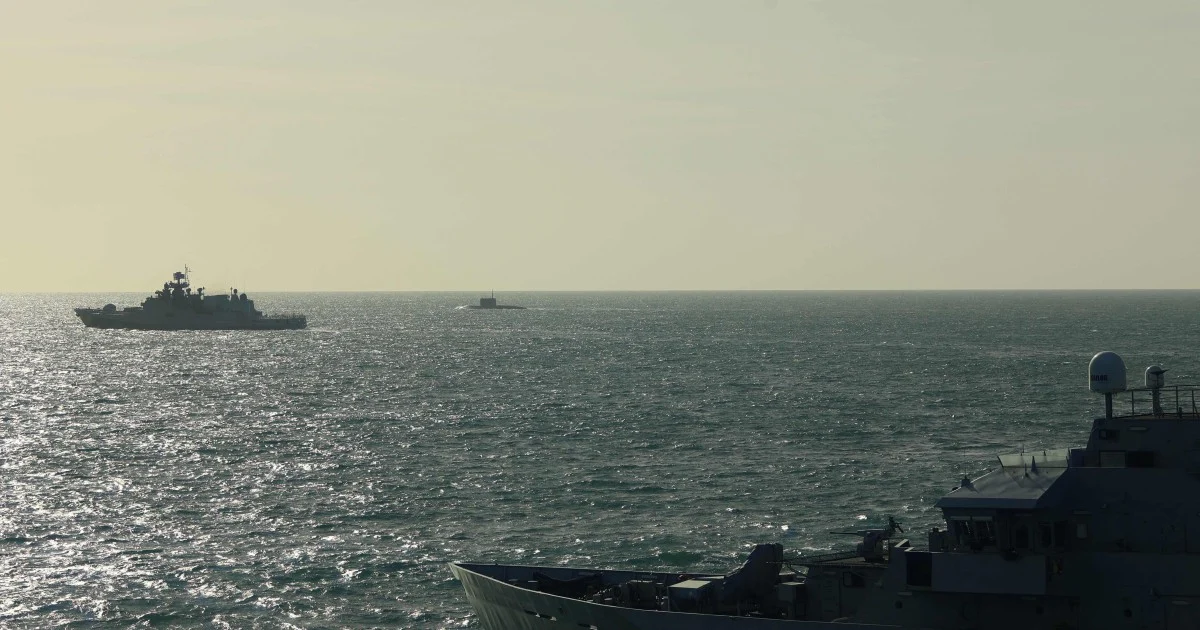
The latest maritime incident involving Russian naval forces has drawn sharp criticism from the British government, with Prime Minister Keir Starmer weighing in on Wednesday to describe the firing of warning shots near a civilian yacht as "reckless" conduct. The characterisation, notably stopping short of labelling the action as deliberately provocative, reflects the careful diplomatic language employed by London even as it registers alarm over the conduct of Russian vessels operating in international waters near British territory.
The incident near the English Channel represents yet another episode in a lengthening pattern of confrontational behaviour at sea between Russian and NATO-aligned vessels. These encounters have become increasingly frequent as Moscow continues to assert its naval presence in waters where Western powers maintain significant maritime interests. For Malaysian and Southeast Asian observers, the English Channel incidents offer a cautionary glimpse into how great power competition can create hazardous conditions for international shipping, a concern that resonates acutely across the region given the critical importance of sea lanes to regional trade.
Starmer's decision to describe the incident as reckless rather than sinister appears calculated to acknowledge the seriousness of the action without escalating the rhetorical temperature further. The distinction between the two characterisations carries diplomatic weight, with "sinister" implying deliberate strategic intent to provoke or intimidate, whilst "reckless" suggests dangerous but perhaps less calculated behaviour. This framing may reflect British assessment that whilst the incident was objectively dangerous and unacceptable, attributing conspiratorial intent could prove counterproductive to de-escalation efforts.
The English Channel has assumed heightened strategic importance in recent years as a focal point of geopolitical competition. The waterway serves as one of the world's busiest maritime passages, with thousands of commercial vessels transiting annually between Europe and global markets. Russian naval activity in these waters has become more assertive since the invasion of Ukraine, with Moscow seemingly intent on demonstrating that it can operate freely in areas adjacent to NATO territory. The frequency of such incidents has created genuine hazards for merchant shipping, potentially affecting international commerce and insurance arrangements.
For regional perspectives, these Channel incidents echo longstanding concerns about freedom of navigation in strategically vital waterways. Southeast Asian nations have historically championed principles of open navigation and peaceful resolution of maritime disputes, particularly given the region's dependence on unimpeded access to crucial sea routes such as the Strait of Malacca. The Russian warship's conduct in firing warning shots, despite occurring thousands of kilometres away, underscores how major power rivalries can establish precedents that affect global maritime norms and potentially embolden similar behaviour elsewhere.
The British government's response to the incident reflects NATO's broader challenge in managing escalating Russian assertiveness without triggering a spiral of confrontation. The alliance has strengthened its presence in Eastern Europe and the North Atlantic following Russia's invasion of Ukraine, but this defensive posture occasionally generates tense encounters at sea. Starmer's measured language suggests that despite the provocative nature of warning shots, London believes maintaining communication channels and avoiding inflammatory rhetoric remains strategically prudent.
Russian naval operations near British waters have intensified alongside broader tensions stemming from the Ukraine conflict. Moscow has deployed submarines, warships, and surveillance vessels with greater frequency in waters once considered firmly within Western spheres of influence. These operations appear designed to demonstrate Russian capability and resolve, whilst also gathering intelligence on NATO maritime activities. The firing of warning shots, however, crosses from surveillance into direct confrontation, creating physical danger for civilian maritime traffic that shares the waterway.
The yacht mentioned in the incident highlights the vulnerability of civilian vessels caught in zones where military powers conduct operations. Maritime commercial interests depend upon predictable and lawful conduct from all parties operating in international waters. When military vessels fire warning shots, however justified they may be by particular maritime rules, they inject danger into shipping lanes where ordinary commercial vessels expect safe passage. This dynamic carries implications for insurance costs, routing decisions, and the overall efficiency of global maritime commerce.
The incident occurs against a backdrop of sustained strain in UK-Russia relations, with diplomatic engagement largely frozen since the Ukraine invasion. Unlike during the Cold War, when formal channels existed for managing maritime incidents, current communication between London and Moscow remains limited. This absence of robust crisis communication mechanisms potentially increases the risk that future maritime confrontations could escalate unexpectedly. The shooting incident, whilst resolved without casualties, demonstrates how quickly tensions can develop when military vessels from opposing camps operate in proximity.
From a Malaysian viewpoint, these European maritime tensions reinforce the importance of maintaining robust international legal frameworks governing naval conduct. Southeast Asian nations have consistently advocated for adherence to the United Nations Convention on the Law of the Sea and peaceful resolution of maritime disputes. The English Channel incident, though distant geographically, represents the kind of brinkmanship that Malaysian policymakers and maritime authorities observe with concern, particularly given the region's own competing maritime claims and the presence of major power navies in regional waters.
The British government's restrained response, whilst appropriate to the immediate circumstances, may signal to other actors that military provocations in contested waters carry limited diplomatic consequences. Moscow's continued assertiveness in European maritime zones suggests that current British and NATO responses have not substantially altered Russian calculations regarding the risks and benefits of such operations. Whether London pursues additional countermeasures or opts for continued measured responses will influence how Russian naval conduct evolves in coming months.


%22%2F%3E%3C%2Fpattern%3E%3C%2Fdefs%3E%3Crect%20width%3D%22100%25%22%20height%3D%22100%25%22%20fill%3D%22url(%23ph40buhg)%22%2F%3E%3Crect%20width%3D%22100%25%22%20height%3D%22100%25%22%20fill%3D%22url(%23ph40buhp)%22%2F%3E%3Ctext%20x%3D%2250%25%22%20y%3D%2250%25%22%20text-anchor%3D%22middle%22%20dominant-baseline%3D%22central%22%20fill%3D%22rgba(255%2C255%2C255%2C0.95)%22%20font-family%3D%22Georgia%2C%20'Times%20New%20Roman'%2C%20serif%22%20font-weight%3D%22700%22%20font-size%3D%22320%22%20letter-spacing%3D%22-0.02em%22%3EGRS%3C%2Ftext%3E%3C%2Fsvg%3E)