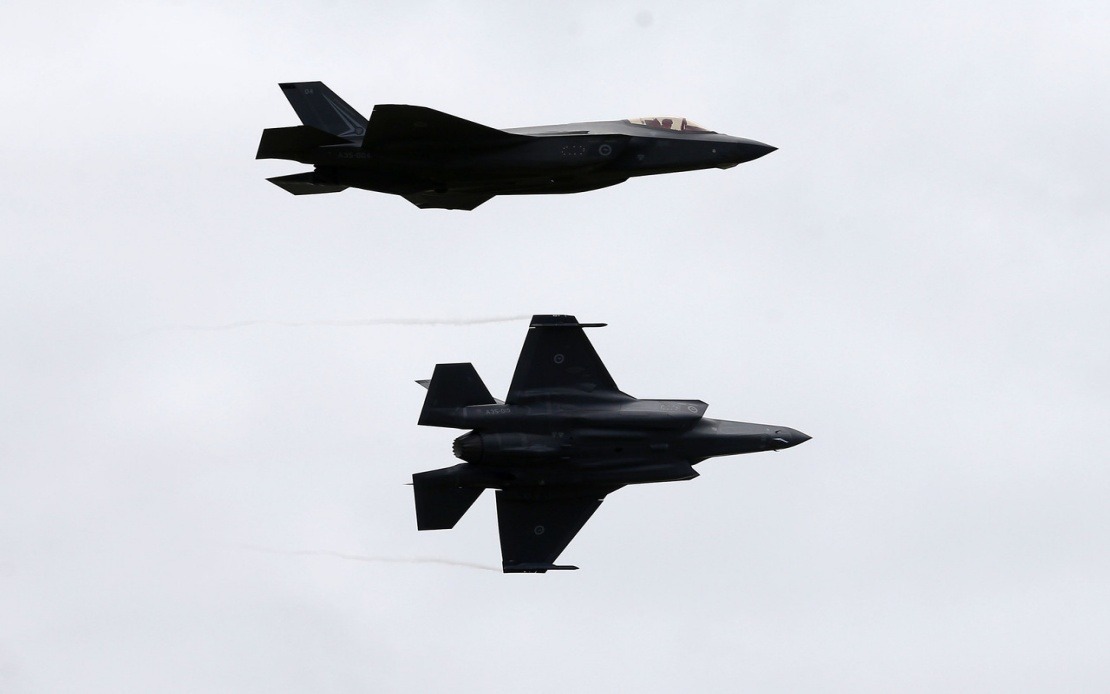
Three major Western democracies have taken a significant step forward in developing cutting-edge military aviation technology, signing a substantial defence contract that underscores deepening strategic partnerships in an increasingly contested global security environment. The UK, Italy, and Japan announced a £4.6 billion (US$6.1 billion) agreement to accelerate work on a sixth-generation stealth fighter aircraft, marking what their governments describe as a crucial breakthrough for the Global Combat Air Programme (GCAP).
The contract represents a collaborative industrial undertaking of considerable scale, with all three nations jointly funding the initiative. Rather than one country shouldering the development costs alone, the partnership distributes financial responsibility and technological expertise across three advanced economies, each bringing distinct capabilities to the project. This trilateral approach reflects broader patterns in modern defence procurement, where complex weapons systems often emerge through international consortia rather than purely national programmes.
The work will be executed through Edgewing, a joint venture formally established in 2025 that brings together three of the world's most accomplished defence contractors: Britain's BAE Systems, Italy's Leonardo, and Japan's Aircraft Industrial Enhancement Co. Ltd. (JAIEC). This industrial structure pools the aerospace and defence expertise of three major manufacturers, each with extensive experience in fighter jet development and integration of advanced technologies. The consortium model allows for specialisation and prevents unnecessary duplication of research and development efforts.
The immediate focus of this new contract phase centres on detailed design work and establishment of the aircraft's fundamental specifications. Engineers and designers from the three nations will work to translate the programme's long-term vision into concrete technical requirements, conducting rigorous testing protocols to validate concepts before committing to full-scale production. This methodical approach reduces the risk of costly modifications later in development, a lesson learned from previous complex defence projects.
According to statements from the British government, the new fighter is envisioned as part of a transformed Royal Air Force operating ecosystem. Rather than replacing existing aircraft entirely, the GCAP fighter will operate alongside current Typhoon jets and American F-35s, alongside autonomous systems and other unmanned platforms. This integrated approach acknowledges that future air warfare involves complex networks of manned and unmanned assets rather than individual aircraft operating in isolation.
The technological ambitions embedded in the programme are substantial. Developers plan to incorporate advanced digital engineering, artificial intelligence systems, and breakthrough technologies not yet standard on existing fighters. These capabilities would position the aircraft at the frontier of combat aviation when it enters service around 2035, providing allied air forces with decisive advantages during a period when technological competition with strategic rivals is intensifying.
For Malaysia and the broader Southeast Asian region, this development carries several implications worth considering. The emergence of sixth-generation fighter technology in allied hands reshapes the balance of power dynamics relevant to Indo-Pacific security, a region where Malaysia's own strategic interests are deeply rooted. As advanced nations invest heavily in next-generation combat capabilities, smaller and mid-sized countries must recalibrate their own defence strategies and procurement decisions.
The timeline to 2035 reflects the extended development cycles required for such sophisticated military platforms. Unlike commercial aerospace where competitive pressures accelerate innovation, defence projects typically follow longer paths involving extensive testing, validation, and integration phases. This extended schedule provides some breathing room for other nations to assess technology trends and make informed choices about their own air force modernisation programmes.
The arrangement also demonstrates how technology-sharing and joint development can strengthen alliances while distributing substantial financial burdens. For defence industries in participating nations, the GCAP contract represents significant employment opportunities and industrial capacity utilisation across multiple years, sustaining skilled workforces and technical expertise in critical sectors.
The collaboration between the UK, Italy, and Japan carries symbolic weight beyond its immediate military dimensions. It signals alignment among three democracies confronting shared strategic challenges, from great power competition to emerging threats in both established and novel warfare domains. This partnership, formulated through defence cooperation, reflects deeper political and economic ties that bind these nations to common security interests.
As the programme advances through its design phase, stakeholders across the Asia-Pacific will monitor progress closely. The eventual capabilities of the GCAP fighter will influence regional defence calculations and potentially affect procurement decisions by allied nations throughout the Indo-Pacific, including partners close to Malaysia's own strategic considerations.
The investment represents more than hardware procurement; it embodies confidence in sustained technological innovation, commitment to long-term defence planning, and willingness to engage in complex international industrial cooperation. For small and medium-sized nations observing from the region, the initiative underscores the reality that cutting-edge military capability remains concentrated among technologically advanced economies with substantial industrial bases and research infrastructure.

