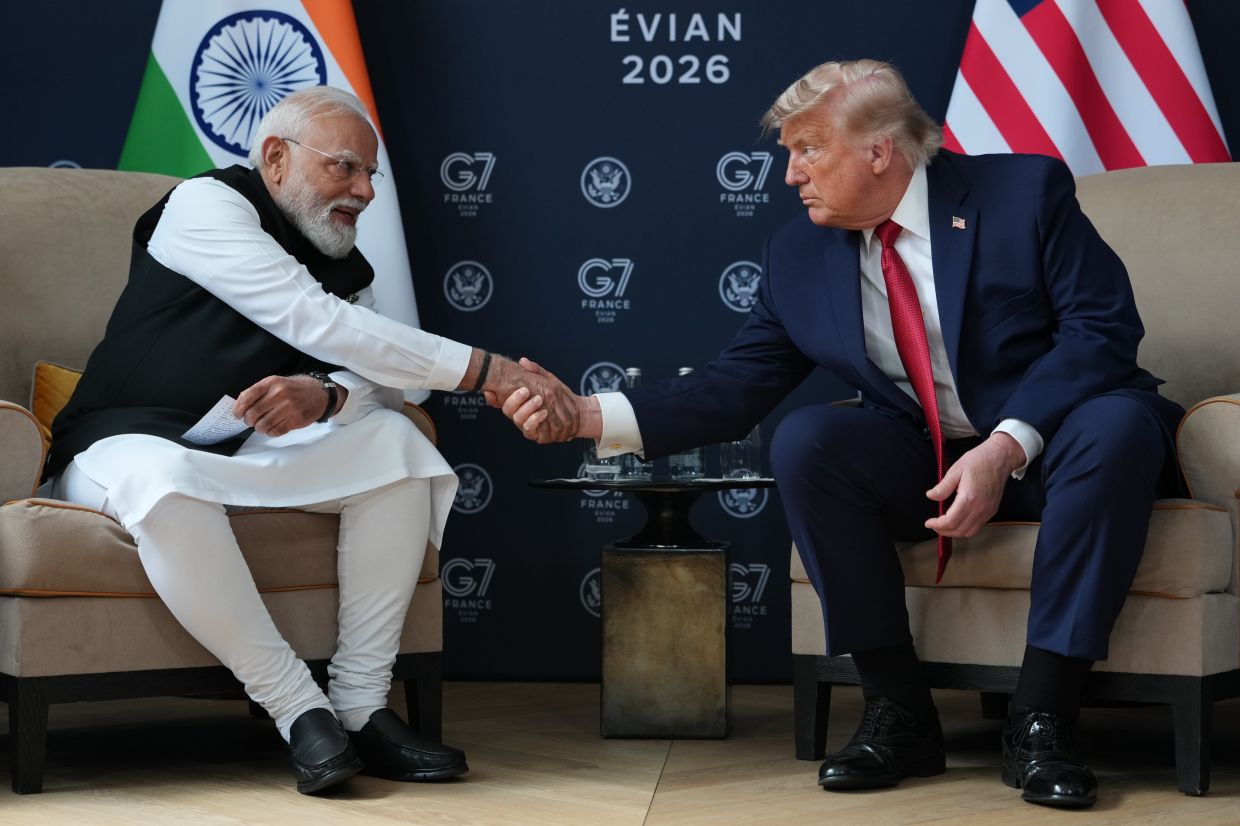
During their first bilateral meeting in over a year, US President Donald Trump and Indian Prime Minister Narendra Modi faced an awkward diplomatic moment when questioned about three Indian nationals killed in recent American military operations. Rather than offering condolences, Trump brushed aside the tragedy by framing commercial shipping as inherently dangerous work, a comment that has reverberated uncomfortably across New Delhi's political landscape and underscored underlying tensions beneath the veneer of US-India friendship.
The deaths occurred when US forces launched missiles at the Palau-flagged MT Settebello, a commercial cargo vessel, last week in the strategic Strait of Hormuz. The incident was part of a broader American enforcement campaign against what US Central Command characterised as violations of its blockade targeting Iranian oil shipments. In addition to the Settebello attack, American forces targeted two other commercial vessels crewed by Indian nationals for similar alleged infractions, raising concerns about the risks ordinary merchant sailors face caught between geopolitical tensions in one of the world's most critical shipping corridors.
When speaking to reporters immediately after the bilateral meeting concluded, Trump adopted a dismissive tone that contrasted sharply with diplomatic convention. His remarks, which acknowledged hearing about the incident but offered neither sympathy nor regret, framed the deaths as an inevitable consequence of seafaring rather than a matter requiring serious engagement. "This has been happening throughout time, but we work together," Trump said, before attempting to pivot toward expressions of general goodwill toward Indian nationals. For many observers, the comment appeared to trivialise a significant tragedy that had direct implications for bilateral relations and the safety protocols governing military operations in contested waters.
Meanwhile, India's External Affairs Minister S. Jaishankar adopted a markedly different posture, publicly registering strong protest during separate communication with American counterparts. Yet the State Department's official readout of their conversation revealed the fundamental disagreement underlying their discussion. American officials emphasised their commitment to enforcing the blockade on Iranian ports and signalled that violations would not be tolerated, effectively doubling down on the policy that precipitated the deadly strikes. This apparent refusal to acknowledge Indian concerns or recalibrate approach triggered visible anger within India's political establishment and general public.
The diplomatic friction manifested itself in remarkable street-level displays of discontent. Video footage emerged showing auto rickshaw drivers in Delhi removing Trump posters from their vehicles, posters that formed part of a carefully orchestrated US embassy public relations campaign featuring birthday greetings to America alongside the US president's image. The act of defacement, captured and circulated through social media, represented a rare and pointed rejection of American diplomatic outreach by ordinary Indians, signalling that goodwill gestures could not override tangible grievances resulting from military actions.
India's political opposition seized on Trump's apparent indifference as evidence of inadequate government pushback. Rahul Gandhi, a prominent opposition leader, launched a sharp critique accusing Prime Minister Modi of capitulating to American pressure without asserting India's sovereign interests. Taking to social media, Gandhi characterised the government's muted response as servile compliance rather than principled diplomacy, arguing that a genuinely independent nation would never accept such dismissive language regarding the deaths of its citizens. His commentary highlighted growing internal debate about whether Modi's government had prioritised the strategic relationship with Washington at the expense of defending Indian lives and national dignity.
Despite the current friction, both leaders attempted to project confidence in the broader relationship. Trump described Modi as both a tough negotiator and great leader, pledging a future visit to India to reinforce commitment to the partnership. Modi's statement about ensuring seafarer safety through implementation of bilateral agreements attempted to redirect focus toward future cooperation and safety assurances. Yet these reassurances felt somewhat perfunctory given the immediate context of unresolved deaths and lingering questions about accountability and policy adjustment.
The two nations have been engaged in substantive trade negotiations since their last meeting in February 2025, when discussions began on a comprehensive bilateral trade agreement that would position India among the first countries to enter formal trade talks with the new Trump administration. These negotiations assume heightened significance given that trade agreements typically include provisions addressing maritime safety, commercial vessel protection, and dispute resolution mechanisms. US Trade Representative officials remain engaged in discussions over an interim trade deal framework, suggesting that economic cooperation remains a vehicle through which both sides might address underlying tensions.
Recently, US Secretary of State Marco Rubio visited India separately and characterised the country as one of America's most strategically important partners, language designed to reinforce the relationship's significance beyond the current dispute. Yet such messaging carries less impact when military actions directly harm Indian nationals and senior American officials appear unwilling to express basic human sympathy or acknowledge legitimate grievances. The challenge for both governments lies in reconciling their stated commitment to strategic partnership with the practical reality that American military operations continue affecting Indian citizens and interests.
For Malaysia and other Southeast Asian nations observing this dynamic, the episode offers instructive lessons about the complexities of aligning with major powers. India's experience demonstrates that even strategically valuable partnerships with Washington do not guarantee protection from military consequences of American policy choices, particularly regarding Middle Eastern security concerns. As regional states navigate their own relationships with the United States, China, and India itself, the MT Settebello incident serves as a sobering reminder that geopolitical alignment carries tangible human costs and that diplomatic sophistication requires genuine reciprocal respect rather than performative expressions of partnership.
The immediate impact remains unclear, though the incident has exposed fissures in the US-India relationship that transcend official talking points. Whether Modi's government can leverage the trade negotiations to establish firmer protections for Indian commercial shipping in contested waters, or whether the relationship will move forward with these fundamental disagreements unresolved, will shape regional perceptions of American reliability as a strategic partner in an increasingly volatile geopolitical environment.
%22%2F%3E%3C%2Fpattern%3E%3C%2Fdefs%3E%3Crect%20width%3D%22100%25%22%20height%3D%22100%25%22%20fill%3D%22url(%23ph2y81qg)%22%2F%3E%3Crect%20width%3D%22100%25%22%20height%3D%22100%25%22%20fill%3D%22url(%23ph2y81qp)%22%2F%3E%3Ctext%20x%3D%2250%25%22%20y%3D%2250%25%22%20text-anchor%3D%22middle%22%20dominant-baseline%3D%22central%22%20fill%3D%22rgba(255%2C255%2C255%2C0.95)%22%20font-family%3D%22Georgia%2C%20'Times%20New%20Roman'%2C%20serif%22%20font-weight%3D%22700%22%20font-size%3D%22320%22%20letter-spacing%3D%22-0.02em%22%3ETV3%3C%2Ftext%3E%3C%2Fsvg%3E)
%22%2F%3E%3C%2Fpattern%3E%3C%2Fdefs%3E%3Crect%20width%3D%22100%25%22%20height%3D%22100%25%22%20fill%3D%22url(%23ph2pvjyg)%22%2F%3E%3Crect%20width%3D%22100%25%22%20height%3D%22100%25%22%20fill%3D%22url(%23ph2pvjyp)%22%2F%3E%3Ctext%20x%3D%2250%25%22%20y%3D%2250%25%22%20text-anchor%3D%22middle%22%20dominant-baseline%3D%22central%22%20fill%3D%22rgba(255%2C255%2C255%2C0.95)%22%20font-family%3D%22Georgia%2C%20'Times%20New%20Roman'%2C%20serif%22%20font-weight%3D%22700%22%20font-size%3D%22170%22%20letter-spacing%3D%22-0.02em%22%3EJudicial%3C%2Ftext%3E%3C%2Fsvg%3E)