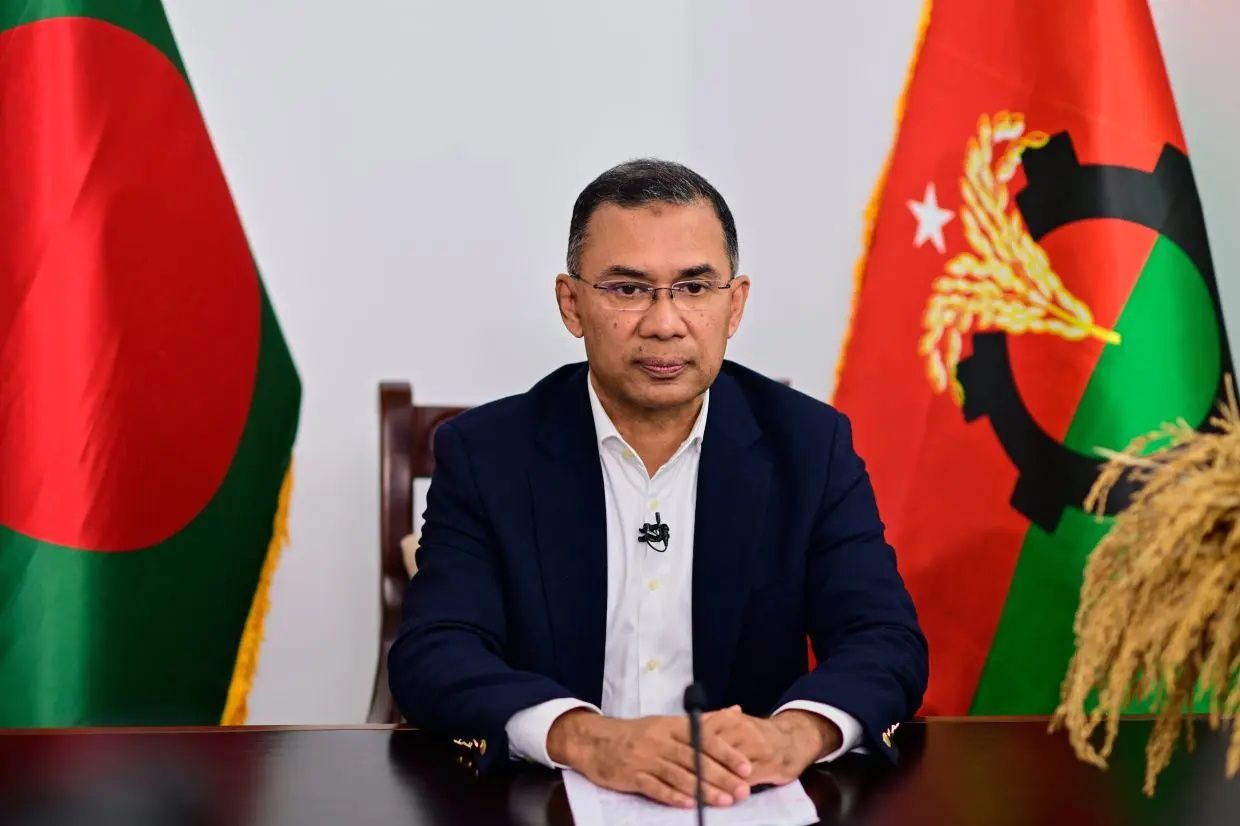
Bangladesh Prime Minister Tarique Rahman is embarking on his maiden international journey since taking office, with scheduled stops in Malaysia and China that underscore a deliberate recalibration of Dhaka's regional relationships. The foreign ministry confirmed Saturday that Rahman will arrive in Malaysia on Sunday before proceeding to Beijing the following day, a sequencing that carries significant diplomatic weight in a region where the order of first visits often signals strategic priorities.
The decision to visit Malaysia before China, and notably to bypass India entirely despite its status as Bangladesh's geographical neighbour, reflects the complex dynamics that have reshaped South Asian geopolitics over the past year. Bangladesh remains bordered almost entirely by Indian territory except for its coastline, yet the choice to look eastward first demonstrates how severely bilateral relations have deteriorated since the tumultuous events of 2024 that ousted former Prime Minister Sheikh Hasina from power.
Rahman's itinerary signals an intention to diversify Bangladesh's economic partnerships at a critical juncture for the country's development. Malaysia, home to an estimated 800,000 Bangladeshi workers—representing more than a third of that nation's total foreign workforce—represents a crucial economic anchor for hundreds of thousands of families reliant on remittances. The visit offers opportunity to strengthen the bilateral relationship and explore avenues for expanded trade and labour cooperation that have become increasingly vital to Bangladesh's economy.
The subsequent leg to China carries equally significant implications for Bangladesh's infrastructure ambitions and long-term growth trajectory. Beijing is expected to discuss trade partnerships and infrastructure development initiatives, with particular emphasis on Chinese involvement in Bangladesh's long-pending infrastructure projects. Among these, the Teesta river restoration scheme represents a flagship initiative that has languished for years despite its potential to transform water management and agricultural productivity across northern Bangladesh.
The Teesta project exemplifies the infrastructure gaps that Beijing is increasingly positioned to fill across South Asia. The initiative encompasses comprehensive river restoration through dredging operations, embankment construction, and irrigation infrastructure development—precisely the type of large-scale engineering undertaking where Chinese firms have accumulated substantial expertise and capital. If China commits resources to this endeavour, it would represent a tangible demonstration of Beijing's willingness to bankroll Bangladesh's development priorities while simultaneously expanding Chinese influence in a strategically important nation.
The diplomatic rupture with India stems from fundamental disagreements about the 2024 uprising that toppled Hasina's government. The former prime minister, who maintained close ties with New Delhi, fled to India when mass protests forced her from power, and she remains in hiding there. Bangladesh's new administration has repeatedly demanded her extradition, creating a persistent friction point with India that shows little sign of resolution. This unresolved tension encapsulates deeper anxieties about sovereignty and regional autonomy that animate contemporary Bangladesh political discourse.
Border security has emerged as another flashpoint in the deteriorating relationship. India has faced criticism for allowing individuals it categorizes as undocumented migrants to cross into Bangladesh, a practice that Bangladesh views as both destabilizing and disrespectful of territorial integrity. These accumulating grievances have contributed to a broader reorientation of Bangladesh's foreign policy stance, one that appears less deferential to Indian strategic preferences and more open to hedging through engagement with other major powers.
Tarique Rahman assumed the premiership in February following elections held under Bangladesh's interim administration, which had governed since Hasina's departure. The transition offered an opportunity to reset bilateral relations with India, but incremental improvements have proven fragile in the face of persistent structural tensions. India's historical preponderance as Bangladesh's primary external security guarantor and trade partner meant that any significant cooling of ties carried substantial costs, yet the political dynamics unleashed by 2024's upheaval have proven stronger than institutional inertia.
China's courtship of Bangladesh must be understood within the broader context of Sino-Indian rivalry across South Asia. New Delhi remains deeply apprehensive about Beijing's expanding influence in its traditional sphere of influence, and the world's two most populous nations increasingly compete for primacy in regional infrastructure development, trade relationships, and strategic positioning. Bangladesh's geographic location, substantial population, and economic potential make it a prize in this competition, particularly as China advances initiatives like the Belt and Road Initiative across Asia.
The foreign ministry has characterized these visits as part of a comprehensive diplomatic initiative designed to strengthen Bangladesh's economic partnerships and diversify its external relationships. This framing reflects recognition that overreliance on any single power—whether India, China, or the United States—carries risks in an era of great-power competition. Bangladesh's development requires access to capital, technology, and markets, and the nation's leaders appear increasingly determined to access these resources without excessive deference to any single external actor.
For Malaysian observers, Rahman's visit carries implications for Southeast Asian engagement with South Asia more broadly. As India and China jockey for position across the region, medium powers like Malaysia and Bangladesh have opportunities to forge partnerships based on mutual economic interest rather than alignment in broader geopolitical competitions. The presence of such a large Bangladeshi diaspora in Malaysia has created tangible people-to-people connections and shared economic interests that transcend traditional great-power rivalries.
The visit also signals Bangladesh's intention to position itself as part of broader Asian economic networks rather than confining itself to South Asian frameworks. Enhanced engagement with ASEAN nations like Malaysia represents a strategic pivot toward Southeast Asia's dynamism and away from South Asia's more fraught political environment. As Bangladesh seeks to develop as a middle-income nation and eventually achieve upper-middle-income status, access to Southeast Asian expertise, capital, and markets becomes increasingly valuable.
Rahman's diplomatic venture carries risks as well as opportunities. Closer alignment with China without carefully managing the India relationship could invite unintended consequences, given India's enormous capacity to affect Bangladesh's security and economic interests through its control of water resources and land borders. Successfully navigating this delicate balance requires sophisticated diplomacy and clear communication about Bangladesh's intention to maintain relationships with multiple powers rather than realigning decisively away from India. How Rahman manages these competing pressures will substantially influence Bangladesh's regional positioning for years to come.