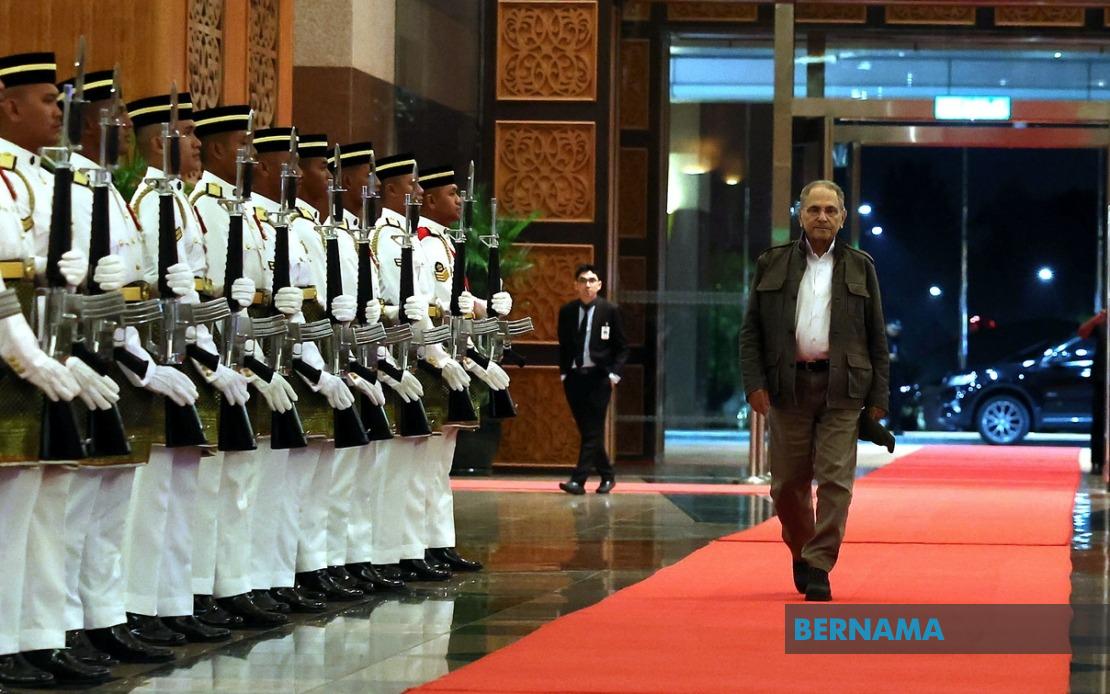
Timor-Leste President Jose Ramos-Horta concluded a five-day strategic visit to Malaysia on June 17, departing from Kuala Lumpur International Airport in the early morning hours. The high-profile engagement marks another chapter in the strengthening relationship between the two Southeast Asian nations, as both capitals seek to expand cooperation across multiple sectors ranging from trade and investment to security and development.
The timing of Ramos-Horta's departure—boarding a Batik Air flight at 2.15 am from KLIA Terminal 1—underscored the intensive schedule maintained during his time in Malaysia. Upon his arrival at the airport complex just before 1.35 am, the Nobel Peace Prize-winning leader received formal recognition through a static Guard of Honour provided by personnel from the First Battalion Royal Ranger Regiment, signalling Malaysia's respect for the visiting dignitary.
During his Malaysian sojourn, Ramos-Horta took part in a significant dialogue session titled "A Changing World, Enduring Values" on June 15, where he articulated a notably positive assessment of Malaysia-Timor-Leste relations. His characterisation of bilateral ties as "exceptionally good" reflected genuine appreciation for Malaysia's multifaceted role in his nation's development trajectory. The president specifically highlighted Malaysia's demonstrated achievements across three critical dimensions: maintaining robust security arrangements, sustaining democratic governance, and achieving meaningful economic progress—all areas where Timor-Leste itself aspires to excel.
The historical dimension of Malaysia's engagement with Timor-Leste featured prominently in Ramos-Horta's remarks. He acknowledged Malaysia's consistent backing even before Timor-Leste's formal independence in 2002, a period when the young nation was navigating the complexities of separation from Indonesia. Particularly significant was Malaysia's contribution to United Nations peacekeeping operations in 1999, when international forces helped stabilise the territory during its transition to sovereignty. This historical context reveals the depth of institutional cooperation that has underpinned the bilateral relationship.
A pivotal moment in Timor-Leste's regional integration came with its acceptance as ASEAN's 11th member on October 26, 2025. Ramos-Horta explicitly credited Malaysia's support for this achievement, noting Malaysia's instrumental role during its ASEAN chairmanship. This accession represents a watershed for Timor-Leste, transforming it from an observer into a full participant in regional decision-making structures and initiatives. The significance extends beyond symbolic recognition; it grants the nation access to ASEAN's institutional frameworks, dispute resolution mechanisms, and collective security arrangements.
Looking ahead, Ramos-Horta conveyed confidence in Timor-Leste's capacity to host the ASEAN Summit in 2029, an undertaking that requires substantial infrastructure development and institutional preparation. The president noted that his government is accelerating infrastructure projects to meet the hosting requirements, demonstrating tangible commitment to regional leadership responsibilities. For Malaysia and other ASEAN capitals, successful hosting by Timor-Leste would further embed the newcomer into regional structures and showcase the bloc's inclusivity.
Economic cooperation emerged as a central theme of the visit. Ramos-Horta actively promoted Timor-Leste as an investment destination, particularly in infrastructure development. His pitch to Malaysian investors emphasised three structural advantages: a low national debt burden, a substantial sovereign wealth fund providing financial flexibility, and endorsement from major multilateral financing institutions. These characteristics distinguish Timor-Leste from many developing nations struggling with debt sustainability, positioning it as a relatively lower-risk environment for long-term capital deployment.
Prime Minister Datuk Seri Anwar Ibrahim underscored Malaysia's receptiveness by hosting a formal luncheon at Seri Perdana Complex. The bilateral discussions during this engagement covered expansive terrain: trade relations, investment promotion, human capital development, educational cooperation, and technical training programmes. This breadth reflects both nations' recognition that sustainable partnership requires multidimensional engagement rather than narrow transactional relationships.
Current trade statistics, however, reveal significant room for growth. Bilateral commerce in 2024 reached just USD18.72 million (RM85.68 million), with Malaysia accounting for USD18.37 million of exports and Timor-Leste contributing a mere USD0.35 million in imports. The asymmetry underscores both the nascent nature of economic ties and the untapped potential for expansion. For context, Malaysia's trade relationships with established ASEAN partners far exceed these figures, suggesting that as Timor-Leste develops and integrates more fully into regional supply chains, bilateral commerce could accelerate substantially.
The visit's strategic importance transcends bilateral considerations. Malaysia benefits from deeper engagement with Timor-Leste as it consolidates ASEAN cohesion and extends its influence eastward within the bloc. For Malaysian firms, particularly in construction, engineering, and technical services, the infrastructure investment wave anticipated in Timor-Leste represents commercial opportunities. Conversely, Timor-Leste gains access to Malaysia's capital markets, technological expertise, and regional connectivity.
Ramos-Horta's emphasis on Timor-Leste's readiness for regional responsibilities signals maturation of a nation that gained independence only two decades ago. ASEAN membership, combined with strengthening ties with established democracies like Malaysia, provides institutional anchors for continued development. The investment push reflects Timor-Leste's recognition that sustainable growth requires foreign capital, technical expertise, and integration into regional production networks—precisely what enhanced Malaysia ties can facilitate.
As geopolitical currents in Southeast Asia continue shifting, with great power competition intensifying and regional stability increasingly contested, the Malaysia-Timor-Leste relationship gains added significance. Both nations share interests in maintaining ASEAN unity, respecting international law in maritime disputes, and resisting external pressure. The five-day visit thus represented more than ceremonial engagement; it constituted strategic positioning for a region increasingly critical to global security and economic architecture.

%22%2F%3E%3C%2Fpattern%3E%3C%2Fdefs%3E%3Crect%20width%3D%22100%25%22%20height%3D%22100%25%22%20fill%3D%22url(%23ph40buhg)%22%2F%3E%3Crect%20width%3D%22100%25%22%20height%3D%22100%25%22%20fill%3D%22url(%23ph40buhp)%22%2F%3E%3Ctext%20x%3D%2250%25%22%20y%3D%2250%25%22%20text-anchor%3D%22middle%22%20dominant-baseline%3D%22central%22%20fill%3D%22rgba(255%2C255%2C255%2C0.95)%22%20font-family%3D%22Georgia%2C%20'Times%20New%20Roman'%2C%20serif%22%20font-weight%3D%22700%22%20font-size%3D%22320%22%20letter-spacing%3D%22-0.02em%22%3EGRS%3C%2Ftext%3E%3C%2Fsvg%3E)