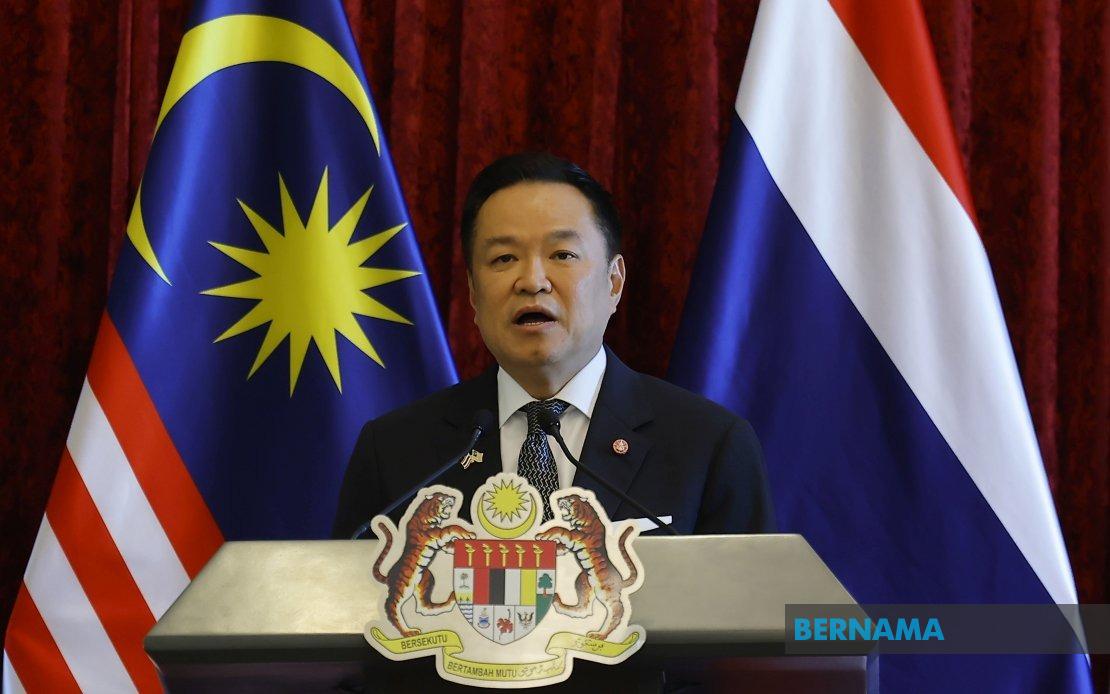
Thailand's Prime Minister Anutin Charnvirakul has publicly endorsed Malaysian counterpart Datuk Seri Anwar Ibrahim as polling approaches for the Johor state election, signalling continued goodwill between the neighbouring nations. Speaking at a joint press conference in Putrajaya during his official visit to Malaysia, Anutin offered his good wishes for the electoral contest, a gesture reflecting the warm diplomatic ties between Bangkok and Kuala Lumpur despite the distinct political trajectories each nation has navigated in recent years.
The Johor state election represents a significant political moment for Anwar's administration. The 16th state poll, scheduled to take place on Saturday, will see competition across all 56 state assembly constituencies, with 172 candidates in total contending for seats. This statewide contest comes at a critical juncture for the federal government's broader political standing, as state-level results frequently carry implications for national parliamentary dynamics and coalition stability.
Anwar's ruling coalition, Pakatan Harapan, has committed to fielding candidates in every single constituency, demonstrating confidence in its organisational capacity and electoral prospects. The coalition's slate comprises a deliberate mix of seasoned political veterans alongside newer entrants drawn from its three constituent parties: PKR, DAP, and Amanah. This strategic blending of experience and fresh faces suggests an attempt to balance established political networks with the need to appeal to voters seeking change and renewal in state leadership.
Johor holds particular significance within Malaysia's political landscape. As the nation's second-largest state by population and a long-standing stronghold of Umno, the southern territory has traditionally served as a bellwether for national electoral trends. Recent shifts in Johor's political allegiances, particularly the state government's movement toward Pakatan Harapan in previous contests, underscore the volatility of Malaysian electoral behaviour and the declining predictability of once-solid party strongholds.
Anwar's characterisation of his meeting with Anutin as unusually warm and productive carries importance beyond diplomatic courtesy. The Malaysian Prime Minister drew an explicit parallel to conversations among longstanding friends, suggesting a level of comfort and shared understanding that extends beyond formal protocol. Such public expressions of personal rapport between heads of government can subtly influence perceptions of political legitimacy and international standing, factors that carry symbolic weight during electoral periods.
Antin's visit marks his first return to Malaysia since his reappointment as Thailand's Prime Minister in March 2026, representing a resumption of high-level engagement between the two nations following the reshuffling of Thailand's political leadership. The two-day official visit was undertaken at Anwar's specific invitation, indicating Malaysian determination to maintain momentum in bilateral relations despite the geographical and political complexities that occasionally characterise Southeast Asian diplomacy.
The deepening cooperation mentioned as a goal of the visit encompasses multiple domains of mutual interest. Thailand and Malaysia share extensive economic ties, maritime boundaries requiring careful management, and growing coordination on regional security matters within Southeast Asia's broader geopolitical context. Enhanced cooperation signals an attempt to position both nations as stable and forward-looking partners within an international environment marked by great power competition and shifting regional alignments.
Anwar's warmth toward his Thai counterpart also reflects strategic considerations beyond immediate bilateral relations. Malaysia maintains careful balances with multiple regional powers and international actors, and demonstrating strong relationships with neighbouring Thailand serves to reinforce Malaysia's role as a central Southeast Asian player. For a Prime Minister navigating complex domestic political circumstances, evidence of strong international relationships and diplomatic respect can provide a form of external validation and prestige.
The timing of Anutin's visit, arriving just days before a significant state election, may itself carry political messaging. While the Thai Prime Minister's remarks about wishing Anwar electoral success are diplomatically conventional, their utterance during an official visit subtly affirms international confidence in the Malaysian government's stability and legitimacy. International observers and analysts frequently interpret such gestures as indicators of external assessment regarding political outcomes and leadership durability.
The visit also underscores the resilience of Malaysia-Thailand relations despite occasional tensions over maritime issues, transnational criminal activities, and irregular migration flows. Both nations have determined that maintaining cordial high-level engagement serves their respective interests more effectively than allowing bilateral friction to escalate, a pragmatic calculation that has characterised Southeast Asian diplomacy for decades.
For Malaysian audiences, the significance of Anutin's visit extends beyond ceremonial diplomatic exchange. Strong regional partnerships contribute to Malaysia's ability to pursue independent foreign policy objectives, manage complex cross-border issues, and position itself effectively within broader Asian geopolitical developments. The explicit public support for Anwar during an election period, while diplomatically measured, carries subtle but real messaging about international perceptions of Malaysia's political direction and the sustainability of its current governing coalition.
Looking forward, the consolidation of these bilateral ties under Anwar's administration may shape Malaysia's regional engagement strategy for years to come. Enhanced cooperation with Thailand creates opportunities for coordinated responses to transnational challenges while potentially strengthening each nation's hand in negotiations with larger powers and international organisations. The visit thus represents not merely a ceremonial exchange but a substantive reaffirmation of Malaysia's commitment to productive regional partnerships and cooperative governance within Southeast Asia's complex diplomatic ecosystem.

