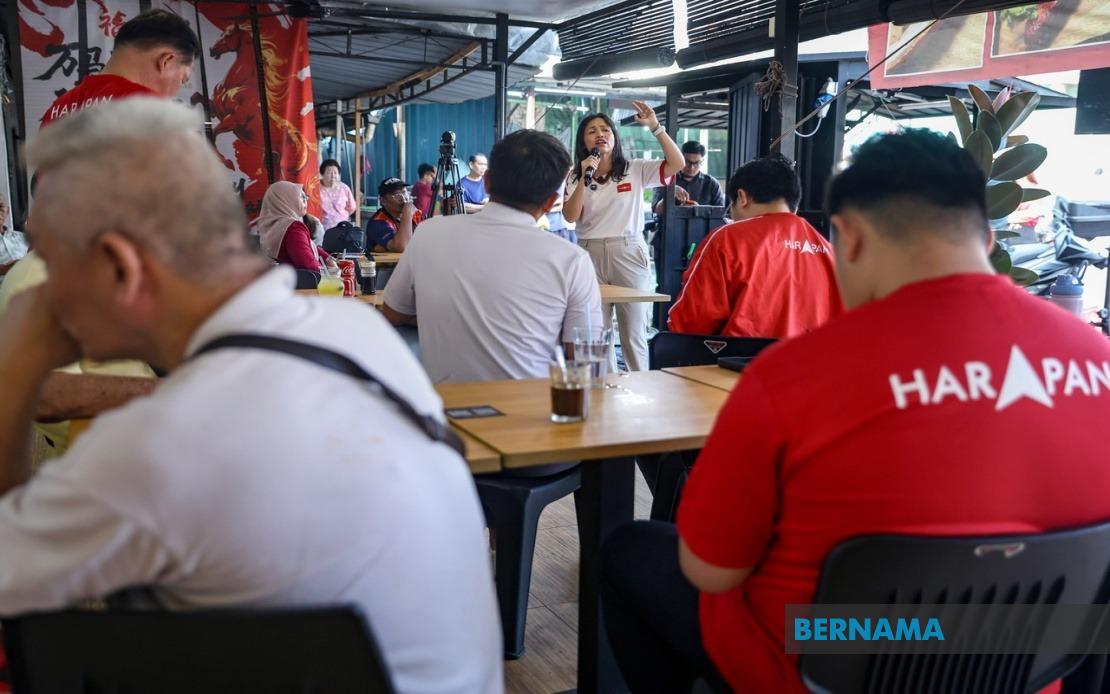
The Johor state election campaign took on a sharper edge as the opposition raised concerns about the use of government facilities and programmes for partisan political activities. Johor DAP chairman Teo Nie Ching has called on Menteri Besar Datuk Onn Hafiz Ghazi to provide a clear explanation regarding allegations that students from Technical and Vocational Education and Training institutions were instructed to participate in an event that was subsequently leveraged for Barisan Nasional campaigning purposes in the run-up to the state polls.
The controversy centres on an event held on July 4 at the Inland Revenue Board Hall in Kluang, where the Johor MARA TVET Roadshow took place. According to Teo, the DAP has received multiple complaints from parents and students indicating that attendance at the programme was made mandatory, with participants warned that non-attendance would be recorded as absenteeism. What began as an ostensibly educational initiative, critics argue, transformed into a political rally when the sitting Menteri Besar allegedly used the platform to promote the Barisan Nasional candidate, even going so far as to publicly mention the candidate's election number to the gathered students.
Teo articulated the core issue facing voters and civil society advocates: the blurred boundaries between legitimate government activity and partisan political campaigning. She stressed that while the DAP has no objection to elected officials participating in government-organised events, the transformation of what appeared to be an educational programme into a vehicle for political mobilisation raises fundamental questions about propriety and the appropriate use of public resources. The distinction matters greatly, she emphasised, as it determines whether the activities comply with election regulations and governmental ethics standards. If the roadshow was genuinely a government initiative, it should remain neutral and apolitical. Conversely, if it was designed as a party event, then the use of a government-owned venue for such purposes requires proper scrutiny.
The DAP's evidence for the allegations includes documentary proof in the form of the event's official programme itinerary and correspondence directing mandatory attendance, supplemented by video recordings that purportedly capture the contentious campaign-related statements made during the gathering. This combination of materials provides a foundation for the opposition's claims and suggests a methodical approach to documenting the incident rather than making unsubstantiated accusations. The presence of such documentation may prove significant if opposition candidates decide to lodge a formal complaint with the Election Commission, which would then have concrete evidence to examine.
Speaking from the perspective of both a political leader and a concerned parent, Teo underscored the uncomfortable position in which students found themselves. Being compelled to attend an event and then subjected to political messaging represents a form of institutional pressure that undermines student agency and neutrality. This framing resonates particularly well in Malaysia, where education is typically viewed as a space insulated from partisan politics and where parental concerns about their children's wellbeing and appropriate treatment carry significant weight in public discourse.
The timing of these allegations assumes particular significance given that early voting was already underway and polling was scheduled for July 11, with 172 candidates contesting 56 state seats across Johor. The controversy emerged during a critical phase of the electoral campaign when voter perceptions are being shaped and campaign narratives are taking hold. For voters concerned about democratic standards and the integrity of the electoral process, such allegations can influence their assessment of the various candidates and coalitions.
Beyond the immediate incident, Teo also seized the opportunity to address what she characterised as double standards in how the Onn Hafiz-led state government frames its record and policy positions. She objected to the Menteri Besar's recent statements calling for federal government policies to be reconsidered on the grounds that they place excessive burdens on residents. Teo countered that this approach allows the state government to claim credit for popular policies while distancing itself from unpopular measures by attributing them to federal leadership or the national coalition partners. She stressed that major policy decisions undergo Cabinet approval and reflect national government priorities rather than state-level implementation choices alone.
The event featured prominently DAP veteran Tan Sri Lim Kit Siang, whose presence underscored the seriousness with which the opposition treats the allegations and the Johor election campaign more broadly. Lim used the occasion to articulate a broader political vision centred on the Malaysian Dream, a concept he defined as encompassing equality, freedom, shared prosperity, and robust protection of human rights. His remarks reflected a strategic choice by Pakatan Harapan to frame the election not merely as a contest between competing administrations, but as a referendum on the kind of Malaysia voters wish to build and the values that should guide the nation's direction.
Lim's exhortation to voters to reject what he termed racial politics and instead consolidate support behind a unified vision speaks to the persistent challenges of political polarisation in Malaysia. His call for voters not to split their ballots suggests concern that anti-establishment sentiment might be diffused across multiple opposition parties or independent candidates, thereby allowing Barisan Nasional to retain control despite losing vote share. This strategic messaging indicates that Pakatan Harapan views the Johor election as consequential not merely for state-level governance, but for demonstrating whether opposition coalitions can maintain organisational coherence and persuade voters of the viability of their alternative vision for national direction.
The allegation involving the TVET event exemplifies broader concerns about election conduct that extend beyond Johor to encompass the entire Malaysian political landscape. When government resources and educational institutions become entangled with partisan campaign activities, it raises questions about whether all contestants operate on a level playing field and whether citizens can make free political choices untainted by institutional pressure. For Malaysian voters and observers, particularly those in Johor, the resolution of these allegations and the broader conduct of the campaign will carry implications for how future elections are conducted and whether the boundaries between government and party remain adequately maintained.
Whether Onn Hafiz and the state administration provide satisfactory explanations for the allegations may determine not only the immediate electoral dynamics in Johor, but also set precedents for how similar issues are handled in future contests. The opposition's decision to document the incident and raise it publicly indicates a determination to hold the government accountable to established norms regarding electoral propriety. How voters respond to these competing narratives and allegations will ultimately shape the outcome of the July 11 polling and influence perceptions about the state of electoral democracy in Malaysia more broadly.

