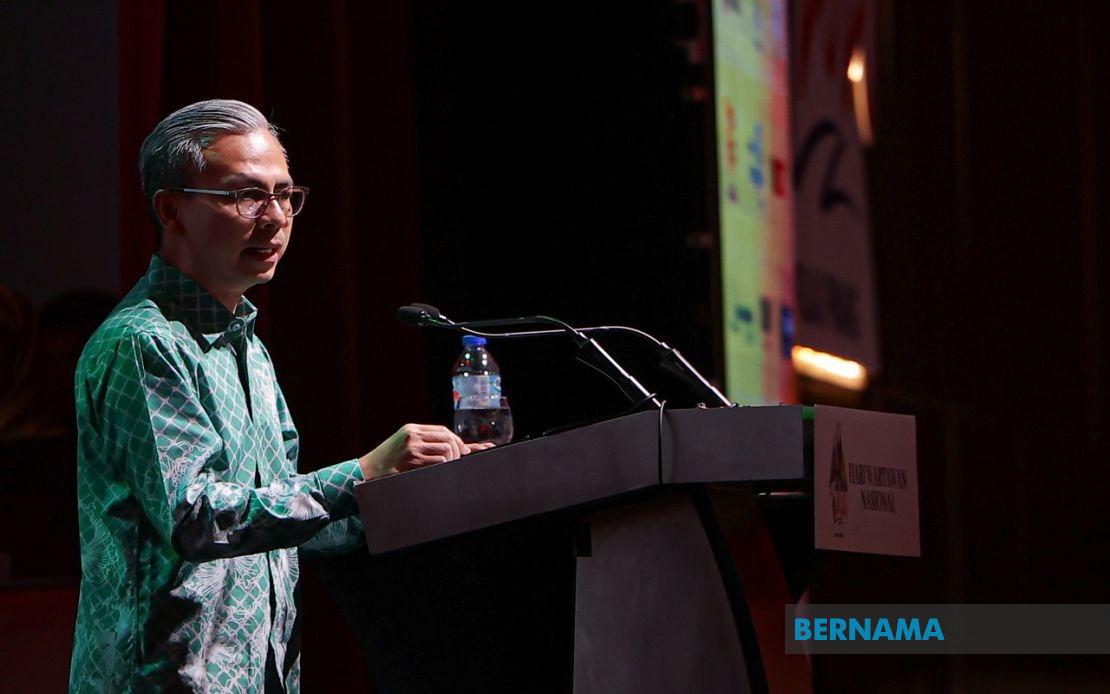
Telekom Malaysia has emerged as the new strategic partner of Tabung Kasih@HAWANA, committing RM500,000 towards bolstering financial assistance programmes for media practitioners and their former colleagues throughout the country. The telecommunications heavyweight made the announcement during the National Journalists' Day 2026 Grand Finale in Butterworth, with Communications Minister Datuk Fahmi Fadzil highlighting the significance of the corporation's involvement in sustaining welfare support for those working in Malaysia's media sector.
Fahmi praised TM's dedication to advancing the wellbeing of journalists and media professionals, describing the contribution as a demonstration of genuine corporate responsibility aligned with the broader mission to strengthen Malaysia's media landscape. The pledge represents a tangible commitment to ensuring that financial hardship does not impede the work of those tasked with reporting on events shaping the nation, particularly during a period when the industry faces considerable economic pressures.
Since its establishment in April 2023, Tabung Kasih@HAWANA has proven its effectiveness in channelling support where it is needed most. The fund has distributed RM2.26 million in assistance to 773 media professionals, demonstrating sustained demand for such welfare mechanisms. TM's injection of capital is expected to expand the fund's capacity to respond to applications and increase the number of practitioners who can receive timely aid during periods of financial difficulty.
The contribution arrives at a particularly challenging juncture for Malaysia's media industry, which has experienced considerable erosion in its primary revenue stream. Advertising expenditure has contracted sharply in recent years, dropping from an annual RM4.5 billion to approximately RM2 billion, placing media companies under acute financial strain. This contraction directly impacts the livelihood of journalists, editors, and support staff, making corporate partnerships like TM's increasingly vital for sector stability.
Fahmi used the occasion to appeal to other government-linked companies and established private enterprises to follow TM's example, urging them to recognise that media organisations require multifaceted support beyond traditional sponsorships. He called for greater media buying commitments from Malaysian corporations, framing advertising expenditure not merely as a business transaction but as an investment in the continuation of credible journalism and information dissemination. The minister's message underscored a growing realisation that media sustainability requires ecosystem-wide participation from commercial entities.
Prime Minister Datuk Seri Anwar Ibrahim's presence at the event, alongside Penang Chief Minister Chow Kon Yeow and senior figures from Bernama, signalled government commitment to the media sector's welfare. The attendance of such high-ranking officials demonstrated that media support has attained prominence in national discourse, particularly given evolving concerns about journalism's viability and the need to maintain editorial independence amid economic headwinds.
Beyond immediate financial relief, Fahmi outlined complementary initiatives designed to equip media professionals with contemporary skills. The Communications Ministry has pledged backing for Project Sigma 2.0, a Google Malaysia-led initiative developed in partnership with the Malaysian Media Council and Malaysian Press Institute. This programme aims to provide journalists and media workers with training in emerging technologies and artificial intelligence applications, addressing the sector's need for capability development in an increasingly digital landscape.
Regional cooperation featured prominently in the minister's remarks, with particular emphasis placed on a fresh Memorandum of Understanding between Bernama and TATOLI, Timor-Leste's national news agency. This agreement represents an expansion of Malaysia's bilateral media engagement and reflects broader ASEAN cohesion following Timor-Leste's accession as the bloc's 11th member during last year's summit in Kuala Lumpur. The collaboration facilitates information exchange, promotes professional standards in journalism, and strengthens institutional ties among Southeast Asian media organisations.
Fahmi contextualised the Timor-Leste partnership within Malaysia's commitment to ASEAN principles of inclusivity and regional stability. He positioned media cooperation as integral to the bloc's mission of fostering shared prosperity and mutual understanding, suggesting that journalism plays a foundational role in building regional consensus and managing cross-border information flows. This framing elevates media partnerships beyond purely commercial considerations to matters of strategic importance for Southeast Asian integration.
The convergence of domestic support mechanisms like Tabung Kasih@HAWANA and international partnerships with regional counterparts suggests a comprehensive approach to ensuring media sector resilience. While corporate contributions like TM's address immediate welfare needs, capacity-building programmes and regional collaboration address longer-term sustainability and professionalism. Together, these initiatives respond to interconnected challenges facing Malaysian journalism, from economic viability to technological adaptation to regional relevance.
Looking forward, the success of TM's partnership model may establish precedent for similar corporate engagement with media welfare infrastructure. Should additional corporations follow suit, cumulative contributions could substantially expand assistance networks and improve outcomes for practitioners across the country. The implicit recognition that media health constitutes a shared responsibility may catalyse broader ecosystem reforms addressing advertising markets, digital transformation, and professional development standards throughout the sector.