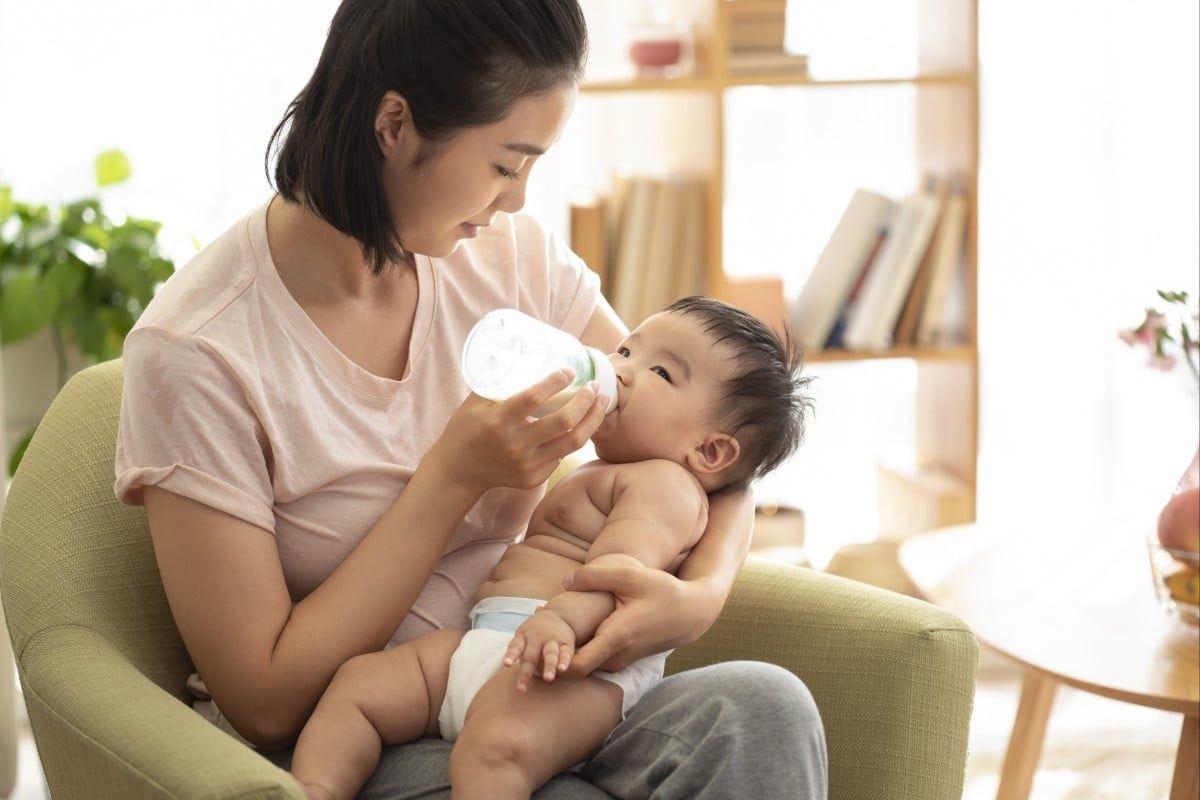
A three-month-old boy in southern China's Guangdong province was rushed to intensive care after developing severe poisoning from an unconventional infant feeding practice that medical staff warns poses grave risks to vulnerable babies. Zhongshan Women and Children's Hospital treated the infant after he displayed alarming physical symptoms including purplish discolouration of his skin, bluish lips, and respiratory distress. His concerned parents had brought him to the facility after these warning signs emerged shortly following a milk feed, sparking rapid medical intervention that would ultimately save his life.
The dangerous situation arose from well-intentioned but medically unsound parental reasoning. The baby's parents had decided to prepare his powdered formula by mixing it with boiled vegetable juice rather than plain water, believing that the vegetable juice would provide superior nutritional value compared to ordinary tap or distilled water. This decision, driven by a desire to enhance their infant's diet, instead introduced toxic compounds into his body. Hospital physicians quickly identified the culprit: the infant had suffered acute nitrite poisoning, a condition that presented an immediate threat to his survival and required emergency intervention.
The medical mechanism behind this poisoning reveals why such substitutions prove catastrophic for infants. When vegetables are subjected to prolonged boiling during the juice preparation process, chemical reactions break down natural nitrate compounds into nitrites, which accumulate in dangerous concentrations within the resulting liquid. This transformation occurs naturally during cooking, making the vegetable juice deceptively hazardous despite coming from wholesome plant sources. An infant's immature digestive and renal systems simply cannot process or eliminate the elevated nitrite loads that would pose manageable risks for older children or adults.
Once nitrites circulate through an infant's bloodstream, they interfere with the oxygen-carrying function of haemoglobin molecules, the proteins responsible for transporting oxygen throughout the body's tissues. This biochemical disruption explains the distinctive purple and blue discolouration that appeared on the patient's skin, lips, and nail beds—visible indicators that his body was struggling to deliver adequate oxygen to peripheral tissues. The respiratory difficulty the baby experienced represented his body's compensatory response, attempting to breathe harder to overcome the compromised oxygen transport system. Without prompt medical treatment, such hypoxia can rapidly progress to organ damage and death.
Medical staff at the hospital responded with intensive care protocols over a forty-eight hour treatment period before the infant stabilised sufficiently for discharge in mid-June. The successful recovery underscores both the seriousness of his condition and the effectiveness of rapid institutional response. However, paediatrician Cao Qi from Nanning No 1 People's Hospital in Guangxi Zhuang autonomous region emphasises that survival outcomes depend critically on how quickly parents recognise symptoms and seek emergency care. Delays measured in mere minutes, he warned on social media, can determine whether an affected infant lives or suffers permanent organ damage.
The incident reflects a broader pattern of Chinese parents experimenting with unconventional infant nutrition practices, often driven by cultural beliefs about food properties or desire to provide perceived nutritional advantages. Cao Qi cautioned against parents relying on subjective judgment or adopting feeding trends without medical guidance, noting that natural and wholesome foods do not automatically suit young infants whose physiological systems remain incompletely developed. This perspective challenges common assumptions that because certain foods benefit older individuals, they must also benefit babies.
Hospital guidance issued following this case emphasises strict protocol: infant formula powder must be reconstituted exclusively with warm water. Parents should categorically avoid substituting water with vegetable juice, rice water, fruit juice, or broths of any kind. These alternatives, regardless of their perceived nutritional content, introduce unpredictable chemical compounds that pose toxicological risks proportionate to an infant's vulnerability. The specificity of this medical advice reflects experience gained through treating preventable poisoning cases.
Recognising nitrite toxicity symptoms enables parents to access life-saving treatment. The constellation of purple or blue skin discolouration, bluish lips, laboured breathing, and lethargy following feeding should trigger immediate hospital visits. Cao Qi stressed that such symptoms demand emergency assessment rather than home observation or delayed medical consultation. The stakes for infant poisoning are incomparably high, leaving no margin for cautious waiting or home remedies.
This poisoning case echoes similar incidents across China where parental feeding choices created medical crises. A fifty-two-day-old infant in Henan province required hospitalisation after his grandmother added honey to his feeding water, inadvertently introducing Clostridium botulinum spores that cause botulism—a paralytic illness with mortality risk. These recurring incidents suggest systemic gaps in parent education regarding infant physiology and feeding safety, despite widespread availability of medical guidance.
The incident carries particular relevance for Southeast Asian families, given regional cultural practices that similarly emphasise herbal liquids, natural preparations, and traditional foods for infant nutrition. Medical professionals across Malaysia and the region encounter comparable situations where well-meaning relatives introduce unprocessed foods or homemade preparations into infant diets. Understanding the physiological reasons why newborns and young infants require carefully controlled diets—rather than simply adhering to rules without comprehension—may more effectively motivate compliance with medical recommendations.
Parental instincts to optimise infant nutrition are understandable, yet they require alignment with medical evidence regarding infant physiology. The gap between natural food safety for adults and suitability for babies reflects fundamental biological differences in digestive capacity, kidney function, and metabolic pathways. Professional medical guidance exists not to restrict infant nutrition arbitrarily, but to protect vulnerable developing systems from compounds that mature bodies handle routinely but infant systems cannot process safely.

%22%2F%3E%3C%2Fpattern%3E%3C%2Fdefs%3E%3Crect%20width%3D%22100%25%22%20height%3D%22100%25%22%20fill%3D%22url(%23ph5931qg)%22%2F%3E%3Crect%20width%3D%22100%25%22%20height%3D%22100%25%22%20fill%3D%22url(%23ph5931qp)%22%2F%3E%3Ctext%20x%3D%2250%25%22%20y%3D%2250%25%22%20text-anchor%3D%22middle%22%20dominant-baseline%3D%22central%22%20fill%3D%22rgba(255%2C255%2C255%2C0.95)%22%20font-family%3D%22Georgia%2C%20'Times%20New%20Roman'%2C%20serif%22%20font-weight%3D%22700%22%20font-size%3D%22272%22%20letter-spacing%3D%22-0.02em%22%3EAzeem%3C%2Ftext%3E%3C%2Fsvg%3E)