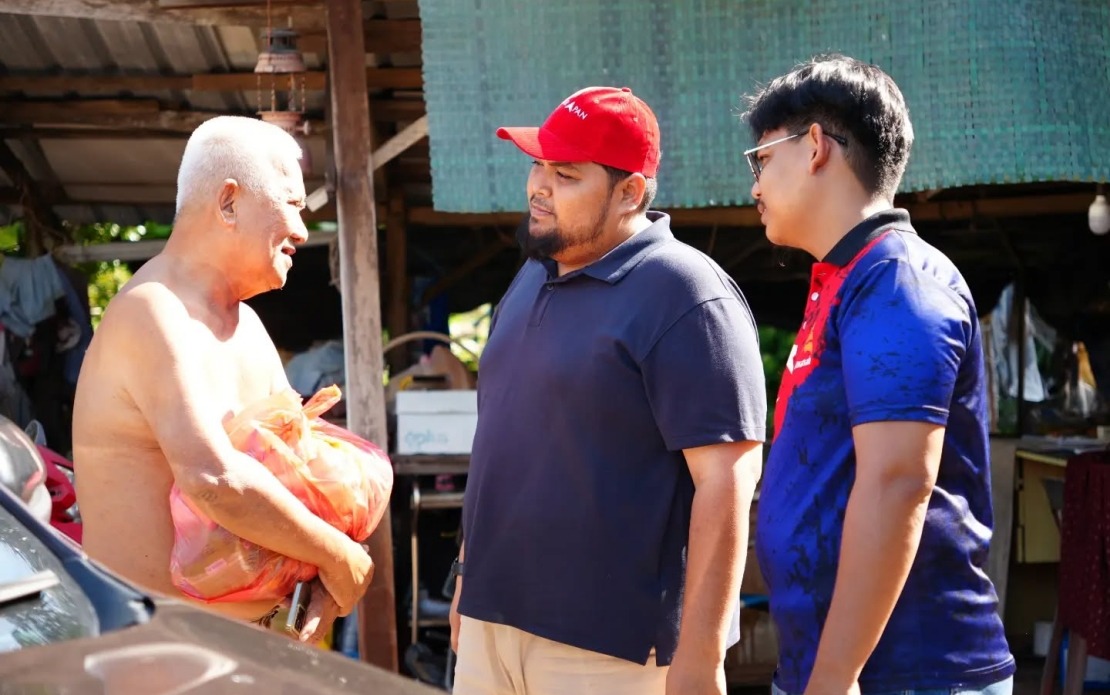
As voting approaches for the 16th Johor State Election on July 11, Pakatan Harapan's candidate for Maharani, Muhammad Taqiuddin Cheman, has sharpened his campaign message around the concerns dominating conversations with younger constituents. Known colloquially as Taqi, the former Pulai Sebatang assemblyman is dedicating his final campaign days to direct engagement with youth groups across Muar, seeking to understand their most pressing challenges and positioning himself as the solution to their aspirations.
The crux of Taqiuddin's appeal centres on three interconnected issues that resonate powerfully among Muar's younger demographic: the scarcity of employment pathways, the bottleneck limiting business formation, and deficiencies in technical training. His recent encounters with young entrepreneurs operating from District 84 illuminated a specific and solvable problem—approximately 70 traders operate in an undersized commercial hub where they must rotate trading days due to space constraints. Rather than viewing this as an intractable infrastructure problem, Taqiuddin frames his role as an advocate who can help these entrepreneurs navigate applications for alternative sites throughout the district, positioning himself as a facilitator of opportunity rather than merely a politician making promises.
Muar's demographic trajectory reveals why this strategy holds particular urgency. The district has acquired an unflattering reputation as a "retirement town," a descriptor that masks a genuine economic challenge: young people systematically depart the area in pursuit of careers elsewhere, while those remaining often find themselves confined to semiconductor industry employment. This brain drain reflects not inadequate ambition among Muar's youth but rather structural limitations in the local economy that have discouraged enterprise and constrained professional mobility. Taqiuddin's diagnosis of this problem suggests both understanding of local conditions and a willingness to address root causes rather than symptoms.
Pakatan Harapan's broader "Johor For All" manifesto provides the policy scaffolding for Taqiuddin's localized message. The initiative commits RM500 million specifically toward assisting young entrepreneurs in expanding their enterprises, moving beyond rhetorical support toward concrete financial mechanisms. For constituencies like Maharani, where the entrepreneurial impulse exists but access to capital and business space remains constrained, such targeted funding could genuinely alter the feasibility calculus for venture creation. This commitment suggests that Pakatan Harapan recognizes young voter mobilization requires not merely sympathetic rhetoric but demonstrable resource allocation.
The Maharani Energy Gateway project, expected to reach completion in the near term, represents infrastructure that could materially transform the constituency's economic foundation. Such developments typically generate employment across multiple sectors—construction, operations, supply chain management, and ancillary services—potentially addressing the employment vacuum that currently drives outmigration. Taqiuddin's emphasis on this project signals awareness that electoral success increasingly depends on candidates' capacity to link their personal platforms to broader development trajectories that voters recognize as transformative.
Taqiuddin's advocacy for expanded Technical and Vocational Education and Training institutions in Maharani addresses a particularly sophisticated concern: not merely employment, but employment aligned with actual industry requirements. Southeast Asia's broader economic trajectory increasingly demands workforce skills that formal academic pathways alone cannot reliably produce. By prioritizing TVET expansion, Taqiuddin acknowledges that Maharani's young people need training that matches labour market realities—particularly in sectors like semiconductors and advanced manufacturing that currently dominate employment in the region. This approach sidesteps the education versus employment debate by proposing institutions designed specifically to bridge that divide.
The candidate has also incorporated narrower sectoral interests into his platform, recognizing that Maharani's economy encompasses fishing communities whose livelihoods depend on marginally profitable activities. His identification of the shallow river mouth at Parit Raja Laut as an impediment to fishing boat movement suggests attention to constraints that impede income generation for second-generation fishermen. Similarly, poor drainage systems affecting oil palm plantation operations represent challenges affecting both landowners and workers dependent on agricultural income. These specifics demonstrate that Taqiuddin's campaign operates across multiple economic strata rather than focusing exclusively on aspirational young professionals.
Taqiuddin faces a competitive field that reflects Johor's increasingly fragmented political landscape. His opponents include Mohamad Anuar Hayan representing Perikatan Nasional, Datuk Ashari Md Sarip from Barisan Nasional, and Muhammad Amir Fiqri contesting as a Parti Ikatan Demokratik Malaysia candidate. This four-way contest suggests that none of the traditional major coalitions command overwhelming electoral dominance in Maharani, creating genuine uncertainty about outcomes. For Taqiuddin, this fragmentation potentially advantages candidates who can construct specific, localized appeals rather than relying on broader party momentum.
Taqiuddin's previous experience as an assemblyman from 2018 to 2022 provides a record against which voters can assess his capacity to deliver. His background in business ownership suggests familiarity with entrepreneurial constraints and opportunities, potentially lending credibility to his advocacy for business expansion. However, his previous term was relatively brief, concluding before he could demonstrate sustained impact on the issues now dominating his campaign narrative. This creates both opportunity and vulnerability: he can position himself as learning from previous experience, but opponents will inevitably highlight his limited prior executive record.
The broader context of Johor state politics has shifted considerably since 2022. The political realignments that occurred nationally have produced corresponding upheaval in Johor, with traditional power structures disrupted and voter preferences increasingly volatile. Young voters in particular have demonstrated willingness to depart from inherited partisan attachments, making them genuinely persuadable by candidates offering substantive responses to material concerns. Taqiuddin's strategic focus on youth engagement therefore reflects both genuine demographic shifts and rational political calculation about which constituencies remain uncertain and therefore winnable.
For Malaysian readers across the region, the Maharani contest illustrates broader patterns reshaping state politics: the declining effectiveness of personality-driven politics divorced from policy specificity, the increasing sophistication of younger voters' demands, and the emergence of localized economic concerns as central electoral battlegrounds. Constituencies experiencing outmigration and economic stagnation are becoming pivotal, as candidates capable of proposing credible revitalization strategies can mobilize voters concerned less with national political abstractions than with material possibilities for their communities. As Johor's election approaches, Taqiuddin's emphasis on specific, addressable problems facing young constituents represents a template that may gain influence across Southeast Asian electoral politics as demographic and economic pressures concentrate political attention on localized prosperity.

