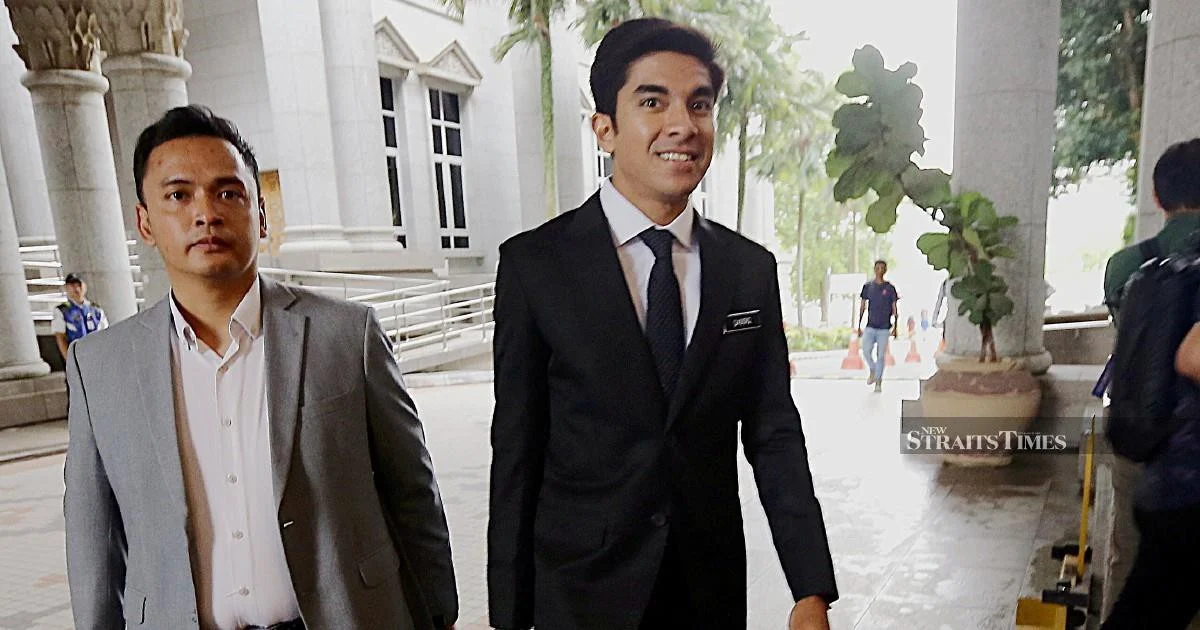
Amir Fiqri, commonly known as Amir Jack, is set to carry Muda's banner into the Maharani state constituency during the forthcoming Johor election. The candidate, who serves as a special officer to Muar Member of Parliament Syed Saddiq Syed Abdul Rahman, represents one of four seats the youth-focused party has determined to contest in the state polls. His nomination underscores Muda's strategy of deploying candidates with established political networks and institutional support as the party seeks to expand its footprint beyond its historical strongholds.
The timing of Amir Jack's candidacy reflects broader positioning within Muda ahead of the Johor state election. As a trusted aide within Syed Saddiq's parliamentary office, Amir Jack brings direct exposure to grassroots politics and constituent engagement at the federal level. This appointment signals that Muda intends to contest Maharani seriously, rather than simply filling a nomination slate with lesser-known figures. The decision to field someone embedded in the federal political machinery suggests the party views this constituency as winnable or strategically important for brand-building purposes.
Maharani itself occupies a significant position within Johor's electoral geography. The constituency's voter composition and historical voting patterns will shape the dynamics of this three-cornered or potentially multi-way contest. Amir Jack's candidacy introduces a new dimension to competition in the seat, particularly if the Barisan Nasional, Perikatan Nasional, and Pakatan Harapan all maintain presence in the constituency. Understanding local issues—whether related to economic development, infrastructure, or community services—will be crucial to his campaign's success.
Muda's decision to field four candidates statewide indicates the party is balancing ambition with realistic assessment of its ground capabilities in Johor. The party has gradually expanded electoral participation since its formal establishment, though it remains a relative newcomer compared to established coalitions. This measured approach suggests party leadership believes these four seats offer the best combination of voter receptivity and organisational readiness. By concentrating resources rather than spreading them thinly across numerous constituencies, Muda aims to maximise the impact of its limited campaign machinery and financial resources.
Syed Saddiq's own position as Muar MP adds institutional weight to his aide's candidacy. The Muar member is one of Muda's most prominent figures in Parliament, having secured his seat during a previous election cycle. His visibility and legislative record provide a backdrop against which Amir Jack can campaign. Voters in neighbouring constituencies may have formed impressions of Syed Saddiq's work, and these perceptions could transfer partially to his staff member's candidacy, though local issues specific to Maharani will ultimately dominate voter calculations.
For Amir Jack personally, this nomination represents a significant career milestone. Moving from advisory roles to direct electoral candidacy is a substantial step that exposes him to public scrutiny and voter judgment in ways his previous position did not. Success in Maharani would establish him as an elected representative and provide a platform for future political advancement. Conversely, a loss would require reassessment of whether his political capital is better deployed in supporting roles or whether improved ground preparation might be needed for future contests.
Muda's participation in the Johor election carries broader significance for Malaysia's political landscape. The party's performance in this major state election will influence perceptions of its viability as a national political force. A strong showing could accelerate recruitment of additional candidates and volunteers for future elections, while disappointment might constrain its growth trajectory. For voters concerned about political alternatives beyond the established blocs, Muda's performance indicators matter considerably.
The Johor election itself remains fluid in terms of timing and overall dynamics. Various political combinations at state and federal levels create uncertainty about which coalitions will ultimately dominate. Within this environment, Muda's decision to contest specific seats like Maharani suggests a calculated assessment of where the party can compete effectively. Whether Amir Jack's candidacy in particular proves competitive will depend heavily on local campaign execution, voter engagement, and how economic and governance issues resonate with Maharani residents.
For Malaysian observers tracking political fragmentation and coalition realignments, Amir Jack's nomination exemplifies how established political networks are being leveraged to support newer parties. Rather than starting entirely from scratch, Muda is deploying individuals with federal connections to establish credibility at state level. This networking strategy mirrors approaches adopted by other political movements seeking to break traditional two-coalition dominance. The effectiveness of this method will become clearer as campaign activities intensify and voter response emerges.
%22%2F%3E%3C%2Fpattern%3E%3C%2Fdefs%3E%3Crect%20width%3D%22100%25%22%20height%3D%22100%25%22%20fill%3D%22url(%23ph39leig)%22%2F%3E%3Crect%20width%3D%22100%25%22%20height%3D%22100%25%22%20fill%3D%22url(%23ph39leip)%22%2F%3E%3Ctext%20x%3D%2250%25%22%20y%3D%2250%25%22%20text-anchor%3D%22middle%22%20dominant-baseline%3D%22central%22%20fill%3D%22rgba(255%2C255%2C255%2C0.95)%22%20font-family%3D%22Georgia%2C%20'Times%20New%20Roman'%2C%20serif%22%20font-weight%3D%22700%22%20font-size%3D%22320%22%20letter-spacing%3D%22-0.02em%22%3E300%3C%2Ftext%3E%3C%2Fsvg%3E)
%22%2F%3E%3C%2Fpattern%3E%3C%2Fdefs%3E%3Crect%20width%3D%22100%25%22%20height%3D%22100%25%22%20fill%3D%22url(%23ph14edxg)%22%2F%3E%3Crect%20width%3D%22100%25%22%20height%3D%22100%25%22%20fill%3D%22url(%23ph14edxp)%22%2F%3E%3Ctext%20x%3D%2250%25%22%20y%3D%2250%25%22%20text-anchor%3D%22middle%22%20dominant-baseline%3D%22central%22%20fill%3D%22rgba(255%2C255%2C255%2C0.95)%22%20font-family%3D%22Georgia%2C%20'Times%20New%20Roman'%2C%20serif%22%20font-weight%3D%22700%22%20font-size%3D%22151%22%20letter-spacing%3D%22-0.02em%22%3EMalaysian%3C%2Ftext%3E%3C%2Fsvg%3E)