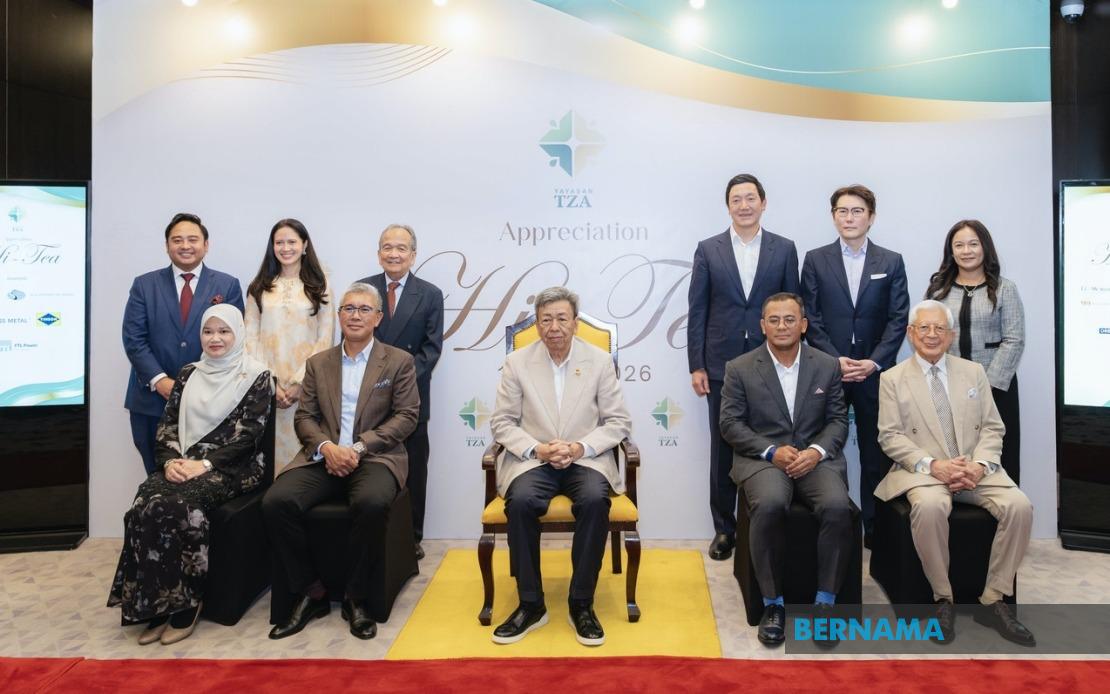
Sultan Sharafuddin Idris Shah, the Sultan of Selangor, attended the Yayasan TZA (YTZA) Appreciation Hi-Tea Ceremony in Kuala Lumpur on June 18, underscoring the royal family's continued backing of charitable initiatives aimed at disadvantaged communities. His arrival at approximately 3.50 pm marked a show of support for the foundation's work in education and social development, with the event drawing attendance from Selangor Menteri Besar Datuk Seri Amirudin Shari and Federal Education Minister Fadhlina Sidek. The gathering reflected the broader commitment of Malaysian leadership to community-centred programmes, particularly those targeting lower-income families.
Yayasan TZA chairman Tan Sri Arshad Raja Tun Uda and foundation advisor Tengku Datuk Seri Zafrul Abdul Aziz greeted the Sultan upon arrival. The ceremony provided an opportunity to showcase the foundation's multifaceted approach to social welfare, extending beyond emergency relief into structural empowerment through education, environmental sustainability, and grassroots community engagement. Such high-level patronage signals the growing recognition within Malaysia's governance structure that long-term social progress requires coordination between government bodies, corporate sectors, and private charitable organisations.
Tengku Zafrul outlined the philosophical underpinnings of YTZA's operations during his speech, emphasising that programmes were conceived to transcend temporary assistance and instead build lasting capacity within individuals and households. This distinction matters significantly for Southeast Asian development discourse, where philanthropic efforts often face criticism for perpetuating dependency rather than fostering self-sufficiency. The foundation's strategy encompasses educational scholarships, environmental projects, community mobilisation events, and cultural celebrations specifically designed to include marginalised populations in shared national moments.
The ACE SPM initiative represents YTZA's flagship educational endeavour, designed to strengthen examination preparation among Sijil Pelajaran Malaysia candidates drawn predominantly from B40 households. The programme addresses a critical gap in Malaysia's education system: while formal schooling provides baseline instruction, disadvantaged students frequently lack access to quality supplementary coaching and examination technique training. In 2025 alone, the foundation supported 467 students across ten Selangor schools, while digital learning components reached over 4,000 participants. These figures underscore the operational scale YTZA has achieved, though they simultaneously highlight the vastness of unmet need across the country.
The expansion trajectory of ACE SPM carries implications for education equity across the broader region. As Malaysia grapples with persistent performance disparities between urban and rural, wealthy and poor student populations, targeted interventions become increasingly essential for social mobility. Tengku Zafrul's commitment to scale the programme across coming years suggests YTZA anticipates growing demand and possesses confidence in the model's effectiveness. The integration of digital delivery mechanisms proves particularly significant given Malaysia's post-pandemic emphasis on technological integration in learning, potentially serving rural areas where geographic barriers have traditionally limited access to quality coaching.
During the ceremony, Sultan Sharafuddin witnessed the presentation of substantial corporate support, including a mock cheque for RM1 million from Kuok Brothers Sdn Bhd and RM300,000 from YTL Power International Berhad. These donations reflect the willingness of Malaysia's major conglomerates to channel corporate social responsibility funds toward education initiatives, particularly when aligned with royal patronage and government backing. The RM1.3 million combined commitment provides material resources for programme expansion while validating YTZA's operational model to the broader business community. Corporate engagement of this magnitude often proves transformational for foundations operating in the social development space, enabling multiyear planning and ambitious outreach targets.
Yayasan TZA simultaneously launched Larian KITA@Klang, a community fun run scheduled for October 10 in conjunction with celebrations of the Sultan of Selangor's Silver Jubilee. This event represents the foundation's fourth iteration of the Larian KITA series, a concept that weaves together physical activity, community participation, and cultural celebration. The strategic timing of the run's announcement alongside major donations demonstrates how Malaysian philanthropic events integrate royal calendars, corporate support mechanisms, and grassroots community engagement. Such coordination amplifies event significance beyond immediate participants, generating media attention and broader public awareness of both the foundation's work and the charitable causes it champions.
The Larian KITA concept itself merits examination as a model for community mobilisation. By packaging social inclusion, inclusivity celebration, and local cultural appreciation within an accessible sporting format, the foundation leverages the rising popularity of community running events across Malaysia to advance its mission. The chosen route's emphasis on cultural and culinary attractions transforms a simple fun run into an educational experience about local heritage, particularly valuable in increasingly globalised and mobile societies where intergenerational transmission of place-based culture faces challenges.
Tengku Zafrul's expression of gratitude to sponsors, donors, volunteers, and strategic partners highlighted the ecosystem dynamics essential to YTZA's sustainability. Malaysian charitable organisations frequently operate within constrained resource environments where government grants remain limited and traditional donor bases concentrate wealth within particular communities. The foundation's success in cultivating relationships across corporate, government, and individual donor spheres indicates sophisticated institutional development. This multi-stakeholder approach proves more resilient than models relying on single funding sources, particularly important given Malaysia's economic volatility and the cyclical nature of corporate profitability.
The gathering of Selangor's political leadership alongside royal patronage underscores education's centrality to contemporary Malaysian development strategy. Both the Menteri Besar and Education Minister's presence signaled alignment between state administration, federal policy, and charitable sector innovation. This convergence suggests increasing recognition that government budgets alone cannot address educational disparities, necessitating hybrid models where public institutions, philanthropic organisations, and corporate resources combine toward shared objectives. For observers tracking Malaysian social policy evolution, such events indicate shifting mindsets about responsibility for community welfare.
Yayasan TZA's work gains additional significance when contextualised within Southeast Asia's broader educational landscape. The region faces persistent challenges in expanding quality education to lower-income populations, with many countries struggling to translate government investment in schooling into measurable learning outcomes. Malaysia's relatively advanced infrastructure and institutional capacity position initiatives like YTZA as potential models for peer learning across ASEAN, particularly for middle-income nations seeking to address inequality through targeted supplementary programmes. The foundation's explicit focus on B40 communities reflects international development consensus about targeting scarce resources toward those with greatest need.
Looking forward, YTZA's expansion plans carry implications for corporate engagement in Malaysian social development. As foundations demonstrate reliable impact and maintain professional governance standards, corporate sponsors grow increasingly willing to commit sustained funding. The RM1.3 million announced during this ceremony likely represents just the beginning of deepened partnerships, particularly as the education sector increasingly attracts corporate investment aligned with skills development and workforce preparation objectives. Companies investing in ACE SPM gain indirect benefits through improved secondary education quality and stronger candidate pools for future recruitment.
The appreciation ceremony itself exemplified contemporary Malaysian charitable practice: combining traditional respect for royal patronage with modern impact reporting, corporate partnership formalisation, and community event innovation. This hybrid approach balances Malaysia's constitutional monarchy with contemporary governance expectations around transparency and measurable outcomes. For regional observers, the event illustrated how established institutions like YTZA successfully navigate the complex political economy of Malaysian social development, securing resources while maintaining operational independence and programmatic focus on the most disadvantaged populations.


%22%2F%3E%3C%2Fpattern%3E%3C%2Fdefs%3E%3Crect%20width%3D%22100%25%22%20height%3D%22100%25%22%20fill%3D%22url(%23ph40buhg)%22%2F%3E%3Crect%20width%3D%22100%25%22%20height%3D%22100%25%22%20fill%3D%22url(%23ph40buhp)%22%2F%3E%3Ctext%20x%3D%2250%25%22%20y%3D%2250%25%22%20text-anchor%3D%22middle%22%20dominant-baseline%3D%22central%22%20fill%3D%22rgba(255%2C255%2C255%2C0.95)%22%20font-family%3D%22Georgia%2C%20'Times%20New%20Roman'%2C%20serif%22%20font-weight%3D%22700%22%20font-size%3D%22320%22%20letter-spacing%3D%22-0.02em%22%3EGRS%3C%2Ftext%3E%3C%2Fsvg%3E)