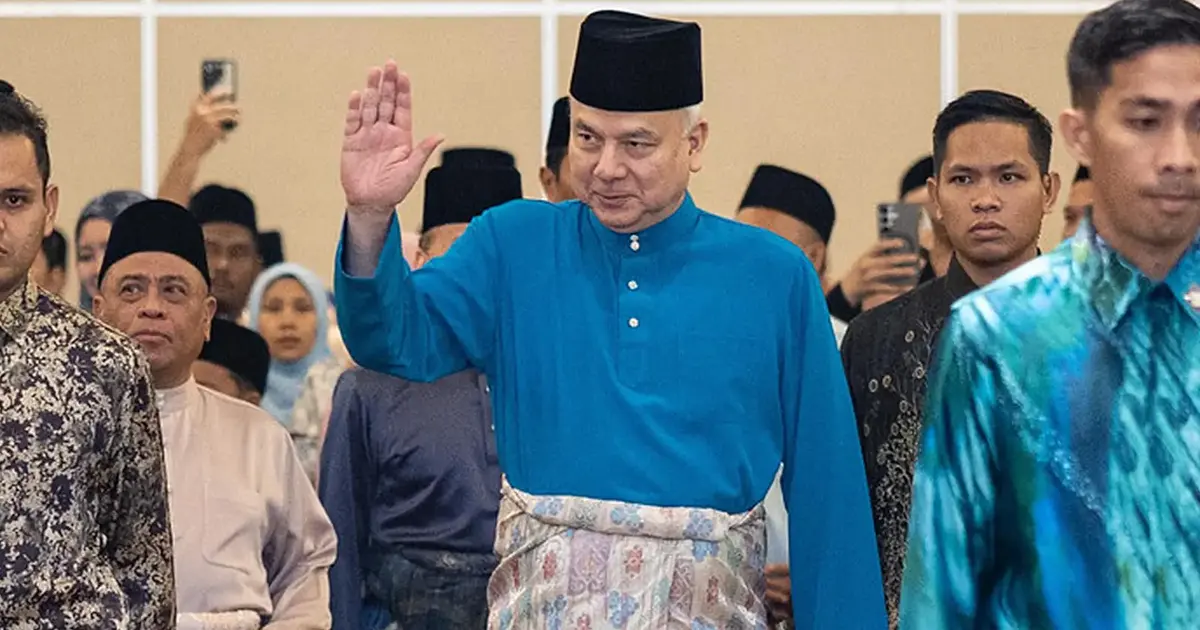
Sultan Nazrin Shah, Malaysia's Deputy Agong, has issued a pointed reminder to the nation's leadership cadre to exercise restraint and rational judgment when making consequential decisions. Speaking to concerns about governance standards, the Perak Sultan underscored the danger of allowing emotions to override deliberation, particularly in matters affecting millions of citizens.
His intervention arrives at a moment when Malaysia continues navigating complex political terrain, with various sectors grappling with institutional reform, economic challenges, and social cohesion. The Deputy Agong's words carry particular weight given the constitutional role of the monarchy in safeguarding national stability and serving as a moral compass for the populace.
Central to Sultan Nazrin's message is the proposition that durable national achievement cannot rest on the shoulders of political figures alone. Instead, he positioned societal success as inherently dependent on the collective will of ordinary Malaysians to set aside narrow interests and embrace shared values. This framing shifts responsibility beyond the executive and legislative branches, positioning citizens as active stakeholders in the nation's trajectory.
The emphasis on cooperation represents a deliberate pivot away from zero-sum political thinking that has occasionally characterised Malaysian public discourse. By highlighting mutual respect as foundational, Sultan Nazrin implicitly critiqued an environment where political opponents are sometimes treated as enemies rather than fellow Malaysians with differing perspectives. This distinction matters enormously in a multiethnic, multireligious democracy where perceived sectarian tensions can rapidly undermine institutional confidence.
Harmonious coexistence, the third pillar of the Deputy Agong's formulation, speaks directly to Malaysia's multicultural fabric. The country's stability has historically rested on elite consensus around constitutional arrangements, particularly the Federal Constitution's foundational bargains regarding Islam, Bumiputera rights, and the monarchy. When leaders make decisions impulsively or without adequate consultation, they risk triggering unintended reactions across different communities, each with distinct sensitivities and historical experiences.
The warning against emotional decision-making holds implications for institutional design as well. Governance structures thrive when they build in mechanisms for reflection, consultation, and deliberation before consequential moves are executed. Rushed decisions, Sultan Nazrin suggests, often lack the rigour necessary to withstand scrutiny or withstand the test of time. This observation resonates with Malaysian constitutional tradition, which emphasises the consultative role of paramount rulers in matters of state.
For Southeast Asia more broadly, Sultan Nazrin's intervention reflects a broader pattern whereby constitutional monarchies and ceremonial heads of state increasingly articulate national values during periods of uncertainty. Unlike purely symbolic figureheads, Malaysia's Yang di-Pertuan Agong and deputy occupants hold defined constitutional prerogatives and serve as repositories of institutional memory. When they speak, they do so from a position uniquely insulated from electoral pressure, allowing them to transcend partisan calculations.
The Deputy Agong's framing also implicitly critiques short-termism in political strategy. Leaders chasing immediate electoral advantage or responding to perceived slights may sacrifice longer-term institutional health. This tension between short-term political viability and long-term stability has periodically surfaced in Malaysian politics, particularly during transitions of government or moments when coalition arrangements appear fragile.
Sultan Nazrin's intervention carries particular relevance for younger political players who may not have absorbed lessons from Malaysia's earlier transformative moments. The Emergency period, the May 1969 riots, and more recent episodes of communal tension all taught hard lessons about the consequences of losing sight of shared commitment to national cohesion. By invoking these underlying principles, the Deputy Agong taps into a reservoir of national wisdom accumulated through historical experience.
The timing of this intervention, coupled with its careful construction around universal values of respect and cooperation, suggests a deliberate effort to elevate public discourse without appearing to take sides in contemporary partisan disputes. This rhetorical strategy allows Sultan Nazrin to fulfil his constitutional calling to safeguard national interests without directly endorsing any particular political faction or policy position.
For Malaysian readers and the broader Southeast Asian audience, the Deputy Agong's message resonates beyond ceremonial significance. In democracies where institutional constraints remain contested and political competition occasionally edges toward zero-sum thinking, reminders about foundational values serve important functions. They reinforce that despite genuine disagreements, leaders and citizens alike remain bound by commitments to peaceful dispute resolution, constitutional governance, and mutual accommodation.
Moving forward, Sultan Nazrin's counsel will likely be referenced in public debates over governance quality and leadership standards. Whether contemporary political actors internalise this message or merely acknowledge it ceremonially will partly determine whether Malaysian democracy continues strengthening its institutional foundations or risks further erosion of the cooperative compact that has historically sustained the nation.

%22%2F%3E%3C%2Fpattern%3E%3C%2Fdefs%3E%3Crect%20width%3D%22100%25%22%20height%3D%22100%25%22%20fill%3D%22url(%23ph40buhg)%22%2F%3E%3Crect%20width%3D%22100%25%22%20height%3D%22100%25%22%20fill%3D%22url(%23ph40buhp)%22%2F%3E%3Ctext%20x%3D%2250%25%22%20y%3D%2250%25%22%20text-anchor%3D%22middle%22%20dominant-baseline%3D%22central%22%20fill%3D%22rgba(255%2C255%2C255%2C0.95)%22%20font-family%3D%22Georgia%2C%20'Times%20New%20Roman'%2C%20serif%22%20font-weight%3D%22700%22%20font-size%3D%22320%22%20letter-spacing%3D%22-0.02em%22%3EGRS%3C%2Ftext%3E%3C%2Fsvg%3E)