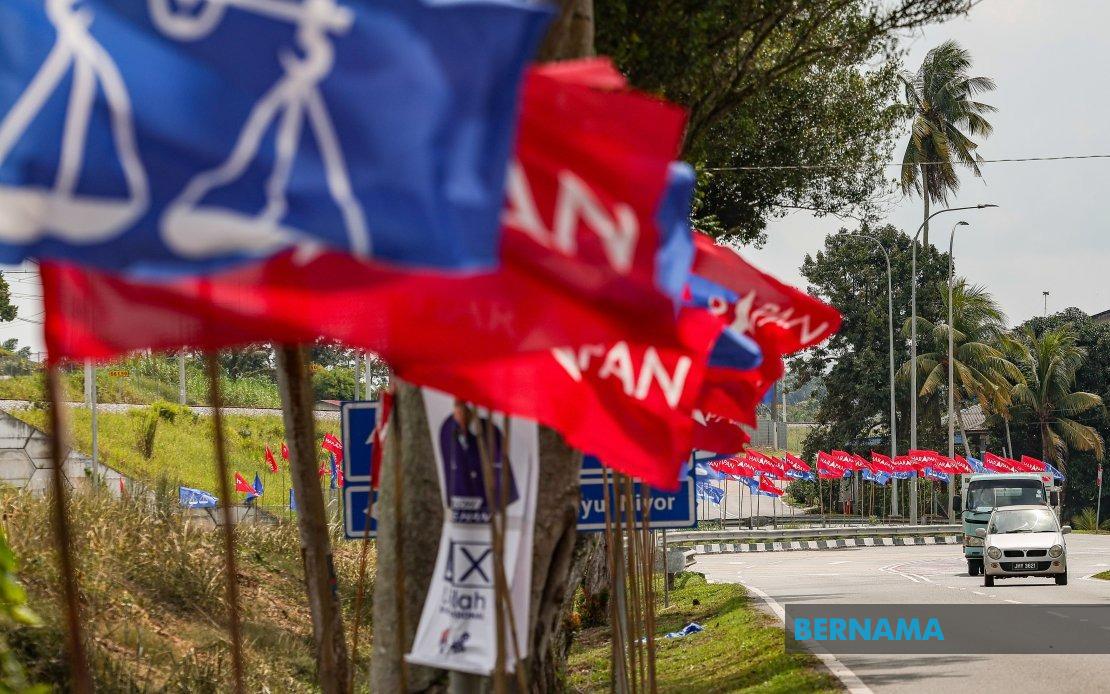
Pakatan Harapan's bid to recapture the Larkin state seat in Johor is gaining momentum, with candidate Suhaizan Kaiat expressing growing confidence that the constituency can be wrested back from incumbent Barisan Nasional control. Speaking in Johor Bahru on June 30, the Pulai Member of Parliament outlined a strategic assessment centred on historical voting patterns and anticipated shifts in voter behaviour when participation rates climb above recent lows.
Suhaizan's optimism stems largely from a comparison between the 2022 state election result and the 2018 general election outcome. During the 14th General Election, the Larkin constituency demonstrated a clear capacity to swing away from BN when voter interest and participation were robust. The 2022 Johor state election, by contrast, produced a subdued turnout of only 51 per cent—a depressed figure that Suhaizan attributes to pandemic-related constraints that discouraged voters from participating. This distinction is crucial to understanding PH's electoral calculus heading into the July 11 vote.
The sitting BN member, Mohd Hairi Mad Shah, secured the Larkin seat in the 2022 state election with a respectable majority of 6,178 votes. However, that victory occurred under conditions of reduced electoral engagement. The previous holder of the seat, Datuk Mohd Izhar Ahmad, had won it for PH (then running under the Bersatu banner) during the 2018 general election, underscoring the seat's competitive status. Suhaizan's reasoning suggests that if the July 11 election draws a higher proportion of registered voters to the polls—a realistic possibility given the constituency's political demographics and the heightened interest surrounding this round of state voting—the balance could tilt in PH's favour.
Beyond demographic arithmetic, Suhaizan is also banking on an unconventional source of support: former Bersatu voters who may migrate towards PH following recent strain in the political relationship between Bersatu and PAS. The history of cooperation between PH and Bersatu in earlier governing coalitions has cultivated residual goodwill among sections of Bersatu's base, particularly those frustrated by Bersatu's current alignment and internal political conflicts. Notably, Bersatu is not contesting the Larkin seat in this election, which creates an opening for PH to harvest votes from that quarter.
The electoral landscape in Larkin for the July 11 state election reflects a three-cornered contest with interesting dynamics. Suhaizan represents PH, while the incumbent Mohd Hairi retains BN's nomination. Completing the field is Norsinah Abu, running under the Bersama banner. The presence of Bersama as a third force could fragment opposition support or peel away modest numbers from BN depending on that party's local organizational strength and messaging. However, seasoned observers suggest that Bersama's impact remains uncertain, and the primary contest remains fundamentally between PH and BN.
The broader context of the 16th Johor state election encompasses 172 candidates competing across 56 state seats. Early voting is scheduled for July 7, with the main polling day three days later. This timing compresses the final campaign period, potentially advantaging parties with stronger ground operations and name recognition. Johor's electorate has traditionally demonstrated capacity for split-voting—backing different coalitions at state and federal levels—a pattern that could work in PH's favour if their messaging resonates with bread-and-butter concerns.
Suhaizan's campaign strategy, as evidenced by his engagement with constituents across Larkin, appears focused on reconnecting with voters on issues likely to resonate in an urban-majority constituency like Larkin. The seat encompasses portions of Johor Bahru, a region experiencing consistent economic pressures, rising living costs, and infrastructure concerns. PH's broader policy positioning on affordability and good governance stands to gain traction if the campaign successfully links these national-level messaging points to local grievances.
The mathematical challenge facing PH in Larkin should not be understated. Mohd Hairi's 6,178-vote majority from 2022, while not insurmountable, represents a meaningful hurdle. PH must not only hold their existing voter base but also persuade swing voters and attract the support Suhaizan is counting on from disaffected Bersatu supporters. The turnout question becomes critical: if July 11 sees participation rates approach or exceed those recorded during federal elections—typically in the 70-80 per cent range—demographic and swing factors could compound in PH's favour. Conversely, if the state election struggles to draw voters, particularly in urban areas, PH's pathway to victory narrows significantly.
Regionally, the Larkin contest carries implications beyond its immediate constituency boundaries. As one of the larger urban seats in Johor, its result will contribute to broader assessments of PH's electoral viability in Malaysia's second-largest state. The coalition's performance in Johor has been inconsistent, with previous state elections producing disappointing outcomes despite strong federal-level performances. A successful recapture of Larkin would provide PH with momentum and concrete evidence of recovery in a traditionally competitive state.
Suhaizan's confidence, while tempered by political realism, reflects PH's broader strategic assessment that conditions have evolved since 2022. Political realignments, voter fatigue with incumbent governance at the state level, and shifting coalitional dynamics all ostensibly work in the opposition's favour. However, success depends on translating these theoretical advantages into actual votes on July 11, a challenge that will test PH's organizational capacity and messaging effectiveness in Larkin across the remaining campaign days.

