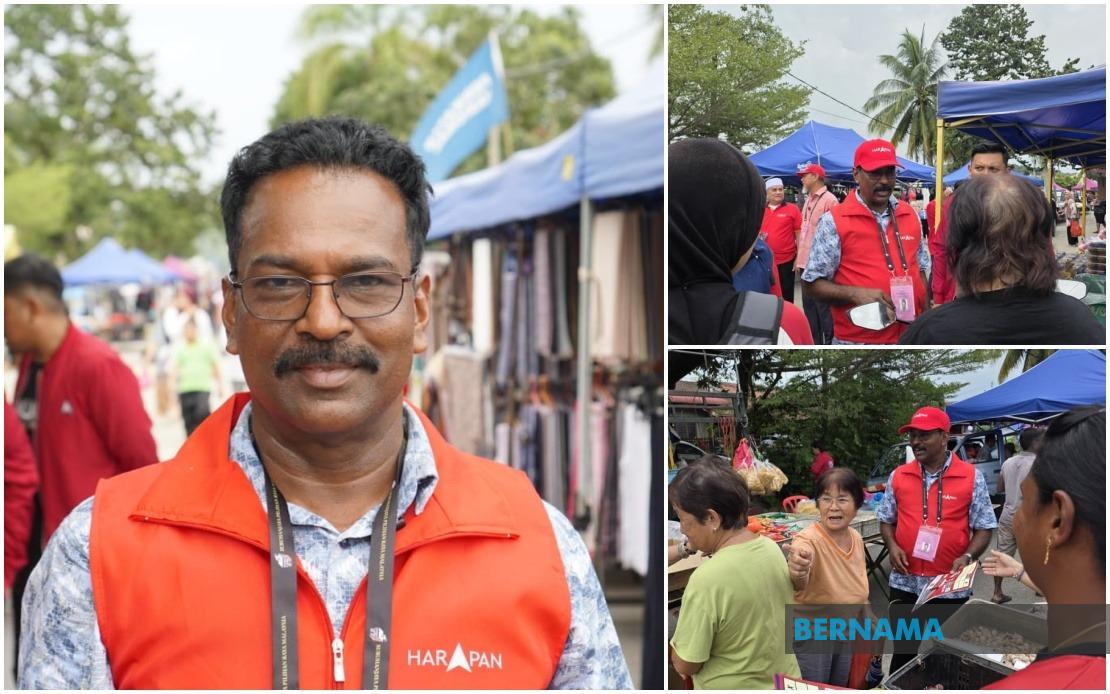
C. Subramani, the Pakatan Harapan candidate contesting the Bukit Kepong seat in the 16th Johor state election, has expressed confidence in securing a breakthrough victory, buoyed by what he describes as growing momentum among voters dissatisfied with the current trajectory of their constituency. The Pagoh native and PKR party chief believes that residents are genuinely seeking alternatives and that his campaign has resonated with this underlying appetite for change across the electoral division.
Subramani's optimism stems from extensive ground engagement throughout the campaign period, during which he has methodically visited communities across Bukit Kepong to understand their most pressing concerns. His visits to Orang Asli settlements have proven particularly illuminating, he suggests, revealing infrastructure deficits and socioeconomic vulnerabilities that have long been overlooked. These interactions have shaped his campaign platform and given him tangible evidence that constituents are ready to support candidates willing to prioritise their immediate needs.
Central to his development vision is the cultivation of synergy between state and federal administrations, a theme he has emphasised repeatedly throughout his campaign messaging. Subramani argues that when both levels of government function in coordination rather than at cross-purposes, constituents benefit from more efficient resolution of issues involving federal agencies. He illustrates this principle with concrete examples, pointing to education policy implementation and water management concerns—irrigation and drainage problems that require ministerial oversight—as matters that could be expedited through improved governmental alignment.
The Bukit Kepong contest remains genuinely competitive, with three major political coalitions fielding candidates: Pakatan Harapan, Barisan Nasional, and Perikatan Nasional. In the previous 2022 state election, the Perikatan Nasional-Bersatu candidate Datuk Dr Sahruddin Jamal won with a majority of just 710 votes, a slender margin that suggests the seat remains highly contestable and susceptible to shifts in voter sentiment. This narrow victory margin has evidently encouraged Subramani and the opposition coalition to believe that a determined campaign could overturn the incumbent advantage.
Subramani has positioned economic revitalisation as a cornerstone of his candidacy, particularly through a proposal to transform the Bukit Kepong Gallery into a heritage tourism destination. Such a development could catalyse local economic activity, generate employment opportunities, and position the community as a visitor destination while celebrating its historical significance. This approach reflects broader thinking about how constituencies can leverage their unique assets rather than relying solely on conventional development frameworks.
Immediate livelihood concerns also feature prominently in his platform. Poor street lighting remains a community safety issue that Subramani has committed to addressing, while the insufficiency of bridge infrastructure poses both safety and connectivity challenges. More broadly, the shortage of affordable housing for the B40 income segment underscores the economic pressures facing many Bukit Kepong residents, a demographic segment that has become increasingly pivotal in Malaysian electoral contests.
Subramani's previous experience as a candidate in the 2022 Johor state election, when he contested the Buloh Kasap seat, has provided him with valuable insights into electoral dynamics and voter engagement strategies. While he did not succeed then, that campaign experience appears to have sharpened his approach and deepened his understanding of how to connect with constituents on substantive policy matters rather than relying on partisan rhetoric alone.
The broader Johor state election landscape involves 172 candidates competing across 56 assembly seats, with approximately 2.7 million registered voters eligible to participate. This electoral exercise carries significance not merely for Johor itself but as an indicator of shifting political preferences in a state that has historically been a political laboratory for Malaysian democracy. The three-cornered contests emerging across multiple seats suggest that Malaysian voters are increasingly open to evaluating multiple political offerings rather than defaulting to entrenched coalition loyalties.
For Subramani specifically, the convergence of voter dissatisfaction, the narrow winning margin from the previous election, and his focused local engagement strategy creates conditions where an upset victory, while not assured, remains within the realm of possibility. His emphasis on practical constituency improvements—addressing infrastructure gaps, supporting lower-income residents, and leveraging local heritage for economic benefit—reflects a pragmatic rather than ideologically rigid approach to campaigning. Whether Bukit Kepong voters ultimately embrace this reform agenda or prefer continuity with the incumbent administration will be revealed when ballots are counted in the coming days.

